


What is Layer 2

Ethereum Scaling Solutions
Currently, Ethereum stands as the platform with the largest number of smart contracts and decentralized applications (DApps), the greatest amount of locked crypto assets, and the highest transaction volume in the blockchain ecosystem. With the explosive growth of the cryptocurrency market over the past few years, the volume of on-chain activities such as transfers and contract calls has increased exponentially.
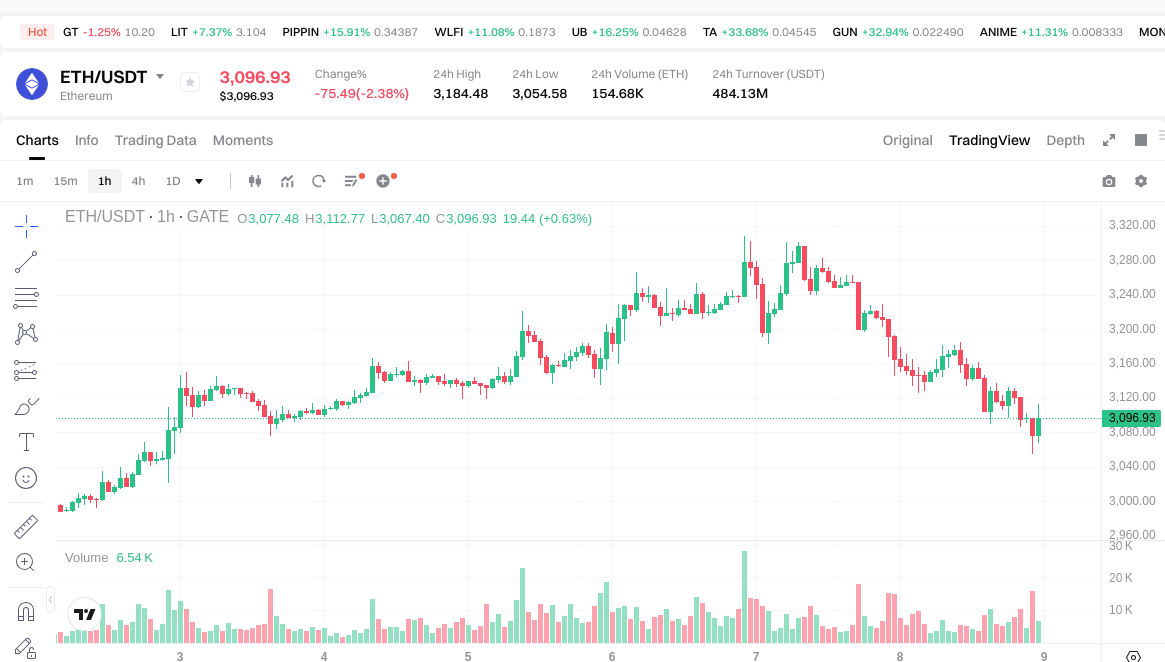 However, even during periods of market weakness, users continue to face challenges related to network congestion and elevated gas costs, which significantly impair the overall user experience. The scalability issue of Ethereum remains one of the most critical topics of concern for the blockchain community.
Ethereum scaling solutions can be fundamentally divided into two main directions: Layer 1 (L1) and Layer 2 (L2), each offering distinct approaches to addressing network limitations.
Layer 1, commonly referred to as Ethereum 2.0, represents an on-chain upgrade that focuses primarily on the transition of the underlying consensus mechanism from Proof of Work (PoW) to Proof of Stake (PoS), alongside the implementation of a sharding mechanism. Through these fundamental changes in the network architecture, individual nodes no longer need to store the entire contents of the blockchain and can utilize their computing power more efficiently. This optimization effectively frees up larger network capacity and improves overall throughput.
However, due to the technical complexity and coordination challenges involved in such a fundamental upgrade, the complete rollout of Ethereum 2.0 must be executed in carefully planned stages over several years. With no definitive timeline for the completion of this comprehensive upgrade, Layer 2 scaling solutions have emerged as a more immediate focus for market participants and developers seeking near-term improvements.
Layer 2 represents an off-chain improvement solution that operates without affecting the underlying Ethereum public chain itself. The core principle involves processing the majority of transactions on the Layer 2 network, while Layer 1 is utilized only when necessary for final settlement and security guarantees. This architectural approach achieves the objective of completing large volumes of transactions quickly and cost-effectively, while maintaining the security guarantees of the main Ethereum network.
To illustrate this concept more clearly, if we compare Ethereum to a congested highway, Layer 2 solutions are equivalent to elevated expressways or viaducts built above this highway. These additional layers help to divert traffic from the congested main blockchain, allowing for smoother and faster transaction processing without compromising the security of the base layer.
Key Technologies of Layer 2
Technical solutions for Layer 2 networks have undergone significant evolution and refinement over the past few years, with several distinct approaches emerging:
State Channel
The State Channel model operates on principles similar to Bitcoin's Lightning Network, offering a straightforward yet effective scaling approach. In simple terms, two parties involved in frequent transactions construct a dedicated payment channel off-chain that enables them to transfer funds to each other multiple times. The key innovation is that only the final settlement result is broadcasted to the main blockchain after all relevant transactions within the channel are completed. This dramatically reduces the number of on-chain transactions required.
The earliest and most prominent state channel project on Ethereum was the Raiden Network, which aimed to bring Lightning Network-style scaling to Ethereum. However, this solution faced several practical limitations in real-world implementation. Most notably, it required both transacting parties to maintain long-term transactional relationships and keep funds locked in channels, which proved impractical for many use cases. As a result of these constraints and limited adoption, development progress has largely stalled.
Plasma
Plasma represents one of the earliest Layer 2 solutions proposed by Ethereum co-founder Vitalik Buterin, offering an innovative approach to scaling. The architecture is conceptually similar to a sidechain system, operating independently of the main Ethereum network while maintaining security connections. The Plasma chain processes transactions autonomously but periodically uploads compressed block hashes to the main blockchain contract for verification and security guarantees.
The efficiency gains are substantial: hundreds or even thousands of transactions can be processed simultaneously off-chain in the Plasma network, while only a few dozen bytes worth of compressed final transaction data need to be uploaded to the main chain. This compression ratio provides significant scalability improvements.
However, a critical challenge with this solution lies in its dependency on the honesty of the nodes operating the Plasma chain and the accuracy of data uploaded to the main blockchain. To mitigate the risk of malicious node operators submitting fraudulent data, users can only withdraw their funds after completing a challenge period that typically lasts 7-14 days. During this window, other network participants can identify and challenge any fraudulent transactions. While this security mechanism is necessary, the extended withdrawal period presents considerable practical challenges for user experience and has limited wider adoption of Plasma-based solutions.
Rollups
Rollup technology has emerged as the most promising and widely favored scaling solution in the current Ethereum ecosystem, with many industry experts arguing that the success of Rollup implementations will directly determine the long-term sustainability and competitiveness of Ethereum as a smart contract platform.
Although Rollups also process the bulk of transactions on Layer 2 infrastructure, they maintain a crucial difference from Plasma: they record essential data for each transaction on Layer 1, including critical information such as the sender address, recipient address, transaction amount, and other necessary details. This data availability guarantee makes Rollups significantly more secure than Plasma-based solutions, as it ensures that all transaction data remains accessible and verifiable on the main chain.
A common question arises: how does recording every transaction on Layer 1 ensure better scalability compared to processing everything directly on Layer 1? The answer lies in sophisticated data compression techniques. Rollups utilize tree-based data structures within smart contracts to efficiently record the state of each account, focusing primarily on transaction records rather than storing redundant information. Crucially, signature verification and other computationally intensive operations are performed on the Layer 2 network, allowing the original transaction data to be significantly compressed before transmission to the main chain. This compression can reduce data requirements by 10-100x while maintaining security.
To address the critical challenge of data consistency and fraud prevention, two distinct technical approaches have evolved within the Rollup framework: Optimistic Rollup and ZK Rollup, each with unique trade-offs.
Optimistic Rollup operates on principles somewhat similar to Plasma's trust model. As the name suggests, it optimistically assumes all uploaded data to be valid and free from fraud by default. Challenges and fraud proofs are only generated and processed when suspicious activity is detected by network watchers. Due to the time required to resolve potential disputes through the challenge mechanism, users currently face withdrawal delays of at least one week when moving funds from Layer 2 Optimistic Rollup networks such as Optimism and Arbitrum back to the Ethereum mainnet. This waiting period, while inconvenient, is necessary to ensure security.
ZK Rollup (Zero-Knowledge Rollup) takes a fundamentally different approach by employing advanced zero-knowledge proof technology. In this system, smart contracts on Layer 1 verify the accuracy and validity of batched transactions by checking cryptographic proofs generated on Layer 2. The major advantage is that users can withdraw funds almost immediately without extended waiting periods, as the mathematical validity proofs provide instant verification. However, the primary challenge lies in the substantial computational resources required to generate these zero-knowledge proofs, which demands significant processing power and can increase operational costs. Projects like zkSync and StarkNet, which implement ZK Rollup technology, have successfully deployed on the Ethereum mainnet and continue to optimize their proof generation systems.
Closing Thoughts
Rollup technology has established itself as the most mainstream and promising solution in the Layer 2 scaling landscape for Ethereum, with an increasing number of related Layer 2 network projects successfully deployed and operational. The ecosystem continues to mature, with the gradual emergence of sophisticated cross-chain bridges designed to facilitate seamless interoperability between various Layer 2 networks and the main Ethereum chain.
It is crucial to understand that Layer 1 and Layer 2 solutions are not mutually exclusive approaches competing for dominance. Rather, these different scaling strategies need to work synergistically and complement each other to achieve optimal results. The future of Ethereum scaling likely involves a multi-layered approach where Layer 1 improvements (such as the ongoing Ethereum 2.0 upgrades) provide a more efficient and secure foundation, while Layer 2 solutions deliver immediate scalability benefits and specialized functionality. Together, these complementary approaches will significantly improve the overall network processing capacity of Ethereum, enabling it to support the next generation of decentralized applications and serve billions of users worldwide.
FAQ
Layer 2是什么?为什么需要Layer 2?
Layer 2是区块链扩展解决方案,通过链下交易处理降低交易成本、提升交易额和速度。区块链存在可扩展性限制,Layer 2突破这些限制,提供更高效的交易体验。
Layer 2和Layer 1有什么区别?
Layer 1是主区块链,Layer 2是建立在其上的扩展层。Layer 1负责安全性和最终结算,Layer 2处理交易以提高速度、降低成本。Layer 2将交易批量打包后提交到Layer 1验证。
Layer 2有哪些主要类型?(如Rollup、Plasma、Sidechains等)
Layer 2主要类型包括Rollup(Optimistic Rollup和ZK Rollup)、Plasma、Sidechains、状态通道等。其中Rollup是当前发展最成熟的方案,能显著提升交易吞吐量和降低手续费。
常见的Layer 2项目有哪些?(如Arbitrum、Optimism、Polygon等)
常见的Layer 2项目包括Arbitrum、Optimism、Polygon、zkSync、Base、Mantle、MetisDAO、Starkware等。这些解决方案通过rollup技术降低交易费用,提升以太坊网络的吞吐量和处理速度。
使用Layer 2安全吗?有什么风险?
Layer 2主要采用密码学保护,安全性较高。但存在中心化风险、智能合约漏洞、跨链桥接风险及流动性风险。用户需了解具体项目机制,谨慎管理资产。
Як здійснювати транзакції на Layer 2?
На Layer 2 можна проводити транзакції через платіжні канали поза ланцюгом. Обидві сторони підписують повідомлення для завершення операцій без подання даних до основного блокчейну, що значно зменшує комісії та час обробки.
Layer 2能解决以太坊的哪些问题?
Layer 2通过将交易转移到二层网络,解决以太坊的高交易额、网络拥堵和交易速度慢等问题。它能显著降低交易费用,提升交易吞吐量,使以太坊生态更高效。
Layer 2的未来发展方向是什么?
Layer 2将继续优化可扩展性和降低交易成本。ZK-Rollups和Optimistic Rollups是核心技术方向,未来会形成独立生态系统,与Layer 1互补协作,共同推动以太坊生态发展。
Що являє собою Avalanche (AVAX): Комплексний аналіз основ логіки whitepaper, практичних застосувань і технічних інновацій

Безшовні рішення для міжланцюгової взаємодії
Вичерпний посібник щодо комісій за газ у блокчейні для Web3

Трансформація Web3: Інновації в інфраструктурі блокчейну
Огляд блокчейну Polygon: повний довідник

Масштабування Layer 2 — це простий спосіб з'єднати Ethereum із розширеними рішеннями

Що являє собою монета BULLA: аналіз логіки whitepaper, сценаріїв використання та базових принципів команди у 2026 році

Як функціонує дефляційна модель токеноміки MYX із повним механізмом спалення та розподілом 61,57 % на користь спільноти?

Що таке сигнали ринку деривативів і як відкритий інтерес за ф'ючерсами, ставки фінансування та дані про ліквідації впливають на торгівлю криптовалютами у 2026 році?

Як відкритий інтерес ф’ючерсів, ставки фінансування та показники ліквідацій дозволяють прогнозувати сигнали ринку криптодеривативів у 2026 році?

Що таке модель токенекономіки та як GALA застосовує механіку інфляції та механізми спалювання
