What Is a Crypto White Paper? A Guide to Evaluating Web3 Projects
In traditional financial markets, investors rely on financial reports, prospectuses, and research papers to assess a company’s operations and growth potential. In contrast, the crypto and Web3 worlds often feature projects that haven’t launched, have no mature revenue structure, and may operate as DAOs or foundations. Here, the white paper becomes the primary—and often most critical—resource for investors.
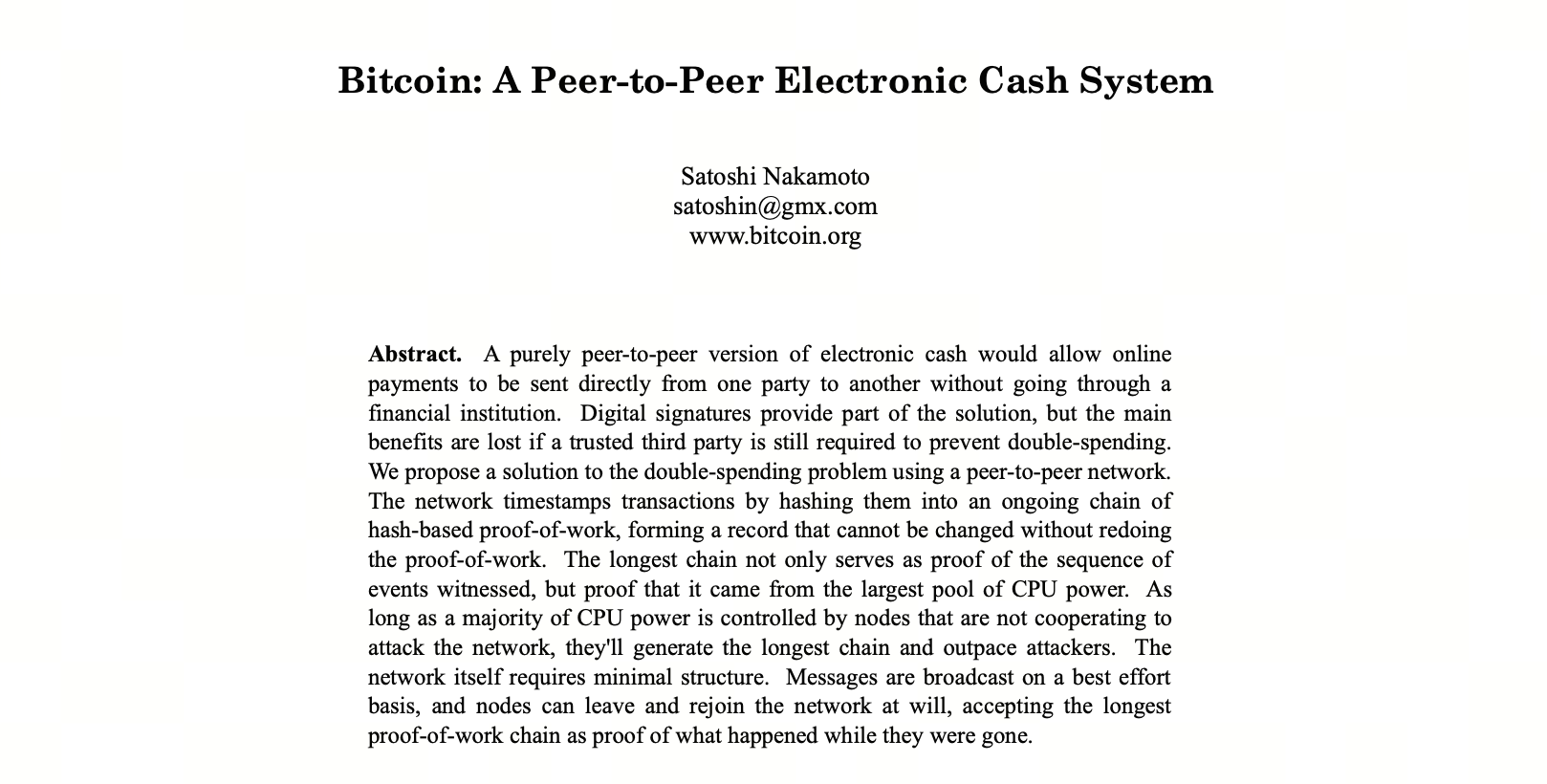 (Source: bitcoin.pdf)
Since Satoshi Nakamoto released "Bitcoin: A Peer-to-Peer Electronic Cash System" in 2008, the white paper has become central to blockchain culture. Far more than a technical document, a white paper fuses vision, business model, token economics, and community governance into a comprehensive guide.
By 2026, the Web3 ecosystem has evolved well beyond simple token issuance. New applications—Layer 2 solutions, real-world asset (RWA) protocols, AI integrations, decentralized identity (DID), and cross-chain infrastructure—are now standard. Reading white papers has become a core skill not just for researchers and engineers, but for anyone active in Web3.
What Is a White Paper in the Crypto Space?
In the crypto industry, a white paper serves as a project’s official documentation. Prepared by developers, foundations, or key contributors, it outlines the project’s goals, technical architecture, tokenomics, governance structure, and future direction.
Unlike academic papers, crypto white papers aren’t just theoretical—they educate, communicate, and build trust. For projects without fully launched products, the white paper is often the most complete and authoritative source of information. Modern white papers combine technical documentation, business strategy, and brand vision, speaking to both engineers seeking protocol details and investors/community members evaluating the project’s long-term value.
The original Bitcoin white paper, just nine pages long, clearly defined the challenges and solutions for decentralized digital cash. Ethereum’s white paper introduced smart contracts and programmable blockchains, laying the technological foundation for DeFi and the broader Web3 environment. These examples prove that a white paper’s worth lies not in its length, but its clarity in defining problems, proposed solutions, and value.
Why Are White Papers So Important?
White papers are vital—they’re typically the earliest and most critical material for investors to assess a project. When a Web3 project lacks users, stable revenue, or even a live mainnet, the white paper is the only way for the market to understand its strategic logic and long-term vision. A strong white paper should answer three key questions: What problem does this project solve, how does the team plan to do it, and what makes their approach more competitive than current market solutions?
By 2026, few sectors in Web3 lack meaningful competition. Whether targeting Layer 2 scaling, AI integration, or RWA protocols, many players address similar issues. A white paper, therefore, must do more than outline features—it needs to highlight unique tech differentiators, cost advantages, ecosystem strengths, and governance models. Investors read white papers not to predict token prices, but to determine whether a project has a compelling case for long-term viability.
What Does a White Paper Usually Cover?
Though there’s no industry-wide template, most mature crypto project white papers share several essential sections.
The project overview comes first. This introduces the project’s background, core ideas, and the market need it addresses. For example, a Layer 2 protocol might focus on lowering Ethereum transaction costs, while an RWA project could emphasize enabling the secure on-chain transfer of bonds, funds, or real estate.
Next, the solutions and technical design sections dive into the heart of the project. Here you'll find details on consensus mechanisms, Rollup designs, cross-chain bridges, zero-knowledge proofs (ZK), execution environments (e.g., Move or Solidity), and data availability (DA) solutions. As AI and modular blockchains gain traction, many 2026 projects now include AI Agent models, chain abstraction layers, and modular execution strategies.
Team and advisor information is another crucial section. Clear, transparent backgrounds boost credibility. Investors want to know if founding members have blockchain development experience, have participated in previous successful ventures, and remain active in the community or on GitHub.
White papers also typically include market and competitive analyses. Mature projects don’t assume a lack of competition; instead, they define their target market, user base, principal competitors, and unique value proposition.
Finally, tokenomics (token economics) is often the focal point for investors. A comprehensive white paper explains total supply, initial circulation, vesting schedules for teams and investors, inflation or burn mechanisms, and the token’s role within the ecosystem. By 2026, investors look closely at whether tokens capture genuine value—beyond just serving as fundraising instruments.
How Do You Know If a White Paper Is Trustworthy?
In the hype-driven crypto market, not all white papers reflect real value. Some projects hide behind technical jargon and grandiose plans. Reliable white papers, however, share certain traits.
First, they present a clear and workable business model. If the entire document merely touts “changing the world” or “disrupting finance” without identifying why users need the product, where revenue comes from, and how the ecosystem functions, it’s a red flag.
Second, technical details must be verifiable. Leading projects share architectural diagrams, open-source code repositories, testnet access, security audit reports, or developer documentation—not just slogans and speculative concepts.
Team transparency is equally vital. Beyond checking LinkedIn or GitHub, observe if the team provides regular development updates, engages in community and technical discussions, participates in AMAs or events, and announces credible partners and backers. Top-tier projects also proactively disclose risks—ranging from technical constraints and market volatility to liquidity issues and regulatory uncertainty. Teams willing to be upfront about risks are far more credible than ones claiming guaranteed success.
Building Community Trust
A successful white paper isn’t just for engineers—it’s the foundation for collective understanding across the entire community. In Web3, most projects start without a massive corporate structure, relying instead on developers, investors, and users to move forward together. That’s why white papers serve as education, marketing, and governance all at once. They help newcomers grasp both the tech and the product, articulate project vision and differentiation to the market, and establish a shared understanding of protocol rules and direction.
From Bitcoin and Ethereum to recent projects like Arbitrum, Optimism, Celestia, EigenLayer, and various RWA protocols, every major Web3 journey begins with a white paper. As DAOs and decentralized governance gain prominence, the white paper essentially becomes the original “constitution” of the protocol—establishing not just product details, but the operational foundation for the entire ecosystem.
Conclusion
In Web3 and the crypto asset universe, a white paper is far more than a technical document; it’s the project’s lifeblood and the cornerstone of trust. It clarifies what a project aims to solve, whether its technology is sound, tokenomics sustainable, the team qualified, and its long-term plan feasible. As AI, RWA protocols, Layer 2 solutions, and modular blockchains evolve quickly in 2026 and beyond, the field grows increasingly complex. Hype or KOL endorsements alone won’t cut it for informed investing. Reading and analyzing the white paper remains the single most fundamental—and critical—step before backing any Web3 project. If you can interpret a white paper’s technical framework, business logic, and governance approach, you have the tools to evaluate both opportunity and risk—empowering you to make more rational, long-term decisions in the ever-changing, often noisy crypto landscape.
FAQ
Q1: How does a white paper differ from an official website?
An official website spotlights the product and brand, whereas a white paper offers in-depth explanation of technical architecture, tokenomics, governance mechanisms, and development blueprints. It’s the most complete and formal official record for a project.
Q2: Is reading the white paper enough to judge a project?
No—the white paper is just a first step. To form a complete view, also check GitHub development activity, community engagement, security audits, ecosystem partnerships, and on-chain data.
Q3: Which parts should beginners focus on when reading a white paper?
Start with the project overview, tokenomics, team background, and roadmap. These sections are typically easiest to digest and most effective for gauging credibility and long-term potential.
Related Articles

Will Sidra Break $1,000? A Realistic Look at Sidra Chain Price Claims in 2026–2027
BlockDAG (BDAG): A High-Speed and Secure Layer 1 for the Next Era

Rising Prices but Bearish Funding Rates: Is Crypto Entering a “Layered Bull Market” After Wall Street Capital Inflows?

Fractional NFTs: Lowering Barriers and Enhancing Liquidity
What is USDC? A Complete Guide to One of the Most Trusted Stablecoins