LCP_hide_placeholder
fomox
Search Token/Wallet
/

Why is Bitcoin so expensive?

2026-01-16 19:23
Bitcoin
Blockchain
Crypto Insights
Cryptocurrency market
Investing In Crypto
Article Rating : 3
167 ratings
Explore the factors that drive Bitcoin’s price, including limited supply, growing demand, and institutional investment. This analysis examines why Bitcoin commands a high value, providing insights for investors and traders on Gate.
Why is Bitcoin so expensive?

The Importance of Bitcoin’s High Value for Market Participants

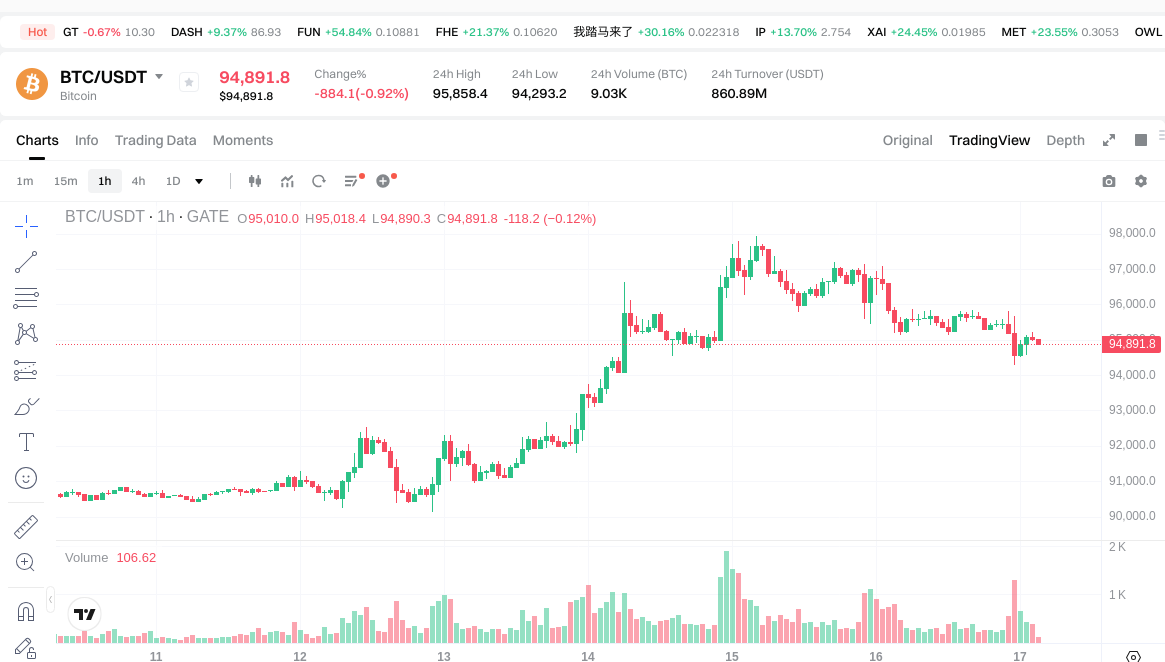
Grasping the reasons behind Bitcoin’s elevated price is essential for all types of market participants. For long-term investors, Bitcoin offers an effective way to diversify investment portfolios and serves as a reliable hedge against inflation in traditional currencies. Many see it as digital gold, capable of maintaining purchasing power during periods of economic uncertainty. image_url

Traders capitalize on Bitcoin’s volatility for short-term speculation and profit from price swings. With round-the-clock trading and global liquidity, they can respond instantly to market shifts. Everyday users appreciate Bitcoin as a store of value—especially in countries with unstable national currencies—and as a means for fast, relatively low-cost cross-border payments without banking intermediaries.

Bitcoin’s high price also shapes risk management strategies, requiring market participants to carefully analyze conditions and make well-informed decisions on entry and exit timing.

Recent Examples and Practical Uses of Bitcoin

In recent years, Bitcoin has expanded its reach across multiple economic sectors, evolving from an experimental asset into a recognized financial instrument. Many large and mid-sized companies worldwide now accept Bitcoin as a legitimate payment method for goods and services, streamlining international business transactions.

Businesses benefit from using Bitcoin through lower transaction fees compared to traditional payment systems, faster settlements between global partners, and reduced dependence on banking infrastructure. This is especially relevant for companies operating internationally, where conventional bank transfers can take days and entail significant fees.

Furthermore, more governments are considering legalizing Bitcoin as an official payment method or recognizing it as a legitimate financial asset. Some countries have already integrated cryptocurrencies into their financial systems, reinforcing Bitcoin’s status as a global alternative currency and increasing trust among institutional investors.

Bitcoin Statistics and Data

Recent analytics show that Bitcoin’s total market capitalization has topped $1.5 trillion, cementing its position as the world’s largest cryptocurrency by market cap. Its high value is driven by strictly limited supply—the network protocol ensures the total number of Bitcoins will never exceed 21 million.

The actual number of coins in circulation continues to approach this cap, while new coin issuance (mining) is growing increasingly complex and resource-intensive. This scarcity effect is a primary driver of rising prices.

Bitcoin’s daily trading volume regularly surpasses $10 billion, demonstrating robust liquidity and popularity among individual and institutional investors alike. Such liquidity allows for rapid position changes with minimal price impact, making Bitcoin an appealing investment asset.

More than 60% of all Bitcoins have remained unmoved for extended periods, reflecting a long-term holding strategy (HODL) by major holders and their confidence in the asset’s continued appreciation.

Summary and Conclusions

Bitcoin remains a highly valued and sought-after asset thanks to a unique blend of key factors. The cap of 21 million coins creates fundamental scarcity, which becomes more pronounced as circulation nears the limit. Meanwhile, demand from all types of market participants continues to grow.

Institutional adoption by major financial institutions, investment funds, and corporations further legitimizes and stabilizes Bitcoin. Its role as an alternative to traditional financial systems and as a hedge against inflation is increasingly recognized amid global economic uncertainty.

Together, these factors make Bitcoin attractive to a wide range of market participants—from individual investors seeking portfolio diversification to large corporations leveraging it for risk hedging and optimizing international transactions.

To succeed in the Bitcoin market, it is crucial to monitor market trends, follow regulatory developments across jurisdictions, and assess macroeconomic factors that may impact Bitcoin’s value and utility in the future. Mastering these elements enables sound investment decisions and effective risk management in the fast-evolving cryptocurrency market.

FAQ

Why is Bitcoin so expensive?

Bitcoin’s high price is driven by its limited supply (maximum 21 million coins), growing demand, institutional investment, and recognition as digital gold and a store of value.

What determines Bitcoin’s value?

Bitcoin’s value is set by market supply and demand. When demand outpaces supply, the price rises. The supply of Bitcoin is capped at 21 million coins, creating scarcity and supporting its price.

Why is Bitcoin more expensive than other cryptocurrencies?

Bitcoin commands a higher price due to its status as the original cryptocurrency, strong market trust, and powerful network effects. Its leading position and substantial trading volume drive its price and attract investors.

Will Bitcoin’s price rise or fall in the future?

Over time, Bitcoin tends to appreciate because of its limited supply and rising demand. Analysts expect further price increases in the years ahead.

Is it worth investing in Bitcoin at this price?

Yes, Bitcoin is a worthwhile investment. Its price is expected to reach new record highs as demand grows and supply remains limited. Bitcoin’s elevated price reflects its value as a digital asset and protection against inflation.

* The information is not intended to be and does not constitute financial advice or any other recommendation of any sort offered or endorsed by Gate.

Share

Content

The Importance of Bitcoin’s High Value for Market Participants

Recent Examples and Practical Uses of Bitcoin

Bitcoin Statistics and Data

Summary and Conclusions

FAQ

Related Articles
A Comprehensive Guide to Tokenizing Real-World Assets

A Comprehensive Guide to Tokenizing Real-World Assets

A comprehensive guide to real-world asset tokenization, bridging traditional and digital finance with blockchain technology. Discover the benefits, practical use cases, and future prospects of RWAs, empowering you to invest confidently and engage in the asset tokenization market. Tailored for cryptocurrency enthusiasts and fintech professionals.
2025-12-21
Top Crypto Trading Simulation Tools for Beginners

Top Crypto Trading Simulation Tools for Beginners

This article explores top crypto trading simulators designed to enhance traders' skills without financial risk. Perfect for beginners and experienced traders alike, these platforms mimic real crypto market conditions using virtual funds. Key topics include understanding the mechanics of trading simulators, their educational benefits, and detailed reviews of leading tools like Roostoo and Gainium tailored to various trading needs. The article guides you in selecting the right simulator based on ease of use, available features, and realistic market data, aiming to foster knowledge, experience, and disciplined trading approaches.
2025-12-02
Understanding Stablecoin Varieties: A Comparison Guide for Choosing Wisely

Understanding Stablecoin Varieties: A Comparison Guide for Choosing Wisely

Explore the essential role of stablecoins as a bridge between traditional finance and the digital asset ecosystem. This guide outlines the types of stablecoins—fiat-collateralized, crypto-collateralized, algorithmic—and the key benefits of using stablecoins, such as price stability and transaction efficiency. Suitable for traders, businesses, and crypto enthusiasts, the article addresses potential risks like centralization and regulatory uncertainty. Learn to choose the right stablecoin by assessing transparency, market capitalization, and utility in compliance with legal frameworks.
2025-12-21
Effective Zero Cost Strategies for Risk Management

Effective Zero Cost Strategies for Risk Management

Explore effective no-cost strategies for cryptocurrency risk management, focusing on the zero-cost collar approach. This article discusses how buying put options and selling call options can protect against losses without upfront fees, while balancing potential gains. Learn the mechanics, benefits, and limitations of this strategy, tailored for traders keen on minimizing risks with Bitcoin and Ethereum on Gate. Ideal for those seeking customizable risk management tools without emotional trading disruptions, the guide offers insights into maximizing trading effectiveness while navigating market volatility.
2025-11-23
Understanding Multi Signature Wallets Explained

Understanding Multi Signature Wallets Explained

This article explains the concept and functionality of multisig wallets, which enhance security and collaborative control over digital assets. It addresses the differences between custodial and self-custodial multisig wallets, outlines the process of creating one, and discusses their pros and cons. Additionally, it lists popular multisig wallet options, tailored for crypto users in group settings or seeking heightened security measures. Ideal for individuals and organizations aiming to safeguard assets, the article guides readers in understanding and applying multisig wallet solutions while navigating potential risks and setup complexities.
2025-11-04
Understanding Cross Margin Trading: A Comprehensive Guide

Understanding Cross Margin Trading: A Comprehensive Guide

The article "Understanding Cross Margin Trading: A Comprehensive Guide" delves into cross margining, a strategic tool for managing risk and optimizing capital efficiency in cryptocurrency trading on Gate. It explains key concepts, benefits, and potential dangers of using cross margining, catering to both seasoned traders seeking flexibility and beginners desiring to mitigate risks. Structured to enhance readability, the guide clarifies cross margin mechanisms, discusses risk management strategies, and compares it with isolated margin trading. Explore essential cross margin strategies and FAQs to equip traders with knowledge for informed decisions in volatile markets.
2025-11-27
Recommended for You
What is BULLA coin: analyzing whitepaper logic, use cases, and team fundamentals in 2026

What is BULLA coin: analyzing whitepaper logic, use cases, and team fundamentals in 2026

BULLA coin introduces decentralized accounting and on-chain data management innovation built on BNB Smart Chain, eliminating intermediaries while ensuring real-time transaction verification. The platform addresses critical gaps in cryptocurrency infrastructure by embedding accounting logic directly into smart contracts, enabling transparent audit trails and regulatory compliance. Real-world applications include seamless transaction imports across multiple exchanges, comprehensive crypto portfolio tracking, and secure record-keeping for investors. Trade import tools enhance user experience by automating data categorization and consolidation. Founded in 2021 by blockchain architect Benjamin with support from experienced fintech designers and engineers, BULLA Networks demonstrates active development momentum with continuous smart contract iterations through early 2026. The 2026-2027 strategic roadmap prioritizes network infrastructure expansion and enhanced security protocols, positioning BULLA as a robust decen
2026-02-08
How does MYX token's deflationary tokenomics model work with 100% burn mechanism and 61.57% community allocation?

How does MYX token's deflationary tokenomics model work with 100% burn mechanism and 61.57% community allocation?

This article examines MYX token's innovative deflationary tokenomics, featuring a distinctive 61.57% community allocation and 100% burn mechanism. The community-focused distribution empowers token holders through MYX DAO governance while ensuring value flows back to ecosystem participants. The 100% burn mechanism systematically removes node-generated revenue from circulation, reducing the total supply from one billion tokens and creating genuine scarcity. This supply-driven deflation counters inflation pressures and strengthens long-term holder value without requiring external demand. The combination of broad community distribution and aggressive token elimination creates sustainable deflationary economics. Ideal for investors seeking to understand how MYX Finance aligns community interests with protocol success through structural value preservation and decentralized governance mechanisms on Gate exchange.
2026-02-08
What Are Derivatives Market Signals and How Do Futures Open Interest, Funding Rates, and Liquidation Data Impact Crypto Trading in 2026?

What Are Derivatives Market Signals and How Do Futures Open Interest, Funding Rates, and Liquidation Data Impact Crypto Trading in 2026?

This comprehensive guide decodes cryptocurrency derivatives market signals essential for 2026 trading success. Learn how futures open interest, funding rates, and liquidation data—such as ENA's $17 billion contract volume and $94 million daily position closures—reveal market sentiment and institutional positioning. The article explains how long-short ratios and liquidation heatmaps identify reversal opportunities, while options imbalance signals indicate smart money accumulation strategies. Discover why exchange outflows and funding rate extremes precede major price movements. From analyzing $46.45M ENA outflows to understanding leverage risks, this resource equips traders with actionable intelligence for predicting market turning points. Perfect for beginners and experienced traders leveraging Gate's analytics tools to navigate increasingly complex derivatives markets with informed entry and exit strategies.
2026-02-08
How do futures open interest, funding rates, and liquidation data predict crypto derivatives market signals in 2026?

How do futures open interest, funding rates, and liquidation data predict crypto derivatives market signals in 2026?

This article explores how three critical derivatives metrics—open interest exceeding $20 billion, funding rates shifting positive, and liquidation volume declining 30%—predict crypto derivatives market signals in 2026. The guide reveals institutional participation driving market maturation while positive funding rates signal strengthened bullish momentum. Long-short ratio stabilization at 1.2 with put-call ratio below 0.8 demonstrates sophisticated hedging strategies on Gate and other platforms. Reduced liquidation volumes indicate improved risk management and market resilience. By analyzing how these indicators combine—measuring position sizing, sentiment extremes, and forced selling pressure—traders gain precise tools for identifying trend reversals, leverage exhaustion, and market turning points with 55-65% AI-driven accuracy for 2026.
2026-02-08
What is a token economics model and how does GALA use inflation mechanics and burn mechanisms

What is a token economics model and how does GALA use inflation mechanics and burn mechanisms

This article explores GALA's innovative token economics model, examining how inflation mechanics and burn mechanisms create sustainable ecosystem growth. The guide covers GALA token distribution through 50,000 Founder's Nodes requiring 1 million GALA for 100% daily rewards, establishing long-term community participation. A dual-mechanism approach pairs controlled inflation with strategic annual supply reduction to establish deflationary pressure. The burn mechanism, powered by 100% transaction fee burning on GalaChain combined with NFT royalty enforcement averaging 6.1%, creates continuous supply reduction while incentivizing creator participation. Governance utility empowers node holders to vote on game launches through consensus mechanisms, transforming GALA holders into active stakeholders. Perfect for investors and ecosystem participants seeking to understand how GALA balances token scarcity with ecosystem vitality through integrated economic incentives and community governance on Gate.
2026-02-08
What is on-chain data analysis and how does it reveal whale movements and active addresses in crypto?

What is on-chain data analysis and how does it reveal whale movements and active addresses in crypto?

On-chain data analysis reveals cryptocurrency market dynamics by examining active addresses and transaction metrics that expose whale movements and investor behavior. This comprehensive guide explores how blockchain data serves as a critical market indicator, demonstrating the correlation between large holder activities and price movements—such as FLOKI's 950% surge in whale transactions. The article covers whale movement tracking, holder distribution patterns showing 73.47% concentration among major stakeholders, and on-chain fee trends as cycle indicators. Essential metrics include active addresses reflecting genuine network participation, transaction volumes revealing strategic positioning, and network congestion patterns during market cycles. By tracking these interconnected indicators through platforms like Glassnode and Gate, investors and traders can identify market sentiment shifts, anticipate price movements, and distinguish institutional activity from retail participation, making on-chain analysis i
2026-02-08