What is Token Minting: Simple Explanation, Examples, and Difference from Mining

Understanding Token Minting
Token minting is the process of creating new cryptocurrencies or digital assets on a blockchain. In simpler terms, minting refers to the issuance of tokens into circulation. When you hear the phrase "token minting explained simply," think of it as someone releasing a new digital coin and permanently recording it on the blockchain—that's minting in action.
Token minting (from the English word "minting") refers to the creation of new tokens within a blockchain network. Tokens can be categorized into two main types:
- Fungible tokens — similar to cryptocurrency, such as tokens based on Ethereum or BNB Chain, where each unit is interchangeable and holds equal value.
- Non-fungible tokens (NFTs) — unique digital assets with distinctive properties that cannot be replicated, such as digital art, collectibles, or virtual items.
What does token minting mean in simple terms? It is the recording of a new asset on the blockchain. Once recorded, the token becomes part of the block chain and cannot be altered or deleted. Each token receives a unique address, associated data, and an owner designation.
Examples of Token Minting
Token minting occurs across various use cases and platforms:
- NFT minting — creation of digital images, collections, music, and videos. For example, users can mint NFTs through popular decentralized marketplaces.
- DeFi token minting — creation of liquidity tokens, yield farming participation, and engagement in Decentralized Autonomous Organizations (DAOs).
- ICO and IDO minting — initial token offerings that are subsequently listed on cryptocurrency exchanges and made available to the public.
Some projects automatically conduct minting during staking: users lock their tokens, and the system rewards them with newly minted tokens—this process is also considered minting.
The Difference Between Minting and Mining
Many people confuse minting and mining, but these are distinct processes:
| Criteria | Minting | Mining |
|---|---|---|
| Energy Consumption | Low or zero | High (requires graphics cards, ASIC hardware) |
| Algorithms | PoS, DPoS, NFT, ICO | Proof-of-Work (PoW) |
| Example Cryptocurrencies | Ethereum, Solana, NFTs, Waves | Bitcoin, Litecoin, Ethereum (in earlier stages) |
| Revenue Source | Through token emission or staking rewards | Through block confirmation and validation |
While mining requires significant computational power and specialized equipment, minting is typically associated with token ownership and does not require hardware investments. This makes minting more accessible to newcomers and individual participants in the blockchain ecosystem.
Key Blockchains Using Minting
Token minting is implemented across multiple blockchain networks:
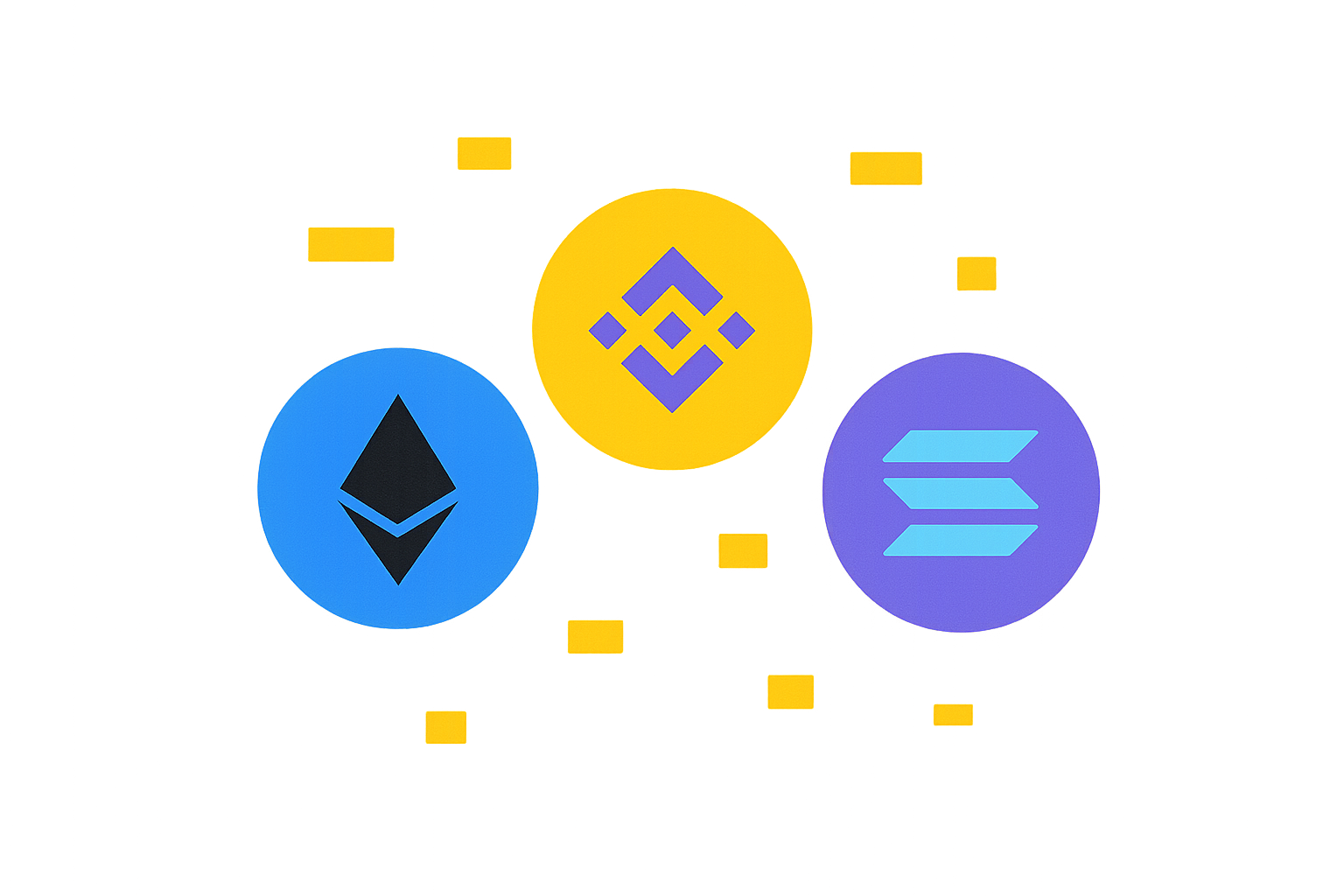
- Ethereum (ERC-20, ERC-721, ERC-1155 standards)
- BNB Chain (BEP-20 standard)
- Polygon (MATIC)
- Solana (SOL)
- Avalanche
- TON
- Waves
Where Token Minting Takes Place
Token minting occurs through various channels and platforms:
- Through smart contracts deployed on blockchain platforms, which automate the creation and distribution of tokens.
- Through NFT marketplaces — decentralized platforms that allow users to mint and trade digital assets.
- On DeFi protocols — decentralized finance platforms that enable users to create and manage tokens as part of financial transactions.
- Through crowdsales, ICOs, and IDOs — initial offering mechanisms where projects launch new tokens to the public.
- In personal wallets with minting support, allowing individual users to create tokens directly from their wallet interfaces.
Conclusion
Minting represents a fundamental technology in the cryptocurrency and blockchain ecosystem. Understanding what token minting is and how it differs from mining helps newcomers navigate the space with confidence and effectively utilize decentralized tools. Whether creating NFTs, participating in DeFi protocols, engaging with DAOs, or launching new tokens, the minting process forms the foundation of these innovative applications.
FAQ
What is Token Minting? What is its basic principle?
Token Minting is the process of creating new digital tokens on a blockchain through smart contracts. It generates new assets in the network, increasing token supply. This differs from mining, which validates transactions and secures the network through computational work.
Token Minting和Mining(挖矿)有什么区别?
Token Minting通过智能合约创建新币,不消耗算力,可随时生成。Mining通过计算力获得币,消耗能源和硬件资源。前者是中心化发行机制,后者是分散式共识机制。
What are some practical application examples of token minting?
Token minting is used in cross-border B2B settlements, supply chain smart payments, and digital currency interactions. These applications improve efficiency and reduce costs significantly.
Who can perform Token Minting? What conditions are required?
Anyone with tokens and smart contract support can perform token minting by paying gas fees. Typically requires specific token standards and contract permissions.
Token Minting会产生什么风险或问题吗?
Token minting can cause severe price volatility and significant losses. Newly minted tokens often experience drastic price swings. Users should carefully assess their risk tolerance and experience level before participating in minting activities.
How does token minting affect the value and supply of cryptocurrencies?
Token minting directly increases cryptocurrency supply. Excessive minting causes oversupply, reducing token value. Controlled minting maintains market equilibrium and supports long-term value sustainability.

Understanding Web3 Wallets: A Comprehensive Guide

Understanding Polygon Blockchain: A Comprehensive Guide

Decentralized Internet: Everything You Need to Know About Web3

Understanding DApps: The Ultimate Guide to Decentralized Applications

Exploring BNB Chain: Advantages and Features for Developers
Understanding NFTs in the Web3 Ecosystem
What is BULLA coin: analyzing whitepaper logic, use cases, and team fundamentals in 2026
What is on-chain data analysis and how does it reveal whale movements and active addresses in crypto?

What is Vodra (VDR) crypto: whitepaper logic, use cases, and fundamentals analysis for 2026
How do cryptocurrency competitors compare in market share, performance, and user adoption in 2026?

What is on-chain data analysis and how does it predict crypto market trends