


What is Layer 2

Ethereum Scaling Solutions
Ethereum currently leads the blockchain space with the highest number of smart contracts and decentralized applications (DApps), the largest value of locked crypto assets, and the greatest transaction volume. The rapid expansion of the cryptocurrency market in recent years has driven exponential growth in on-chain activities such as transfers and contract calls.
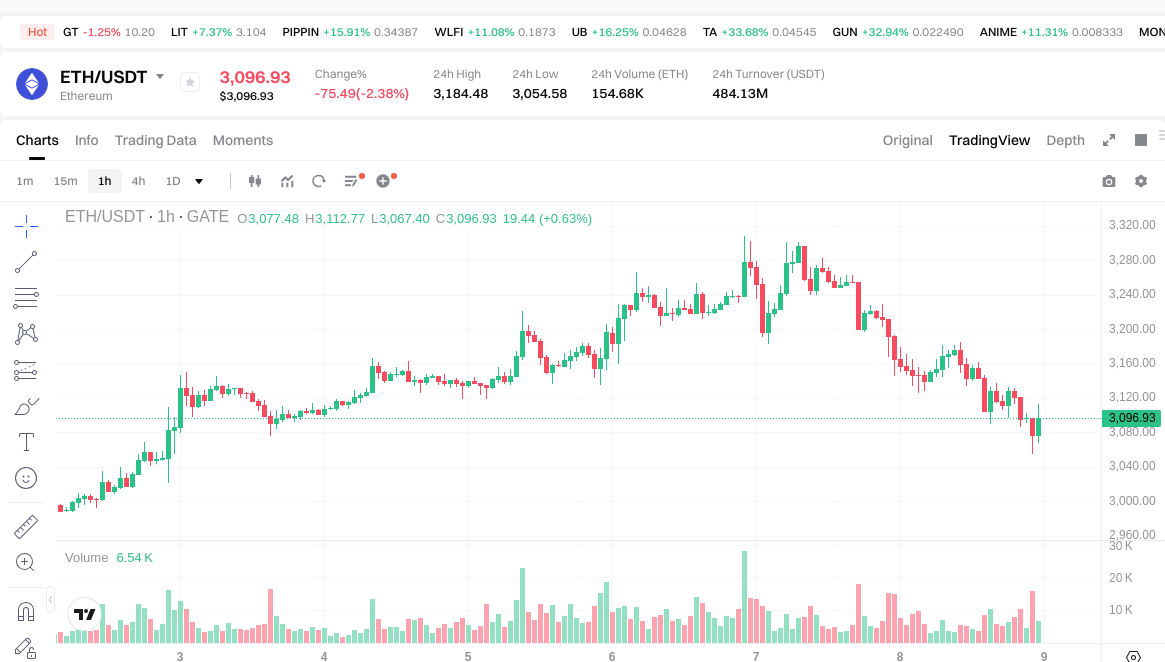 Despite periods of market stagnation, users consistently experience network congestion and high gas fees—issues that continue to seriously undermine the user experience. Ethereum’s scalability challenge remains a top concern within the blockchain community.
Ethereum scaling solutions fall into two primary categories: Layer 1 (L1) and Layer 2 (L2), each taking a unique approach to overcoming network constraints.
Layer 1, often referred to as Ethereum 2.0, is an on-chain upgrade that focuses on shifting the consensus mechanism from Proof of Work (PoW) to Proof of Stake (PoS) and implementing sharding. These architectural upgrades mean individual nodes no longer need to store the entire blockchain, allowing for more efficient use of computational resources. As a result, the network gains greater capacity and improved throughput.
However, the technical complexity and coordination required for such a major upgrade mean that Ethereum 2.0 must be rolled out in carefully staged phases over several years. With no set timeline for completion, Layer 2 scaling solutions have become the immediate focus for developers and market participants seeking near-term improvements.
Layer 2 solutions enhance scalability by processing transactions off-chain, leaving the underlying Ethereum mainnet unchanged. The core concept is to handle the majority of transactions on the Layer 2 network, using Layer 1 only for final settlement and security. This design enables high transaction throughput and lower costs, while upholding the security of the Ethereum mainnet.
To put it simply: if Ethereum is a congested highway, Layer 2 solutions are like elevated expressways or flyovers that help divert traffic away from the bottlenecked main blockchain. These added layers enable faster, smoother transaction processing without compromising the security of the base network.
Key Technologies of Layer 2
Layer 2 technologies have evolved and matured rapidly, resulting in several distinct solutions:
State Channel
State Channels operate much like Bitcoin’s Lightning Network, providing a direct and efficient scaling method. In essence, two parties who transact frequently can open a dedicated off-chain payment channel, enabling multiple transfers between them. The innovation lies in only recording the final settlement on the main blockchain after all channel transactions conclude, dramatically reducing the number of on-chain transactions.
The Raiden Network was Ethereum’s earliest and most notable state channel project, aiming to replicate the Lightning Network’s success on Ethereum. However, this model faced real-world constraints: both parties needed to maintain ongoing relationships and keep funds locked in the channel—often impractical for many use cases. As a result, adoption remained limited, and development has largely stalled.
Plasma
Plasma, one of the first Layer 2 solutions proposed by Ethereum co-founder Vitalik Buterin, offers a novel approach to scaling. Its architecture resembles a sidechain system: it operates independently from Ethereum’s mainnet but maintains security links. Plasma chains process transactions on their own and periodically send compressed block hashes to the mainnet for verification and security.
This method delivers considerable efficiency—hundreds or thousands of transactions can be processed off-chain, while only a few bytes of compressed final transaction data are submitted to the mainnet. Such compression delivers major scalability gains.
However, Plasma’s reliance on honest chain operators and accurate data uploads presents serious challenges. To prevent fraudulent withdrawals, users must wait through a challenge period (usually 7–14 days) before accessing funds, giving others time to spot and challenge dishonest actions. While this security feature is necessary, the extended wait time creates a poor user experience and has limited Plasma’s mainstream adoption.
Rollups
Rollup technology has become the most prominent and widely adopted scaling solution in Ethereum’s ecosystem. Many experts believe the success of Rollups will directly shape Ethereum’s long-term viability as a smart contract platform.
Like Plasma, Rollups process most transactions on Layer 2 infrastructure—but with one key distinction: they record essential transaction data (sender, recipient, amount, and other critical details) directly on Layer 1. This data availability guarantees that all transaction information remains accessible and verifiable on the mainnet, making Rollups significantly more secure than Plasma solutions.
So, how does recording every transaction on Layer 1 actually boost scalability? The answer is advanced data compression. Rollups use tree-based smart contract structures to efficiently track account states, focusing only on transaction records and minimizing redundancy. Signature verification and other heavy computations happen off-chain, so the data sent to the mainnet is highly compressed—reducing requirements by 10–100x without sacrificing security.
To address data consistency and fraud prevention, two main technical paths have emerged: Optimistic Rollup and ZK Rollup, each with its own trade-offs.
Optimistic Rollups operate on a trust model similar to Plasma, “optimistically” assuming all data is valid unless proven otherwise. Fraud proofs and challenges only arise if suspicious activity is detected. Because disputes must be resolved via a challenge process, users currently face a minimum one-week withdrawal delay when moving funds from Layer 2 Optimistic Rollup networks (such as Optimism and Arbitrum) back to Ethereum’s mainnet. This delay, while inconvenient, is vital for security.
ZK Rollups (Zero-Knowledge Rollups) use advanced zero-knowledge proof technology. Here, Layer 1 smart contracts verify batched transactions by checking cryptographic proofs generated on Layer 2. The key advantage: users can withdraw funds almost instantly, with immediate mathematical verification. The core challenge is the significant computational power required to generate these zero-knowledge proofs, increasing operational costs. Projects like zkSync and StarkNet, which are based on ZK Rollup technology, are already live on Ethereum’s mainnet and continue to refine their proof-generation processes.
Closing Thoughts
Rollup technology has emerged as the dominant and most promising Layer 2 scaling solution for Ethereum, with more and more Layer 2 networks successfully deployed and operating. The ecosystem is maturing fast, with advanced cross-chain bridges enabling seamless interaction between various Layer 2 networks and Ethereum’s mainnet.
It’s important to understand that Layer 1 and Layer 2 are not competing solutions; instead, they’re complementary. The future of Ethereum scaling will rely on a multi-layered strategy: Layer 1 upgrades (such as the ongoing Ethereum 2.0 improvements) will strengthen the core network, while Layer 2 solutions will provide immediate scalability and specialized capabilities. Together, these approaches will dramatically increase Ethereum’s processing power, enabling support for next-generation decentralized applications and billions of global users.
FAQ
What is Layer 2? Why is Layer 2 necessary?
Layer 2 is a blockchain scaling solution that reduces transaction costs and boosts both transaction volume and speed by processing transactions off-chain. Since blockchains have inherent scalability limits, Layer 2 solutions break through these barriers to deliver a more efficient transaction experience.
What’s the difference between Layer 2 and Layer 1?
Layer 1 is the main blockchain, responsible for security and final settlement. Layer 2 is a scaling layer built on top of Layer 1 that handles transaction processing to enhance speed and reduce costs. Layer 2 batches and submits transactions to Layer 1 for verification.
What are the main types of Layer 2 solutions? (e.g., Rollup, Plasma, Sidechains, etc.)
Major Layer 2 types include Rollups (Optimistic Rollup and ZK Rollup), Plasma, Sidechains, and State Channels. Rollups are the most mature approach, significantly increasing throughput and lowering fees.
Which Layer 2 projects are most common? (e.g., Arbitrum, Optimism, Polygon, etc.)
Popular Layer 2 projects include Arbitrum, Optimism, Polygon, zkSync, Base, Mantle, MetisDAO, and Starkware. These projects leverage rollup technology to cut transaction costs and improve Ethereum’s throughput and processing speed.
Is Layer 2 secure? What risks exist?
Layer 2 relies primarily on cryptographic security and is generally considered safe. Risks include centralization, smart contract vulnerabilities, cross-chain bridge concerns, and liquidity issues. Users should understand each project’s mechanisms and carefully manage their assets.
How do you make transactions on Layer 2?
On Layer 2, users can transact through off-chain payment channels. Both parties sign messages to execute operations without submitting data to the mainnet, greatly reducing fees and processing times.
What problems does Layer 2 solve for Ethereum?
Layer 2 offloads transactions from the main network, addressing Ethereum’s high transaction volume, network congestion, and slow speeds. It dramatically cuts transaction costs and increases throughput, making the Ethereum ecosystem more efficient.
What’s next for Layer 2 development?
Layer 2 will keep pushing scalability and cost improvements. ZK-Rollups and Optimistic Rollups are the core focus areas. Over time, independent Layer 2 ecosystems will emerge and work in tandem with Layer 1, jointly propelling Ethereum’s growth.

Understanding the Process of Crypto Wrapping
Understanding Decentralized Finance: A Comprehensive Guide

Seamless Cross-Chain Interoperability Solutions

Transforming Web3: Innovations in Blockchain Infrastructure

Layer 2 Scaling Made Easy: Bridging Ethereum to Enhanced Solutions
Understanding Polygon Blockchain: A Comprehensive Guide

What is BULLA coin: analyzing whitepaper logic, use cases, and team fundamentals in 2026

How does MYX token's deflationary tokenomics model work with 100% burn mechanism and 61.57% community allocation?

What Are Derivatives Market Signals and How Do Futures Open Interest, Funding Rates, and Liquidation Data Impact Crypto Trading in 2026?

How do futures open interest, funding rates, and liquidation data predict crypto derivatives market signals in 2026?

What is a token economics model and how does GALA use inflation mechanics and burn mechanisms
