

Search Token/Wallet
Understanding Web3: Exploring the Decentralized Internet Concept
2025-12-25 02:20
Blockchain
DeFi
GameFi
NFTs
Web 3.0
文章評價 : 4
129 個評價
The article explores Web 3.0 as a decentralized internet powered by blockchain, redefining user control over data and privacy. It compares the evolution from Web 1.0's read-only model to Web 2.0's interactive platform, culminating in Web 3.0's user-centered "read-write-own" internet. It addresses privacy, decentralization, and security issues inherent in previous internet eras, offering solutions through dApps, cryptocurrencies, and NFTs. Targeted at crypto investors and tech enthusiasts, it highlights opportunities in DeFi, GameFi, and decentralized social networks, making Web 3.0 essential for understanding future internet interactions.
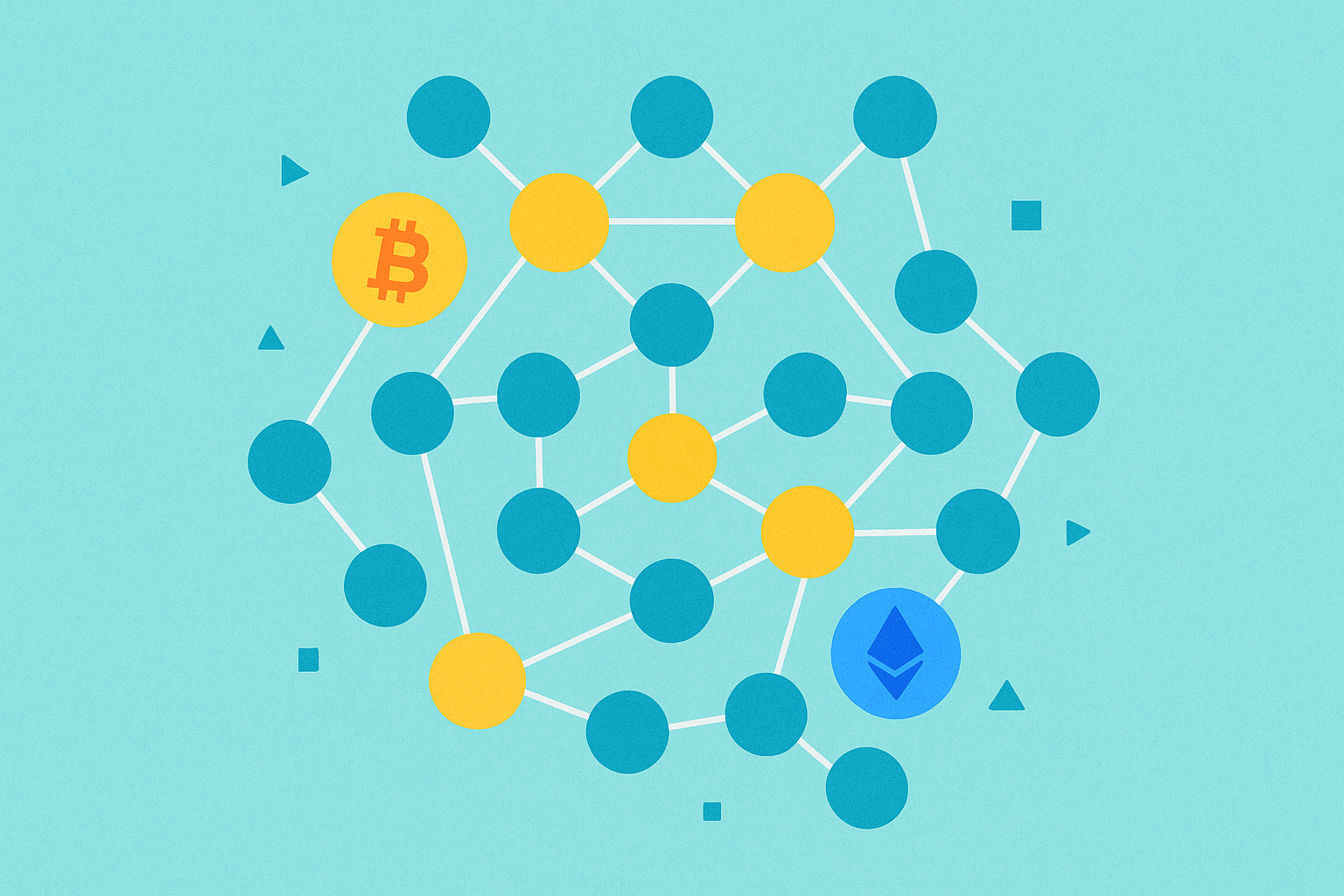
# Web 3.0 Technology: What It Is? Everything You Need to Know About Decentralized Internet
## Web 3.0: Introduction
Web 3.0, commonly referred to as Web3, represents a fundamental shift toward a decentralized internet powered by blockchain technology. This innovative architecture serves as the foundation for diverse decentralized applications (dApps) that operate autonomously without reliance on centralized intermediaries. Unlike its predecessors, Web3 introduces a more transparent and secure approach to accessing online services while protecting user data and privacy without dependence on large technology corporations.
At its core, Web 3.0 redistributes power from major technology companies back to internet users, granting individuals greater control over their personal data and digital security. The dApps that power Web3 operate on public blockchain networks such as Ethereum and encompass a broad spectrum of applications. These range from gaming and social networking platforms to decentralized finance (DeFi) protocols, non-fungible tokens (NFTs), and immersive metaverse experiences. Each of these applications leverages blockchain's inherent properties of transparency, security, and decentralization.
Web 3.0 continues to evolve through ongoing development and refinement of its core technologies and applications. While Web3 has not yet achieved mainstream adoption across all internet sectors, its proponents believe it possesses the transformative potential to challenge dominant technology corporations and establish new standards of transparency, openness, and security in how users interact with and access online services. The term "Web 3.0" was conceptualized by Dr. Gavin Wood, co-founder of Ethereum and [Polkadot](https://dex.gate.com/crypto-wiki/article/what-is-polkadot-dot-fundamentals-whitepaper-logic-use-cases-and-technology-innovation-explained-20251218), in 2014, marking the beginning of this revolutionary vision for the internet's future.
## Previous Eras: Web 1.0 vs. Web 2.0 vs. Web 3.0
### Web 1.0
The earliest iteration of the internet, Web 1.0, functioned primarily as a read-only medium. During this foundational era, which spanned approximately from 1989-1990 to 2004, businesses and organizations established websites to publish static information that users could access and consume. The defining characteristic of Web 1.0 was its unidirectional nature—content flowed from publishers to consumers with minimal opportunity for meaningful user interaction or contribution. There was no genuine framework for online engagement, user-generated content, or dynamic interaction between users and platforms. Web 1.0 essentially served as a digital library where information was centrally published and passively consumed.
### Web 2.0
Beginning in 2004, the internet underwent dramatic transformation with the emergence of social networks and social media platforms. This pivotal shift marked what became known as the "read-write" era of internet history. Web 2.0 fundamentally changed the internet's purpose and function—it transformed online space into a dynamic environment where users could not only access information but also actively participate, create content, and interact with other users and businesses. Platforms like Facebook, Twitter, YouTube, and others became central to how people communicated, shared experiences, and consumed content.
Web 2.0 has persisted from approximately 2004 through the present day. However, this era has increasingly faced scrutiny regarding data privacy concerns and the growing awareness of how personal information is collected, stored, and monetized by major technology corporations. Users have become progressively concerned about data breaches, surveillance, and the unauthorized use of their personal information for targeted advertising and other commercial purposes.
### Web 3.0
Introduced in 2014, Web 3.0 represents the emergence of what is often called the "read-write-own" era of the internet. This paradigm shift introduces a fundamentally different model for data ownership and access, one that operates on decentralized principles rather than centralized control. Web3 คือ an infrastructure built upon blockchain technology, cryptocurrencies, and non-fungible tokens (NFTs)—all specifically engineered to enable decentralized operations, permissionless access, trustless interactions, and enhanced transparency. This architecture fundamentally differs from the centralized models that characterized both Web 1.0 and Web 2.0, offering users genuine ownership and control over their digital assets and personal information.
## How Web3 Solves Problems of Web1 and Web2
### Decentralization
Web 3.0 applications are engineered to operate on blockchain networks, fundamentally changing how user data is managed and controlled. In this decentralized architecture, user information is no longer concentrated in the hands of a single centralized authority. Instead, data is distributed across a network of nodes, eliminating single points of failure and central control. These decentralized applications (dApps) empower users with complete autonomy over their information, enabling them to maintain full custody of their data and making decisions about how and when that data is accessed or shared.
### Permissionless Access
Web 3.0 democratizes access to services in unprecedented ways compared to the centralized model of Web 2.0. On Web3 platforms, users, developers, and organizations operate on equal footing with no hierarchical barriers. Everyone possesses equal rights to participate in creation, innovation, wealth generation, and service utilization on dApps. This permissionless nature eliminates traditional gatekeepers and enables any individual with an internet connection to engage in economic activity, regardless of geographic location, credit history, or institutional affiliation. For example, individuals in developing nations can now access financial services without requiring approval from traditional banking institutions.
### Trustless Interactions
The decentralized platforms inherent to Web3 establish interfaces that operate on trustless principles while maintaining complete transparency. This trustless model functions through cryptographic verification rather than relying on institutional trust or intermediary validation. Incentive systems, structured through tokenomics, are deliberately integrated into operational processes to encourage optimal behavior from all participants. Smart contracts enforce these rules automatically and transparently, removing the possibility of manipulation or deviation from agreed-upon terms. This innovation fundamentally changes how people can confidently interact and transact without requiring trust in central authorities.
### Decentralized Payments in Cryptocurrency
Web3 utilizes cryptocurrencies as the economic engine for transactions. Cryptocurrency-based payments on [Web 3.0](https://dex.gate.com/crypto-wiki/article/understanding-web-3-0-a-comprehensive-guide-20251215) services offer significant advantages: transactions execute more rapidly, transaction fees remain substantially lower than traditional systems, and transfers occur directly between parties in a peer-to-peer fashion without intermediary involvement. This feature dramatically expands Web3's accessibility to the global population of unbanked and underbanked individuals who lack access to conventional banking infrastructure, thereby promoting financial inclusion on a worldwide scale.
### Security and Privacy
The blockchain technology underlying Web3 delivers robust security through advanced cryptographic encryption and immutable record-keeping. Transactions recorded on blockchain cannot be retroactively altered or deleted, creating a permanent audit trail. Smart contracts used to program dApps additionally provide enhanced code auditability and transparency, allowing users and developers to verify exactly how these programs function. This transparency, combined with cryptographic security, creates trustless systems where security is embedded within the technical architecture rather than dependent on institutional promises. The result is security and privacy protection woven into the fundamental design of Web 3.0 solutions.
### Scalability
Web 3.0 has been deliberately architected to support increasingly complex operations at higher scales. It seamlessly integrates with diverse systems and technologies, creating interoperable networks where different blockchain platforms and applications can communicate and exchange value efficiently. This scalability enables Web3 to expand functionality without sacrificing performance or security.
### Responsive and Intuitive User Experience
Web 3.0 functions in conjunction with cutting-edge technologies including artificial intelligence (AI), machine learning (ML), and natural language processing (NLP). These integration technologies enable Web 3.0 applications to understand user needs intelligently and respond to interactions in sophisticated, context-aware ways. As these technologies mature and integrate more deeply with blockchain infrastructure, Web3 applications become increasingly user-friendly and responsive to user preferences and behavior patterns.
## Opportunities in Web 3.0
### Decentralized Finance (DeFi)
Decentralized Finance represents one of Web3's most widely adopted use cases. DeFi protocols enable users to conduct financial transactions—including trading, lending, borrowing, and earning yields—without reliance on centralized financial intermediaries. Users maintain direct control over their assets through self-custody wallets and can access financial services continuously without restrictions imposed by traditional financial institutions. Examples include decentralized exchange protocols like [Uniswap](https://dex.gate.com/crypto-wiki/article/what-is-uniswap-fundamentals-whitepaper-logic-use-cases-technical-innovation-and-team-background-analysis-20251222), lending protocols like [Aave](https://dex.gate.com/crypto-wiki/article/what-is-aave-s-core-whitepaper-logic-and-how-does-its-flash-loan-innovation-drive-defi-adoption-20251216), and yield farming opportunities that generate passive income.
### Non-Fungible Tokens (NFTs)
Non-fungible tokens possess extraordinary potential to bring Web3 technology into mainstream consciousness. NFTs represent unique, verifiable digital assets that can represent ownership of digital or physical items. Their applications range from tokenizing real-world assets—including real estate, art, intellectual property, and commodities—into blockchain-verifiable certificates, to providing robust incentive mechanisms that reward content creators more fairly than traditional platforms. NFTs enable creators to retain ownership rights and receive direct compensation while maintaining control over their intellectual property.
### [GameFi](https://dex.gate.com/crypto-wiki/article/introduction-to-gamefi-a-beginner-s-guide-to-blockchain-gaming-20251212) (Play-to-Earn)
The Play-to-Earn (P2E) movement has played a crucial role in attracting substantial numbers of new users into the cryptocurrency industry. Games built on blockchain infrastructure allow players to earn cryptocurrency and NFT rewards through gameplay, creating genuine economic value. This model has significantly increased public awareness and understanding of Web3 technology by introducing it through engaging, interactive gaming experiences that provide tangible financial incentives.
### Metaverse
Blockchain-based metaverses create immersive virtual worlds where users own digital assets, property, and avatars as NFTs. Leading metaverse projects offer revolutionary methods for interaction and economic participation in virtual environments. Users can own virtual real estate, create businesses, participate in social experiences, and maintain genuine ownership rights to their digital possessions and creations.
### Decentralized Social Networks
Decentralized social networks built on Web3 fundamentally reform data ownership and usage rights. Unlike Web 2.0 platforms that claim proprietary rights over user data and monetize that information through targeted advertising and data sales, Web3 social networks explicitly prevent such appropriation. Users retain ownership of their content and personal information, deciding independently how their data may be used while benefiting directly from any monetization of their contributions.
### Decentralized Data Storage
Web3 offers secure, decentralized cloud storage services where data is encrypted, continuously available, cost-effective, and readily accessible. Projects utilizing distributed storage technologies provide alternatives to centralized cloud storage, eliminating single points of failure and providing users enhanced privacy and data sovereignty.
### Decentralized Identity
Decentralized identity solutions through Web3 wallets and authentication protocols enable users to establish verifiable digital identities that grant access to all decentralized applications within the ecosystem. Users control their identity information, can verify credentials without revealing unnecessary personal details, and maintain privacy while proving their identity across multiple services.
## The Importance of Web3 for Crypto Investors
Web 3.0 operates on blockchain technology—the identical infrastructure that supports cryptocurrency. Digital currencies and crypto assets such as NFTs function as financial incentives within the Web3 ecosystem, creating economic opportunities and value capture mechanisms for participants and investors.
Web3 strategically uses digital assets to distribute governance power. Token holders gain voting rights within Decentralized Autonomous Organizations (DAOs) and participate directly in determining how various dApps operate and evolve. This governance structure enables community-driven development aligned with user interests rather than corporate objectives. For crypto investors, understanding and embracing Web 3.0 is strategically important because the ecosystem's expansion directly correlates with cryptocurrency adoption rates and the increasing valuation of blockchain-based assets.
## Conclusion
Web 3.0 represents a transformative evolution in internet architecture, moving from the read-only model of Web 1.0 and the read-write model of Web 2.0 toward a read-write-own paradigm that genuinely empowers users. Through decentralization, permissionless access, trustless interactions, cryptocurrency payments, and enhanced security, Web3 addresses fundamental problems inherent in previous internet iterations. The technology's capacity to incentivize participation through financial rewards, enable decentralized asset ownership, and implement community governance creates opportunities for more accountable and comprehensive applications.
Growing concerns and disappointment with current internet services continue to accelerate, particularly regarding data privacy, corporate surveillance, and the misuse of personal information. Web 3.0 offers consumers and creators the opportunity to reclaim control from centralized power structures that currently dominate digital services and online applications. As Web3 technology matures and adoption expands across diverse sectors, it possesses the potential to fundamentally restructure how individuals interact with the internet and each other, placing genuine power and control directly into users' hands. The foundational principles and emerging applications of Web3 suggest it will likely play an increasingly central role in shaping the internet's future evolution.
## FAQ
### What is Crypto Web3?
Web3 is the next evolution of the internet built on blockchain technology, enabling decentralized applications and digital ownership. It uses cryptocurrency wallets as your online identity, giving users control over their data and assets in a peer-to-peer network.
### Web 3.0 แตกต่างจาก Web 2.0 อย่างไร
Web 3.0 uses decentralized blockchain technology and gives users data ownership and control, unlike Web 2.0 which is centralized. Web 3.0 enables peer-to-peer transactions, smart contracts, and eliminates intermediaries for greater transparency and security.
### What is a Web3 wallet?
A Web3 wallet is a digital wallet that enables users to manage digital assets and interact with decentralized applications (DApps) on blockchain networks. It differs from traditional digital wallets by providing direct control over your private keys and cryptocurrency holdings.
### What are the 3 important components of Blockchain Trilemma?
Blockchain Trilemma consists of three essential components: Decentralization (distribution of control), Security (protection against attacks), and Scalability (transaction throughput). Current blockchains struggle to fully optimize all three simultaneously, making this a fundamental challenge for network developers.
* 本文章不作為 Gate.com 提供的投資理財建議或其他任何類型的建議。 投資有風險,入市須謹慎。
相關文章

Top Decentralized Exchange Aggregators for Optimal Trading
Exploring top DEX aggregators in 2025, this article highlights their role in enhancing crypto trading efficiency. It addresses challenges faced by traders, such as finding optimal prices and reducing slippage, while ensuring security and ease of use. A practical overview of 11 leading platforms is provided, with guidance on selecting the right aggregator based on trading needs and security features. Designed for crypto traders seeking efficient and secure trading solutions, the article emphasizes the evolving benefits of using DEX aggregators in the DeFi landscape.
2025-12-24
Understanding Web3 Wallets: A Comprehensive Guide
This article provides a comprehensive guide to understanding Web3 wallets, highlighting their significance in securely managing and trading digital assets. It delves into the infrastructure of these wallets, their compatibility with decentralized applications, and their empowerment of users through non-custodial control. Targeted at cryptocurrency traders and investors, the article addresses the need for secure storage solutions and explores the variety of Web3 wallets available, including hardware and software options. It also discusses Web3's advanced internet framework, security features, and benefits, making it essential reading for anyone navigating the decentralized digital economy.
2025-12-22
What is Avalanche (AVAX): A Complete Fundamentals Analysis of Whitepaper Logic, Use Cases, and Technical Innovation
This article offers an in-depth analysis of Avalanche (AVAX) covering its three-chain architecture innovation, token utility, ecosystem expansion, and competitive positioning. It explores how Avalanche enables high transaction throughput, efficient governance, and diverse use cases in DeFi, RWA, and gaming sectors. Targeted at developers and blockchain enthusiasts, the article details the strategic roadmap and contrasts Avalanche's performance against rivals like Solana and Ethereum. Key themes include AVAX's versatile design and institutional adoption, providing essential insights for understanding this emerging blockchain platform.
2025-12-21
Understanding Governance Tokens: A Comprehensive Guide
The article "Understanding Governance Tokens: A Comprehensive Guide" explores the significance of governance tokens in decentralized decision-making within the cryptocurrency ecosystem. It explains how these tokens empower users with voting rights, facilitating democratic participation and equitable governance in blockchain projects. The guide distinguishes between governance tokens and utility tokens, providing insights into their unique roles and functions. Readers learn about the operational mechanics, pros and cons, and trading platforms like Gate for acquiring governance tokens. Additionally, the article provides real-world examples such as Uniswap, Aave, and MakerDAO to illustrate governance tokens in action.
2025-12-19
Complete Guide to Blockchain Gas Fees in Web3
This article provides a comprehensive guide to blockchain gas fees, a crucial aspect of Web3 transactions affecting costs, processing times, and user experiences. It details what gas fees are, their calculations, and the role of different tokens, helping users navigate transaction challenges like failures due to insufficient funds or network congestion. The piece also explores innovative solutions like Instant Gas and token-based reward systems, ensuring seamless interaction on major blockchain networks. Ideal for blockchain users seeking to optimize transaction success rates, the guide underscores the importance of understanding gas fees in ensuring efficient Web3 participation.
2025-12-19
Blockchain-Powered Music Royalty Distribution: Avalanche Drives the Digital Transformation
See how Avalanche is transforming music royalty payments with blockchain. Artists receive instant payouts, full transparency, and direct access without intermediaries. Record Finance and Avalanche are reshaping the music industry through innovative Web3 solutions and USDC stablecoins. The future of creative finance begins now.
2025-12-27
猜您喜歡
What is BULLA coin: analyzing whitepaper logic, use cases, and team fundamentals in 2026
BULLA coin introduces decentralized accounting and on-chain data management innovation built on BNB Smart Chain, eliminating intermediaries while ensuring real-time transaction verification. The platform addresses critical gaps in cryptocurrency infrastructure by embedding accounting logic directly into smart contracts, enabling transparent audit trails and regulatory compliance. Real-world applications include seamless transaction imports across multiple exchanges, comprehensive crypto portfolio tracking, and secure record-keeping for investors. Trade import tools enhance user experience by automating data categorization and consolidation. Founded in 2021 by blockchain architect Benjamin with support from experienced fintech designers and engineers, BULLA Networks demonstrates active development momentum with continuous smart contract iterations through early 2026. The 2026-2027 strategic roadmap prioritizes network infrastructure expansion and enhanced security protocols, positioning BULLA as a robust decen
2026-02-08
What is on-chain data analysis and how does it reveal whale movements and active addresses in crypto?
On-chain data analysis reveals cryptocurrency market dynamics by examining active addresses and transaction metrics that expose whale movements and investor behavior. This comprehensive guide explores how blockchain data serves as a critical market indicator, demonstrating the correlation between large holder activities and price movements—such as FLOKI's 950% surge in whale transactions. The article covers whale movement tracking, holder distribution patterns showing 73.47% concentration among major stakeholders, and on-chain fee trends as cycle indicators. Essential metrics include active addresses reflecting genuine network participation, transaction volumes revealing strategic positioning, and network congestion patterns during market cycles. By tracking these interconnected indicators through platforms like Glassnode and Gate, investors and traders can identify market sentiment shifts, anticipate price movements, and distinguish institutional activity from retail participation, making on-chain analysis i
2026-02-08
What is Vodra (VDR) crypto: whitepaper logic, use cases, and fundamentals analysis for 2026
Vodra (VDR) is a decentralized blockchain platform revolutionizing creator economics through AI-powered infrastructure and transparent compensation systems. The project addresses the creator economy's core challenge—unfair intermediary-controlled monetization—by enabling direct audience-to-creator transactions without traditional gatekeepers. VDR's whitepaper establishes a dual-layer architecture combining artificial intelligence for content assistance with blockchain verification for security and transparency. The platform's real-world applications extend from content monetization to DeFi ecosystem integration, real-world asset tokenization, and AI-driven automation by 2026. Founded by former Google engineer Yu Hu with backing from prominent investors like Dragonfly and The Spartan Group, Vodra positions itself at the intersection of Web3 infrastructure and creator empowerment. Key acquisition channels include Gate and other decentralized exchanges, with development roadmaps targeting API standardization, en
2026-02-08
How do cryptocurrency competitors compare in market share, performance, and user adoption in 2026?
This comprehensive analysis examines how major cryptocurrency competitors diverge across market share, performance, and user adoption in 2026. Bitcoin maintains dominance above 60% while institutional investors adopt core-satellite portfolios allocating 60-80% to Bitcoin and 15-25% to Ethereum. Layer-2 solutions command a decisive 40% market share advantage over legacy networks, with Solana leading at 1,133 TPS and driving institutional TVL beyond $50 billion. Regional adoption varies dramatically: Asia-Pacific accelerates at 11.6% CAGR driven by digital transformation, while North America concentrates 75% institutional users. Trading activity concentrates on Gate and leading platforms, with top five cryptocurrencies maintaining 61% combined market share. Understanding these divergent trajectories is essential for investors navigating competitive positioning and institutional capital flows.
2026-02-08
What is on-chain data analysis and how does it predict crypto market trends
This comprehensive guide explores on-chain data analysis as a foundational tool for predicting cryptocurrency market trends. The article examines how blockchain metrics—including active addresses, transaction volume, and network health—reveal genuine market sentiment beyond price action alone. Key sections analyze whale movements as reliable leading indicators of market direction, demonstrating how large holder distribution patterns expose institutional positioning before broader price shifts occur. The guide further demonstrates how gas fee trends and network congestion serve as real-time sentiment gauges across different blockchain architectures. By tracking these on-chain indicators on platforms like Gate, traders can identify market opportunities before mainstream recognition. The article emphasizes that while on-chain analysis provides measurable predictive value through transaction flow analysis and holder behavior patterns, it functions best as a complementary tool alongside other market analysis metho
2026-02-08
How Does VeChain (VET) Community and Ecosystem Activity Compare to Other Layer 1 Cryptocurrencies in 2026?
This comprehensive analysis examines VeChain's community and ecosystem activity relative to competing Layer 1 blockchains in 2026. The article evaluates VeChain's multimillion-follower social infrastructure across Discord and Telegram, extensive developer ecosystem featuring 5,000+ DApps, and robust on-chain metrics with 2.5 million daily active addresses. Key findings highlight VeChain's enterprise-grade differentiation through supply chain solutions, institutional partnerships with Fortune 500 organizations, and proven real-world applications. While VeChain demonstrates lower developer numbers than Ethereum and Solana, its focused positioning in enterprise adoption, regulatory compliance through MiCA alignment, and strategic partnerships with DNV and Boston Consulting Group establish competitive advantages in B2B blockchain adoption, positioning VET as a distinctive Layer 1 leader within enterprise-centric ecosystems.
2026-02-08