LCP_hide_placeholder
fomox
Search Token/Wallet
/

Understanding Nosana (NOS): Exploring Distributed GPU Computing in Web3
2025-12-22 12:38
AI
Crypto staking
DePIN
Solana
Web 3.0
Article Rating : 4
169 ratings
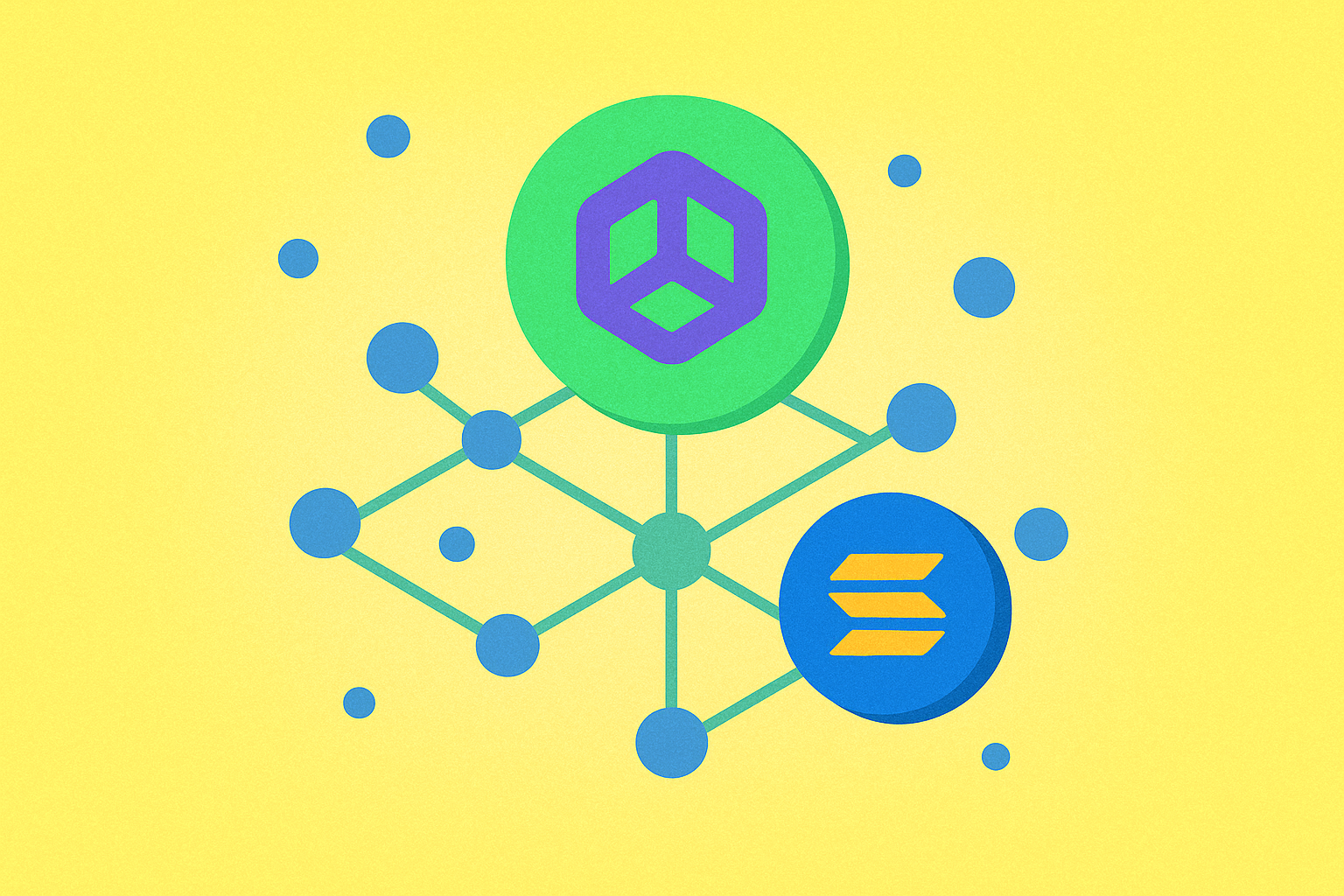
Understanding Nosana (NOS) explores the innovative decentralized GPU grid, addressing the global AI computing resource shortage by leveraging the Solana network. The article details Nosana's solution offering cost-effective GPU access, utilizing NOS tokens for transactions and rewards, with staking benefits for participants, reinforcing community engagement. It identifies challenges in AI inference due to GPU scarcity, proposing Nosana's blockchain-based marketplace as the key solution. Ideal for organizations and developers seeking scalable and affordable computing power, the text enhances keyword density for quick scanning and effective comprehension.
Understanding Nosana (NOS): Exploring Distributed GPU Computing in Web3

Nosana: Powering AI Revolution Through GPU Computing

Overview of AI Computing Challenges

The global artificial intelligence phenomenon has created unprecedented demand for computing resources, particularly for AI inference tasks. As organizations worldwide seek to train, test, and deploy their AI models, the need for specialized hardware has reached critical levels. The primary bottleneck in this process is the severe shortage of Graphics Processing Units (GPUs), which are essential for executing AI inference workloads efficiently.

This GPU scarcity has significant economic implications. As demand continues to outpace supply, the costs associated with AI inference are escalating rapidly. Organizations face mounting expenses when attempting to access the computing power necessary for their projects. The situation becomes more acute as AI models grow increasingly sophisticated, requiring greater computational resources and consequently driving costs to even higher levels. Without alternative solutions, the expense of AI infrastructure could become prohibitively expensive for many projects and organizations.

Nosana Crypto's Decentralized Solution

Nosana crypto represents an innovative approach to solving the AI computing resource crisis through the convergence of blockchain technology and artificial intelligence. Operating on the Solana network, Nosana has developed a decentralized GPU grid that fundamentally reimagines how computing power is accessed and distributed within the AI ecosystem.

The platform functions as a bridge between GPU owners with idle computing hardware and AI projects requiring computational resources. By leveraging blockchain technology, Nosana crypto creates a transparent, efficient, and cost-effective marketplace for computing power. Users can conveniently rent GPU resources for AI inference at significantly reduced costs compared to traditional centralized providers. The decentralized nature of the grid ensures that no single entity controls the resource pool, promoting fairness, availability, and competitive pricing for all participants.

The NOS Token Ecosystem

The NOS token serves as the foundational currency within the Nosana crypto ecosystem, enabling the economic mechanisms that drive platform participation. This utility token facilitates the exchange of value between those seeking computing resources and those providing them.

AI users and projects utilize NOS tokens to purchase computing power from the decentralized GPU grid. This token-based payment system ensures transparent pricing and streamlined transactions within the network. Simultaneously, GPU owners who operate nodes on the Nosana platform receive NOS token rewards in exchange for providing their computing resources. This dual incentive structure creates a self-sustaining economic model where both supply and demand sides are motivated to participate actively in the network.

Staking and Rewards Mechanism

Beyond its primary function as a payment medium, the NOS token also enables passive income opportunities through staking. Network participants can lock their NOS tokens in the platform's staking mechanism to earn additional rewards. This staking feature provides long-term holders with a method to generate yield on their holdings while simultaneously contributing to network security and stability.

The staking and rewards mechanism incentivizes continued network participation and token holding, creating a more stable economic environment. By offering rewards to stakers, Nosana crypto aligns the interests of token holders with the long-term success and security of the platform. This structure encourages community members to maintain their participation and investment in the ecosystem over extended periods.

Conclusion

Nosana crypto represents a significant innovation in addressing the critical GPU resource shortage that threatens to impede AI development and deployment globally. By combining blockchain technology with a decentralized GPU grid architecture on the Solana network, the platform provides a scalable, cost-effective alternative to traditional centralized computing resources. The NOS token ecosystem creates balanced incentives for both resource consumers and providers, while staking mechanisms offer additional value to network participants. This comprehensive approach positions Nosana crypto as a pivotal solution in democratizing access to computing power and enabling the continued evolution of the artificial intelligence revolution.

FAQ

What is the nosana coin?

The Nosana coin, or $NOS, is the native cryptocurrency of the Nosana Network, a decentralized GPU grid that rewards contributors with tokens for providing computing power to support AI inference.

What is Nosana crypto price prediction?

Nosana (NOS) is predicted to trade between $0.1530 and $0.2165 in the next year, based on current market trends and technical analysis. These forecasts suggest potential growth opportunities for investors monitoring the platform.

Where can I buy a Nosana token?

You can purchase Nosana tokens through decentralized exchanges (DEX) and Web3 wallets. Nosana is available on various DEX platforms, enabling you to trade directly from your crypto wallet with competitive trading volume.

What is the circulating supply of Nosana?

The circulating supply of Nosana is 83,400,000 NOS tokens. This represents the amount of tokens currently available and circulating in the market as of the latest data.

What is Nosana and how does it work?

Nosana is a decentralized GPU marketplace built on Solana that connects AI developers with idle computing power. Users pay with NOS tokens to run AI inference jobs, while hardware providers earn rewards for sharing their GPU resources. It enables cost-efficient AI computation through a decentralized infrastructure model.

Is Nosana a good investment and what are the risks?

Nosana offers strong growth potential in the GPU computing sector with increasing adoption. Key risks include market volatility, competition, and regulatory uncertainty. Success depends on your risk tolerance and investment horizon.
* The information is not intended to be and does not constitute financial advice or any other recommendation of any sort offered or endorsed by Gate.

Share

Content

Overview of AI Computing Challenges

Nosana Crypto's Decentralized Solution

The NOS Token Ecosystem

Staking and Rewards Mechanism

Conclusion

FAQ

Related Articles
What is the Current Market Overview of Virtual Protocol (VIRTUAL) in 2025?

What is the Current Market Overview of Virtual Protocol (VIRTUAL) in 2025?

The article provides a comprehensive analysis of Virtual Protocol (VIRTUAL) market dynamics in 2025, highlighting its significant position in blockchain gaming with a market cap of $475.68 million, ranking within the top 25 cryptocurrencies. It discusses the protocol's unique AI integration in gaming, substantial growth rates, and robust market adoption, despite recent volatility. With a circulating supply milestone of 656.08 million tokens, the article covers VIRTUAL's strategic tokenomics and trading activity, including a notable $13.56 million 24-hour volume. It is essential for investors and analysts interested in crypto trends and AI gaming developments.
2025-11-05
Understanding Crypto Token Basics for Beginners

Understanding Crypto Token Basics for Beginners

The article "Understanding Crypto Token Basics for Beginners" explores the intriguing world of $GROK, a memecoin inspired by Elon Musk’s Grok AI program. It details $GROK's emergence, objectives, operational mechanics, and market performance. Highlighting $GROK's strengths and potential risks, the article serves as a guide for potential investors interested in capitalizing on the intersection of memecoin culture, AI advancements, and social media dynamics. Readers will gain insights into $GROK's market strategy, investment considerations, and its unique position amid evolving digital currencies.
2025-12-21
Exploring the Integration of AI in Web3 Applications

Exploring the Integration of AI in Web3 Applications

The article delves into the integration of AI in Web3 applications, focusing on the innovative platform, Grass, which monetizes unused internet bandwidth to aid AI model development. It outlines Grass's operational mechanics, reward system for node operators, and the role of the GRASS token within the ecosystem. Readers will learn how to easily access and benefit from Grass, incentivizing personal and network growth. Key topics include bandwidth monetization, AI empowerment, and decentralized platforms, providing value to tech enthusiasts and users seeking passive income through modern internet solutions.
2025-10-31
# What is Token Economics Model: A Complete Guide to Allocation, Inflation, Burn Mechanisms & Governance Rights

# What is Token Economics Model: A Complete Guide to Allocation, Inflation, Burn Mechanisms & Governance Rights

# Article Overview **What is Token Economics Model: A Complete Guide to Allocation, Inflation, Burn Mechanisms & Governance Rights** This comprehensive guide explores token economics fundamentals through Bittensor's TAO model, examining how fair allocation, deflationary mechanics, and governance integration create sustainable cryptocurrency ecosystems. Discover TAO's merit-based distribution across miners, validators, and subnet operators; understand the 50% supply halving strategy that enhances scarcity; learn how Dynamic TAO empowers subnet autonomy through liquidity pool backing; and grasp governance rights mechanisms enabling token holders' protocol participation. Whether you're a crypto investor evaluating project sustainability on Gate, a developer designing tokenomics, or a community participant seeking ecosystem understanding, this guide addresses critical questions about supply caps, vesting schedules, inflation balance, and long-term value preservation. Master the complete framework transforming t
2026-01-01
What is Bittensor (TAO) whitepaper: core logic, use cases, and technical innovation explained

What is Bittensor (TAO) whitepaper: core logic, use cases, and technical innovation explained

Bittensor (TAO) is a decentralized artificial intelligence protocol that revolutionizes AI model development through blockchain-based orchestration and the innovative Yuma Consensus Algorithm. The network operates 125+ active subnets specializing in data processing, natural language processing, and image recognition, enabling composable AI applications across multiple domains. Bittensor's technical architecture evolved from centralized Yuma Consensus to Dynamic TAO (DTAO), introducing subnet-level token incentives that distribute rewards based on performance and adoption rather than predetermined criteria. Validators stake TAO tokens to assess model quality, while miners earn rewards for genuine AI contributions, creating a market-driven ecosystem. The founding team's expertise attracted institutional validation, culminating in Grayscale's December 2025 spot ETF filing, signaling confidence in Bittensor's sustainable fee revenue model and decentralized AI infrastructure vision.
2026-01-18
Efficient AI Tools for Automated Crypto Trading

Efficient AI Tools for Automated Crypto Trading

Efficient AI Tools for Automated Crypto Trading explores how AI-powered bots optimize cryptocurrency trading, enhancing speed and eliminating emotional bias. This guide reviews the top nine AI trading platforms, including features, costs, and potential benefits. Designed for traders seeking automation, the article details AI functionalities like pattern recognition, execution speed, and adaptation to market changes. It serves as a resource for beginners and experienced traders, emphasizing the importance of careful bot configuration and monitoring for success. Key platforms like Gate provide versatile AI solutions tailored to diverse trading needs.
2025-12-04
Recommended for You
What is BULLA coin: analyzing whitepaper logic, use cases, and team fundamentals in 2026

What is BULLA coin: analyzing whitepaper logic, use cases, and team fundamentals in 2026

BULLA coin introduces decentralized accounting and on-chain data management innovation built on BNB Smart Chain, eliminating intermediaries while ensuring real-time transaction verification. The platform addresses critical gaps in cryptocurrency infrastructure by embedding accounting logic directly into smart contracts, enabling transparent audit trails and regulatory compliance. Real-world applications include seamless transaction imports across multiple exchanges, comprehensive crypto portfolio tracking, and secure record-keeping for investors. Trade import tools enhance user experience by automating data categorization and consolidation. Founded in 2021 by blockchain architect Benjamin with support from experienced fintech designers and engineers, BULLA Networks demonstrates active development momentum with continuous smart contract iterations through early 2026. The 2026-2027 strategic roadmap prioritizes network infrastructure expansion and enhanced security protocols, positioning BULLA as a robust decen
2026-02-08
How does MYX token's deflationary tokenomics model work with 100% burn mechanism and 61.57% community allocation?

How does MYX token's deflationary tokenomics model work with 100% burn mechanism and 61.57% community allocation?

This article examines MYX token's innovative deflationary tokenomics, featuring a distinctive 61.57% community allocation and 100% burn mechanism. The community-focused distribution empowers token holders through MYX DAO governance while ensuring value flows back to ecosystem participants. The 100% burn mechanism systematically removes node-generated revenue from circulation, reducing the total supply from one billion tokens and creating genuine scarcity. This supply-driven deflation counters inflation pressures and strengthens long-term holder value without requiring external demand. The combination of broad community distribution and aggressive token elimination creates sustainable deflationary economics. Ideal for investors seeking to understand how MYX Finance aligns community interests with protocol success through structural value preservation and decentralized governance mechanisms on Gate exchange.
2026-02-08
What Are Derivatives Market Signals and How Do Futures Open Interest, Funding Rates, and Liquidation Data Impact Crypto Trading in 2026?

What Are Derivatives Market Signals and How Do Futures Open Interest, Funding Rates, and Liquidation Data Impact Crypto Trading in 2026?

This comprehensive guide decodes cryptocurrency derivatives market signals essential for 2026 trading success. Learn how futures open interest, funding rates, and liquidation data—such as ENA's $17 billion contract volume and $94 million daily position closures—reveal market sentiment and institutional positioning. The article explains how long-short ratios and liquidation heatmaps identify reversal opportunities, while options imbalance signals indicate smart money accumulation strategies. Discover why exchange outflows and funding rate extremes precede major price movements. From analyzing $46.45M ENA outflows to understanding leverage risks, this resource equips traders with actionable intelligence for predicting market turning points. Perfect for beginners and experienced traders leveraging Gate's analytics tools to navigate increasingly complex derivatives markets with informed entry and exit strategies.
2026-02-08
How do futures open interest, funding rates, and liquidation data predict crypto derivatives market signals in 2026?

How do futures open interest, funding rates, and liquidation data predict crypto derivatives market signals in 2026?

This article explores how three critical derivatives metrics—open interest exceeding $20 billion, funding rates shifting positive, and liquidation volume declining 30%—predict crypto derivatives market signals in 2026. The guide reveals institutional participation driving market maturation while positive funding rates signal strengthened bullish momentum. Long-short ratio stabilization at 1.2 with put-call ratio below 0.8 demonstrates sophisticated hedging strategies on Gate and other platforms. Reduced liquidation volumes indicate improved risk management and market resilience. By analyzing how these indicators combine—measuring position sizing, sentiment extremes, and forced selling pressure—traders gain precise tools for identifying trend reversals, leverage exhaustion, and market turning points with 55-65% AI-driven accuracy for 2026.
2026-02-08
What is a token economics model and how does GALA use inflation mechanics and burn mechanisms

What is a token economics model and how does GALA use inflation mechanics and burn mechanisms

This article explores GALA's innovative token economics model, examining how inflation mechanics and burn mechanisms create sustainable ecosystem growth. The guide covers GALA token distribution through 50,000 Founder's Nodes requiring 1 million GALA for 100% daily rewards, establishing long-term community participation. A dual-mechanism approach pairs controlled inflation with strategic annual supply reduction to establish deflationary pressure. The burn mechanism, powered by 100% transaction fee burning on GalaChain combined with NFT royalty enforcement averaging 6.1%, creates continuous supply reduction while incentivizing creator participation. Governance utility empowers node holders to vote on game launches through consensus mechanisms, transforming GALA holders into active stakeholders. Perfect for investors and ecosystem participants seeking to understand how GALA balances token scarcity with ecosystem vitality through integrated economic incentives and community governance on Gate.
2026-02-08
What is on-chain data analysis and how does it reveal whale movements and active addresses in crypto?

What is on-chain data analysis and how does it reveal whale movements and active addresses in crypto?

On-chain data analysis reveals cryptocurrency market dynamics by examining active addresses and transaction metrics that expose whale movements and investor behavior. This comprehensive guide explores how blockchain data serves as a critical market indicator, demonstrating the correlation between large holder activities and price movements—such as FLOKI's 950% surge in whale transactions. The article covers whale movement tracking, holder distribution patterns showing 73.47% concentration among major stakeholders, and on-chain fee trends as cycle indicators. Essential metrics include active addresses reflecting genuine network participation, transaction volumes revealing strategic positioning, and network congestion patterns during market cycles. By tracking these interconnected indicators through platforms like Glassnode and Gate, investors and traders can identify market sentiment shifts, anticipate price movements, and distinguish institutional activity from retail participation, making on-chain analysis i
2026-02-08