


Token Minting: The Definitive Beginner’s Guide

Token Minting Explained in Plain Language
Token minting refers to the process of generating a new cryptocurrency or digital asset on a blockchain. In simple terms, minting is like digitally striking coins—it's the official issuance of tokens into circulation. If you’ve ever wondered “what is token minting, in plain language”, think of it this way: someone creates a new digital coin and permanently records its details on the blockchain. That’s what minting is all about.
Unlike traditional money printing, token minting happens in a decentralized environment where every transaction is logged on a distributed ledger. This setup guarantees transparency, security, and eliminates the risk of counterfeiting. Each minted token is assigned a unique identifier and becomes an integral part of the blockchain ecosystem.
Core Concepts of Token Minting
Token minting (from the English word minting) means creating a new token on a blockchain network using smart contracts or built-in platform mechanisms. Tokens produced through minting can be of several types:
Fungible Tokens are digital assets that are completely interchangeable and identical, so they can be traded freely. Examples include cryptocurrencies on Ethereum (ERC-20 standard), BNB Chain (BEP-20), and other tokens within DeFi protocols. Each fungible token has the same value and attributes.
Non-Fungible Tokens (NFTs) are unique digital assets, each with its own distinct characteristics. NFTs represent digital art, collectibles, virtual real estate, gaming items, and other one-of-a-kind objects. Every NFT has a unique identifier and metadata, making it irreplaceable.
The minting process involves creating a blockchain record with all relevant token details: parameters, ownership, quantity, and other attributes. Once minted, the token is permanently embedded in the blockchain and cannot be modified or removed, thanks to the immutable nature of distributed ledgers.
Practical Examples of Token Minting
NFT minting is among the most popular minting activities, allowing for the creation of unique digital assets. These include digital artwork, music tracks, videos, collectible cards, or virtual game items. Platforms like OpenSea, Rarible, Foundation, and other NFT marketplaces offer user-friendly tools to mint and sell creations. Artists and content creators can monetize their work by launching limited collections or individual pieces.
DeFi token minting—in decentralized finance, minting is crucial for creating liquidity tokens, staking and farming rewards, and governance tokens for participating in decentralized autonomous organizations (DAOs). For example, when you provide liquidity to a pool on Uniswap or PancakeSwap, the protocol mints LP tokens to represent your share in the pool.
Minting during ICOs and IDOs—token launches involve large-scale minting, where a project generates a set amount of tokens for sale to investors. Once the crowdsale ends, these tokens are distributed to participants and may be listed on crypto exchanges for open trading.
Automatic minting via staking—some blockchain projects have systems that automatically create and distribute new tokens to users who lock up assets to support the network. This is called staking. In return, you earn rewards in newly minted tokens, which encourages long-term participation in the ecosystem.
Minting vs. Mining: Key Differences
Many crypto newcomers confuse minting and mining, but these are fundamentally different, with unique mechanisms and requirements:
| Criteria | Minting | Mining |
|---|---|---|
| Energy usage | Minimal or none | Very high (requires powerful hardware) |
| Required hardware | Standard computer or smartphone | Specialized GPUs or ASIC miners |
| Consensus algorithms | Proof of Stake (PoS), Delegated PoS, smart contracts | Proof of Work (PoW) |
| Blockchain examples | Ethereum (post-upgrade), Solana, Cardano, Polkadot | Bitcoin, Litecoin, Ethereum (when on PoW) |
| Income source | New token issuance, staking rewards | Block confirmation rewards |
| Beginner accessibility | High, no special knowledge needed | Low, requires technical expertise and capital |
| Environmental impact | Minimal, highly eco-friendly | Significant, high carbon footprint |
Mining demands major computing power to solve complex cryptographic problems, resulting in high energy consumption and costly hardware. Minting typically requires holding certain tokens and participating in network consensus, with no need for specialized equipment. This makes minting much more accessible and environmentally sustainable for everyday users.
Leading Blockchain Platforms for Minting
Today’s blockchain platforms offer a variety of minting options, each with its own strengths and features:
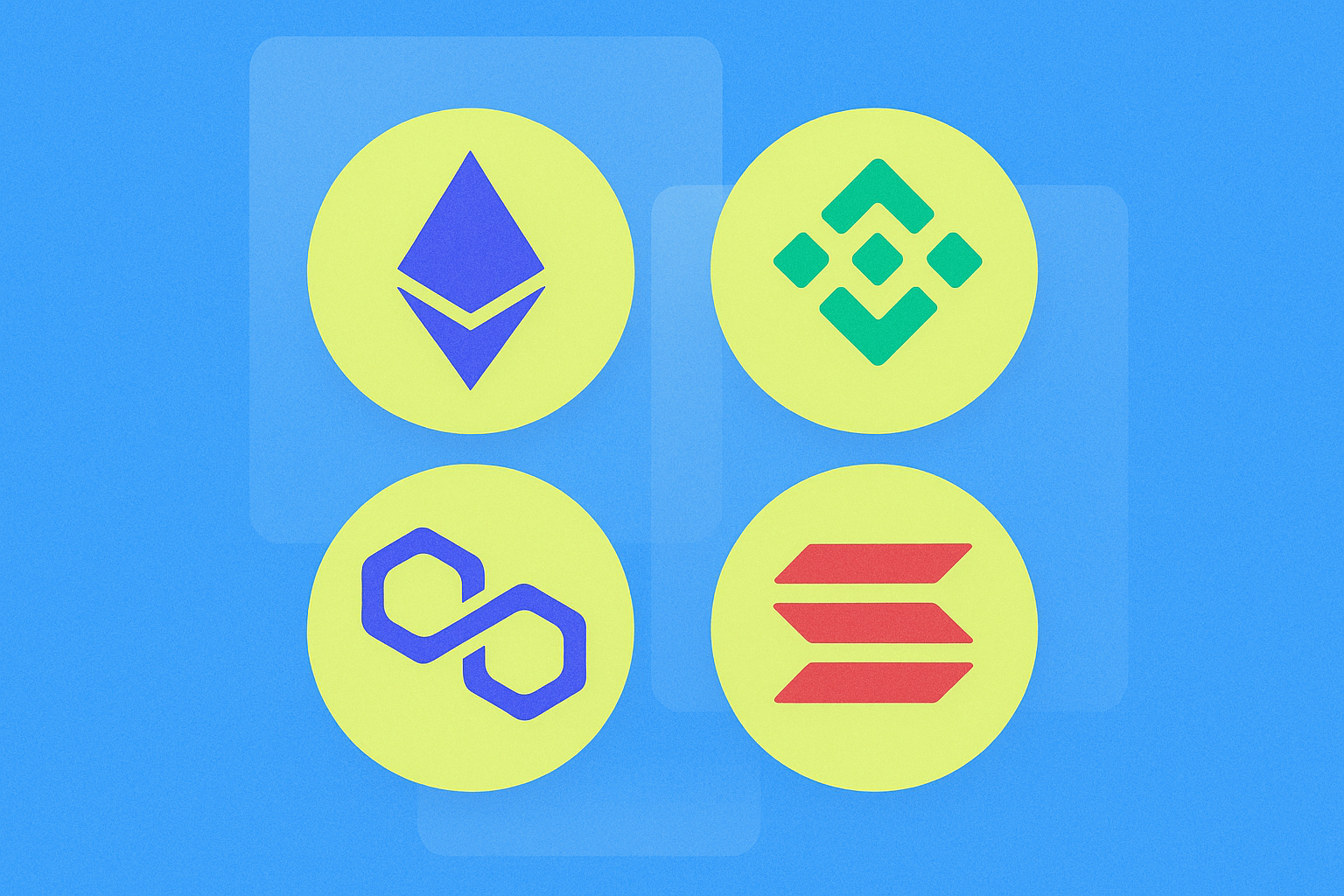
Ethereum is the leading platform for minting, supporting ERC-20 (fungible tokens), ERC-721, and ERC-1155 (NFT) standards. It boasts a robust developer ecosystem and broad community support.
BNB Chain offers low transaction fees and fast processing, using the BEP-20 standard for token creation. It’s well-suited for cost-conscious projects.
Polygon is an Ethereum Layer 2 solution, providing much lower fees while remaining compatible with Ethereum’s ecosystem. It’s ideal for large-scale NFT minting and DeFi app development.
Solana is a high-speed blockchain with ultra-low fees, perfect for NFT collections and DeFi protocols.
Avalanche features a unique subnet architecture, delivering high scalability and rapid transaction finality.
TON (The Open Network) is a next-gen blockchain with sharding and high throughput, built for mass adoption.
Waves focuses on easy token creation and management, offering a user-friendly interface for those without deep technical skills.
Each platform stands out for its speed, transaction costs, security, and developer tool accessibility.
Where and How Token Minting Happens
Token minting methods vary based on token type and the creator’s objectives:
Smart contracts—developers code smart contracts on blockchain platforms to define rules for token creation, distribution, and control. This is the most flexible, programmable method.
NFT marketplaces—platforms like OpenSea, LooksRare, Rarible, and others offer intuitive interfaces for minting NFTs with no coding required. Users upload a file, fill in details, and pay a minting fee.
DeFi protocols—decentralized apps like Uniswap, PancakeSwap, Aave, Curve, and others automatically mint liquidity or reward tokens for users providing liquidity or engaging with the protocol.
Crowdsales, ICOs, and IDOs—projects hold public or private token sales, mass-minting tokens for investors and early supporters.
Personal crypto wallets—wallets such as Trust Wallet, MetaMask, Phantom, and others allow users to mint tokens directly from the wallet interface, making the process easy for non-technical users.
The minting process usually involves several steps: connecting your wallet, setting token parameters (name, supply, properties), confirming the transaction, and paying a gas fee (where applicable).
Conclusion
Token minting is a core technology in today’s blockchain and crypto world, forming the backbone of new digital asset creation. Understanding what token minting is and how it differs from mining empowers newcomers to navigate the crypto space and use decentralized tools effectively.
Whether you’re minting NFTs to monetize creativity, joining DeFi protocols for passive earnings, investing in new projects through IDOs, or managing decentralized organizations via DAOs—it all starts with the minting process. As blockchain technology advances, minting becomes even more accessible and versatile, unlocking fresh opportunities for users worldwide.
In the years ahead, expect minting to become even easier, with lower fees through Layer 2 solutions and new innovative use cases—from art and entertainment to finance and digital asset management.
FAQ
What is token minting? How is it different from traditional token issuance?
Token minting means recording new assets on the blockchain. Once minted, tokens become a permanent part of the network with unique addresses. Unlike traditional issuance, minting is decentralized and transparent thanks to blockchain technology.
How do you start with tokenomics? What technical basics and tools do you need?
Select a blockchain (Ethereum, BSC), write a smart contract in Solidity, and use Remix for development. To deploy, you’ll need MetaMask and basic programming skills. Costs start at $50.
How much does it cost to create a token? What are the main expenses?
Token creation costs range from $1 to $1,000, depending on the blockchain and platform. Main expenses include network (gas) fees, smart contract deployment, and platform charges.
What legal and regulatory issues are involved in token minting? How do regulations differ by country?
Token minting is subject to AML/KYC, data protection, and licensing rules. China, Singapore, and the EU each set different standards. The EU’s MiCA framework imposes strict requirements on issuers and crypto service providers.
What is a smart contract in token minting? How do you write and deploy one?
A smart contract is self-executing code that manages token issuance and transfers. It’s written in Solidity and deployed on Ethereum for a gas fee. Once deployed, the contract is immutable.
What are the most common risks and security concerns in token minting? How can you avoid them?
Major risks include centralized control, fraud (rug pulls), price manipulation, and fake tokens. To avoid them, verify contracts in blockchain explorers, check token distribution, audit smart contracts, review the developer team’s history, and use decentralized platforms.
What’s the difference between ERC-20, BEP-20, SPL, and other token standards?
ERC-20 is Ethereum’s token standard, BEP-20 is for Binance Smart Chain, and SPL is for Solana. Each fits a different blockchain, with varying transaction fees, speeds, and ecosystem compatibility. ERC-20 is most widely adopted, BEP-20 is compatible with ERC-20, and SPL offers the fastest transactions and lowest fees.
How do you market and build a community after launching a token?
After launch, focus on community engagement through social media and open communication. Set fair prices, deliver value to holders with roadmap updates, and use analytics to refine strategies and maximize long-term project value.
Is an audit necessary for token minting? Why does it matter?
Yes, audits are essential for token minting. They ensure smart contract security, prevent vulnerabilities, and protect investors’ assets from attacks and code errors.

Top Decentralized Exchange Aggregators for Optimal Trading

Mastering Stop Limit Order Strategy in Cryptocurrency Trading
Comprehensive Analysis of Leading Multi-Chain Wallet for Web3 Advancement

Understanding Crypto Slippage: A Clear Explanation
Choosing Your Ideal Digital Wallet in 2025: A Starter's Guide
A Comprehensive Guide to Tokenizing Real-World Assets

What is BULLA coin: analyzing whitepaper logic, use cases, and team fundamentals in 2026

How does MYX token's deflationary tokenomics model work with 100% burn mechanism and 61.57% community allocation?

What Are Derivatives Market Signals and How Do Futures Open Interest, Funding Rates, and Liquidation Data Impact Crypto Trading in 2026?

How do futures open interest, funding rates, and liquidation data predict crypto derivatives market signals in 2026?

What is a token economics model and how does GALA use inflation mechanics and burn mechanisms
