

LCP_hide_placeholder
fomox
Search Token/Wallet
/

Solo Mining

2026-01-09 22:39
Bitcoin
Blockchain
Crypto Tutorial
Mining
PoW
Avaliação do artigo : 4.5
half-star
120 avaliações
This comprehensive guide introduces solo mining fundamentals for cryptocurrency enthusiasts. Solo mining involves independently validating blockchain transactions and earning complete block rewards without pool intermediaries, offering autonomy but requiring significant computational resources. The article traces solo mining's evolution from Bitcoin's early days when individual miners thrived, through industrial-scale competition that shifted the landscape toward mining pools. Today, while solo mining major cryptocurrencies like Bitcoin remains economically challenging due to extreme difficulty levels and competition, opportunities persist in alternative cryptocurrencies and ASIC-resistant networks. Modern trends highlight energy-efficient consensus mechanisms and algorithm innovations designed for individual miners. The guide addresses practical considerations including hardware requirements, revenue calculations, operational steps, and realistic profitability assessments for 2024. Essential for understandin
Solo Mining

History and Background of Solo Mining

The emergence of solo mining dates back to the early days of Bitcoin, when it served as the primary method for miners to validate transactions and earn rewards. During Bitcoin's inception in 2009, the mining difficulty was relatively low, making it feasible for individual miners to successfully mine blocks using standard computer hardware. image_url This period represented the golden age of solo mining, where enthusiasts could participate in network security while earning substantial rewards.
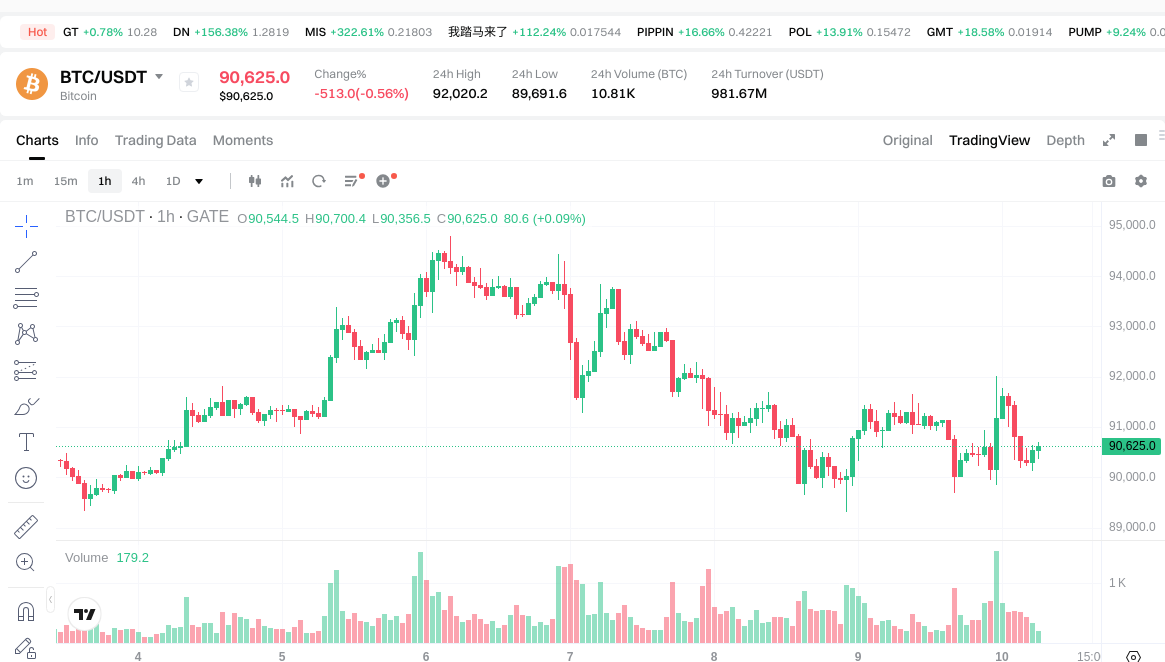
As the cryptocurrency ecosystem evolved and mining difficulty increased exponentially, the landscape began to shift dramatically. The rise of specialized mining hardware (ASICs) and large-scale mining farms transformed the competitive environment. These industrial operations possessed computational power far beyond what individual miners could afford, making it increasingly challenging for solo miners to compete effectively. The growing dominance of mining pools, which aggregate the hash power of multiple miners, further diminished the viability of solo mining for individuals with limited resources.

Despite these challenges, solo mining remains an important concept in understanding the decentralized nature of blockchain networks and continues to attract miners who value independence and the potential for full block rewards.

Use Cases and Functions of Solo Mining

Solo mining serves the fundamental purpose of verifying and recording transactions within a blockchain network while maintaining decentralization. The process involves several critical steps that ensure network security and integrity:

  • Miners independently collect and verify transactions from the mempool, ensuring they meet network requirements
  • They then attempt to solve a complex cryptographic puzzle (proof-of-work) by finding a valid hash that meets the network's difficulty target
  • The first miner to discover a valid solution broadcasts it to the entire network for verification
  • Once the network validates the solution through consensus, the new block is permanently added to the blockchain
  • The successful solo miner receives the complete block reward, including both the block subsidy and transaction fees

The appeal of solo mining lies in several key advantages. First, miners retain 100% of the block rewards without sharing with pool participants, potentially resulting in higher returns if successful. Second, solo miners enjoy complete autonomy in their operations, free from pool rules, fee structures, or payout delays. Third, they contribute directly to network decentralization by operating independently rather than concentrating hash power in pools.

However, solo mining also presents significant challenges. The probability of successfully mining a block as a solo miner depends entirely on one's hash rate relative to the total network hash rate. For major cryptocurrencies like Bitcoin, this probability has become extremely low for individual miners, resulting in highly unpredictable and infrequent rewards.

Impact on the Market and Investment Landscape

Solo mining has played a transformative role in shaping the cryptocurrency market and investment ecosystem. During the early stages of Bitcoin and other cryptocurrencies, solo mining served as the primary mechanism for distributing new coins and securing networks. This grassroots participation model attracted a diverse community of technology enthusiasts and early adopters, contributing to the initial growth and adoption of digital currencies.

The practice significantly influenced cryptocurrency valuations by establishing a tangible cost basis through the computational resources and electricity required for mining. This proof-of-work mechanism created an inherent value proposition that helped legitimize cryptocurrencies as digital assets worthy of investment consideration.

As mining evolved, the shift from solo mining to pool-based mining had profound implications for market dynamics. The concentration of mining power in pools and industrial operations raised concerns about centralization, potentially affecting network security and governance. This evolution prompted discussions about the balance between efficiency and decentralization in blockchain networks.

For investors and market participants, understanding solo mining dynamics provides insights into network security, token distribution mechanisms, and the economic incentives that drive blockchain ecosystems. The profitability calculations associated with solo mining also influence hardware markets, energy consumption debates, and regulatory considerations surrounding cryptocurrency operations.

The landscape of solo mining has undergone significant transformation in recent years, marked by both challenges and innovations. The primary trend has been a continued decline in solo mining popularity for established cryptocurrencies, largely attributable to escalating mining difficulty and the emergence of highly efficient industrial mining operations.

However, the solo mining concept is experiencing a renaissance through several innovative approaches:

Algorithm Diversity: Newer blockchain projects are implementing mining algorithms specifically designed to be more solo-miner friendly. These include memory-hard algorithms and ASIC-resistant designs that level the playing field between individual miners and large operations.

Energy Efficiency Initiatives: Environmental concerns have driven the development of more energy-efficient consensus mechanisms and mining protocols. Some projects are exploring hybrid models that reduce the computational intensity required for solo mining while maintaining network security.

Niche Cryptocurrency Opportunities: While solo mining Bitcoin has become impractical for most individuals, numerous alternative cryptocurrencies with lower network hash rates still offer viable solo mining opportunities. These smaller networks provide a testing ground for miners to participate independently without requiring industrial-scale resources.

Technological Advancements: Improvements in mining software, hardware efficiency, and network protocols continue to evolve, potentially creating new opportunities for solo miners in specific niches.

Year Bitcoin Mining Difficulty Growth
2009 1 (baseline)
2016 104,807,485,529.57
Beyond Continued exponential increase

In conclusion, while the traditional era of solo mining for major cryptocurrencies has largely passed due to increased competition and difficulty, the fundamental concept continues to evolve. Various blockchain technologies are being developed to make solo mining less energy-intensive and more accessible to individual participants. This resilience and evolution demonstrate the enduring appeal of independent mining and its significance in maintaining the decentralized ethos of cryptocurrency networks. For those willing to explore alternative cryptocurrencies or leverage technological innovations, solo mining remains a viable path to participate directly in blockchain security and token generation.

FAQ

What is Solo Mining and how does it differ from pool mining?

Solo Mining means mining independently without joining a pool. Solo miners keep all block rewards but face lower success rates. Pool mining combines resources with others, sharing rewards proportionally but increasing consistent earning chances.

Solo Mining需要什么硬件和设备?个人电脑能做吗?

Solo mining requires specialized ASIC miners or high-performance GPUs. Personal computers lack sufficient computational power and are economically inefficient for solo mining due to extremely low hash rates and high electricity costs.

How is Solo Mining revenue calculated? Can you earn more compared to joining a mining pool?

Solo Mining revenue is calculated per block reward, typically higher than pool sharing. You may earn more than pool mining, but with higher risk. Success rate and difficulty directly impact your earnings potential.

How to start Solo Mining? What are the specific operational steps?

To begin solo mining, install mining software compatible with your chosen cryptocurrency. Set up a full node, configure your hardware, and connect to the blockchain network. Start mining directly from your wallet. Expect high variance in rewards due to network competition.

What are the risks and challenges of Solo Mining? Is the success rate low?

Solo mining faces hardware failure risks and price volatility challenges. Success rates depend entirely on your equipment's hash power and computational resources. While less predictable than pool mining, dedicated miners with quality hardware can achieve consistent rewards over time.

Is it still worthwhile to do Solo Mining in 2024? What are the prospects?

Solo Mining in 2024 is not profitable due to extremely high global hash rates exceeding 580 EH/s. Even with latest ASIC equipment, individual miners face nearly impossible odds. Prospects remain challenging; consider alternative investment strategies instead.

* As informações não pretendem ser e não constituem aconselhamento financeiro ou qualquer outra recomendação de qualquer tipo oferecida ou endossada pela Gate.

Compartilhar

Conteúdo

History and Background of Solo Mining

Use Cases and Functions of Solo Mining

Impact on the Market and Investment Landscape

FAQ

Artigos Relacionados
Guide to Maximizing Returns with Top DeFi Yield Farming Strategies

Guide to Maximizing Returns with Top DeFi Yield Farming Strategies

This article provides a comprehensive guide on optimizing DeFi yield farming through the use of DeFi yield aggregators. It explains how these platforms enhance passive income and streamline complex processes, making yield farming more accessible and efficient. Readers will understand the challenges DeFi aggregators solve, including high gas fees and the complexity of managing multiple protocols. The article is structured to cover the operation, benefits, risks, and popular platforms in the DeFi aggregator landscape. Keywords are strategically placed for readability and scanability.
2025-12-24
Understanding Cross-Chain Solutions: A Guide to Blockchain Interoperability

Understanding Cross-Chain Solutions: A Guide to Blockchain Interoperability

This article delves into the transformative role of cross-chain bridges in blockchain interoperability, essential for the seamless transfer of digital assets. It explains what cross-chain bridges are, outlines their benefits for DeFi operations, and evaluates security challenges. Readers will learn about the top cross-chain bridges and how they innovate crypto transactions. Key points include addressing interoperability issues, enhancing transaction efficiency, and promoting integration across blockchains. With a focus on security audits, liquidity, and community support, the article serves as a comprehensive guide for users exploring cross-chain solutions.
2025-12-24
Understanding Utility Tokens in the Web3 Ecosystem: A Comprehensive Guide

Understanding Utility Tokens in the Web3 Ecosystem: A Comprehensive Guide

This article offers a comprehensive guide to understanding utility tokens and their impact on the Web3 ecosystem, highlighting their significance beyond mere speculation. It addresses the distinction between coins and tokens, and explores the versatile applications of utility tokens across governance, gaming, finance, and data services. With real examples like SAND and UNI, readers will gain insights into the evolving sophistication of decentralized applications powered by utility tokens. Ideal for crypto enthusiasts and professionals seeking to grasp the transformative role of utility tokens in digital decentralization.
2025-12-13
What is AVAX Market Overview: Price, Market Cap, Trading Volume & Liquidity?

What is AVAX Market Overview: Price, Market Cap, Trading Volume & Liquidity?

The article provides an in-depth analysis of the AVAX market, assessing its current valuation, trading activity, supply dynamics, and exchange coverage. It highlights AVAX's positioning within the cryptocurrency sector with a $5.43 billion market cap, liquidity status, and price stability across platforms like Gate. By examining token distribution and trading volume, the article addresses pertinent concerns for investors and developers focusing on Avalanche's blockchain technology. The structured insights cater to crypto enthusiasts, institutional investors, and those interested in layer-one blockchain projects, offering a comprehensive overview pivotal for strategic investment and development decisions.
2025-12-18
Understanding DAO in the World of Cryptocurrency

Understanding DAO in the World of Cryptocurrency

This article explores Decentralized Autonomous Organizations (DAOs) as innovative governance structures in the Web3 ecosystem, detailing their operation, benefits, risks, and notable examples. It highlights how DAOs enable transparent community-driven decision-making using blockchain technology and smart contracts. The piece addresses issues related to security and token concentration, while outlining participation and investment potentials. Key content discusses the operational framework of DAOs, how to join them, benefits and risks, with emphasis on their transformative impact on digital governance.
2025-12-24
Beginner's Guide to Understanding Cryptocurrency White Papers

Beginner's Guide to Understanding Cryptocurrency White Papers

"Beginner's Guide to Understanding Cryptocurrency White Papers" explores the essential role of white papers in cryptocurrency projects. It outlines how these documents provide critical insights into a project's scope, technical foundation, and potential success, helping investors and stakeholders make informed decisions. The guide answers key questions about the anatomy of a white paper, the importance of clarity and transparency, and recognizes warning signs of substandard papers. It provides practical advice on accessing white papers on various platforms, ensuring readers understand their significance in evaluating crypto investments.
2025-12-12
Recomendado para você
What is BULLA coin: analyzing whitepaper logic, use cases, and team fundamentals in 2026

What is BULLA coin: analyzing whitepaper logic, use cases, and team fundamentals in 2026

BULLA coin introduces decentralized accounting and on-chain data management innovation built on BNB Smart Chain, eliminating intermediaries while ensuring real-time transaction verification. The platform addresses critical gaps in cryptocurrency infrastructure by embedding accounting logic directly into smart contracts, enabling transparent audit trails and regulatory compliance. Real-world applications include seamless transaction imports across multiple exchanges, comprehensive crypto portfolio tracking, and secure record-keeping for investors. Trade import tools enhance user experience by automating data categorization and consolidation. Founded in 2021 by blockchain architect Benjamin with support from experienced fintech designers and engineers, BULLA Networks demonstrates active development momentum with continuous smart contract iterations through early 2026. The 2026-2027 strategic roadmap prioritizes network infrastructure expansion and enhanced security protocols, positioning BULLA as a robust decen
2026-02-08
How does MYX token's deflationary tokenomics model work with 100% burn mechanism and 61.57% community allocation?

How does MYX token's deflationary tokenomics model work with 100% burn mechanism and 61.57% community allocation?

This article examines MYX token's innovative deflationary tokenomics, featuring a distinctive 61.57% community allocation and 100% burn mechanism. The community-focused distribution empowers token holders through MYX DAO governance while ensuring value flows back to ecosystem participants. The 100% burn mechanism systematically removes node-generated revenue from circulation, reducing the total supply from one billion tokens and creating genuine scarcity. This supply-driven deflation counters inflation pressures and strengthens long-term holder value without requiring external demand. The combination of broad community distribution and aggressive token elimination creates sustainable deflationary economics. Ideal for investors seeking to understand how MYX Finance aligns community interests with protocol success through structural value preservation and decentralized governance mechanisms on Gate exchange.
2026-02-08
What Are Derivatives Market Signals and How Do Futures Open Interest, Funding Rates, and Liquidation Data Impact Crypto Trading in 2026?

What Are Derivatives Market Signals and How Do Futures Open Interest, Funding Rates, and Liquidation Data Impact Crypto Trading in 2026?

This comprehensive guide decodes cryptocurrency derivatives market signals essential for 2026 trading success. Learn how futures open interest, funding rates, and liquidation data—such as ENA's $17 billion contract volume and $94 million daily position closures—reveal market sentiment and institutional positioning. The article explains how long-short ratios and liquidation heatmaps identify reversal opportunities, while options imbalance signals indicate smart money accumulation strategies. Discover why exchange outflows and funding rate extremes precede major price movements. From analyzing $46.45M ENA outflows to understanding leverage risks, this resource equips traders with actionable intelligence for predicting market turning points. Perfect for beginners and experienced traders leveraging Gate's analytics tools to navigate increasingly complex derivatives markets with informed entry and exit strategies.
2026-02-08
How do futures open interest, funding rates, and liquidation data predict crypto derivatives market signals in 2026?

How do futures open interest, funding rates, and liquidation data predict crypto derivatives market signals in 2026?

This article explores how three critical derivatives metrics—open interest exceeding $20 billion, funding rates shifting positive, and liquidation volume declining 30%—predict crypto derivatives market signals in 2026. The guide reveals institutional participation driving market maturation while positive funding rates signal strengthened bullish momentum. Long-short ratio stabilization at 1.2 with put-call ratio below 0.8 demonstrates sophisticated hedging strategies on Gate and other platforms. Reduced liquidation volumes indicate improved risk management and market resilience. By analyzing how these indicators combine—measuring position sizing, sentiment extremes, and forced selling pressure—traders gain precise tools for identifying trend reversals, leverage exhaustion, and market turning points with 55-65% AI-driven accuracy for 2026.
2026-02-08
What is a token economics model and how does GALA use inflation mechanics and burn mechanisms

What is a token economics model and how does GALA use inflation mechanics and burn mechanisms

This article explores GALA's innovative token economics model, examining how inflation mechanics and burn mechanisms create sustainable ecosystem growth. The guide covers GALA token distribution through 50,000 Founder's Nodes requiring 1 million GALA for 100% daily rewards, establishing long-term community participation. A dual-mechanism approach pairs controlled inflation with strategic annual supply reduction to establish deflationary pressure. The burn mechanism, powered by 100% transaction fee burning on GalaChain combined with NFT royalty enforcement averaging 6.1%, creates continuous supply reduction while incentivizing creator participation. Governance utility empowers node holders to vote on game launches through consensus mechanisms, transforming GALA holders into active stakeholders. Perfect for investors and ecosystem participants seeking to understand how GALA balances token scarcity with ecosystem vitality through integrated economic incentives and community governance on Gate.
2026-02-08
What is on-chain data analysis and how does it reveal whale movements and active addresses in crypto?

What is on-chain data analysis and how does it reveal whale movements and active addresses in crypto?

On-chain data analysis reveals cryptocurrency market dynamics by examining active addresses and transaction metrics that expose whale movements and investor behavior. This comprehensive guide explores how blockchain data serves as a critical market indicator, demonstrating the correlation between large holder activities and price movements—such as FLOKI's 950% surge in whale transactions. The article covers whale movement tracking, holder distribution patterns showing 73.47% concentration among major stakeholders, and on-chain fee trends as cycle indicators. Essential metrics include active addresses reflecting genuine network participation, transaction volumes revealing strategic positioning, and network congestion patterns during market cycles. By tracking these interconnected indicators through platforms like Glassnode and Gate, investors and traders can identify market sentiment shifts, anticipate price movements, and distinguish institutional activity from retail participation, making on-chain analysis i
2026-02-08