Blockchain
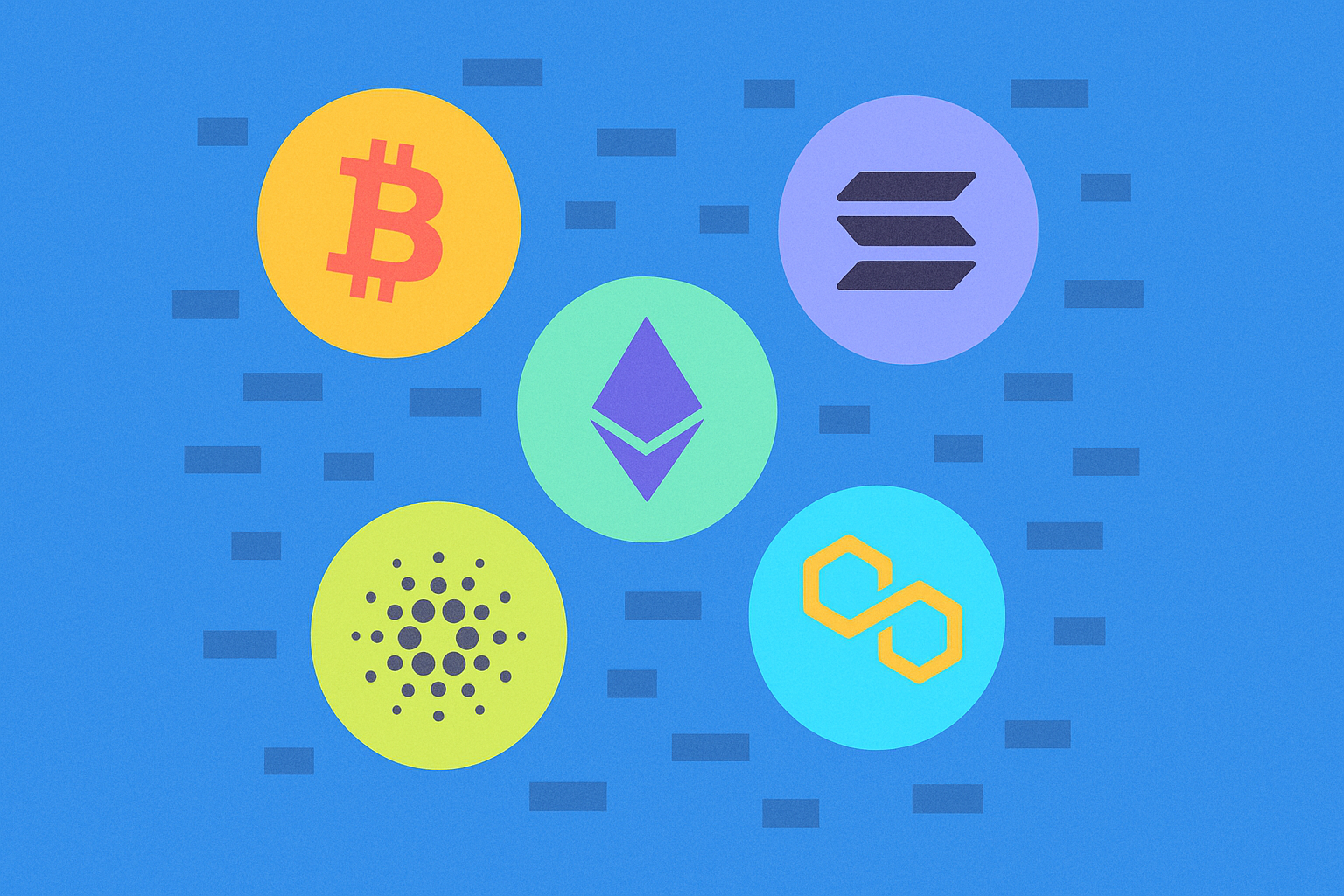
What is Blockchain?
A blockchain is a secure digital document that everyone can see, but no one can alter. Rather than having one person or company maintain records of information, copies of this document exist on many computers, making it extremely difficult to cheat or hack the system. This technology creates trust between people who don't know each other, without the need for intermediaries like banks or governments.
Blockchain is a distributed digital ledger that records transactions across a computer network. Think of it as a special form of database where data is stored in blocks that are linked together in a chain. Unlike traditional databases controlled by a single organization, blockchain distributes identical copies of this ledger across multiple computers (called nodes) on a network.
Blockchain technology works by collecting transactions into blocks, which are then cryptographically linked to previous blocks, creating an unbroken chain of data. Each block contains transaction information, a timestamp, and a unique cryptographic code called a hash, which connects it to the previous block.
What makes blockchain truly revolutionary is that it enables secure, transparent transactions without requiring a trusted third party, such as a bank or government, to verify them.
Blockchain History and Development
The story of blockchain technology begins with the publication of Bitcoin's whitepaper in 2008, authored by an unknown person or group using the pseudonym Satoshi Nakamoto. This foundational document introduced the concept of a peer-to-peer electronic cash system that would operate without financial intermediaries.
A pivotal moment in blockchain history occurred on January 3, 2009, when the first block of the Bitcoin blockchain, known as the genesis block, was mined.
Development continued with Ethereum, whose blockchain was officially launched when the first Ethereum block was mined on July 30, 2015. The addition of programmable smart contracts to Ethereum expanded blockchain from simple transactions to complex applications.
Blockchain technology found its first government registry application in 2016, when the Republic of Georgia implemented a blockchain-based land registry system.
LaborX, a blockchain-based freelancer platform, officially launched in 2017, creating one of the first decentralized job markets.
How Blockchain Works
To understand how blockchain operates, imagine a digital ledger that is replicated thousands of times across a computer network. This network is designed to regularly update and reconcile all these copies, ensuring they all contain identical information.
The process works through the following key steps:
- Transaction Recording: When someone initiates a transaction, it is broadcast to the computer network (nodes).
- Verification: Network participants verify the transaction using established algorithms. This verification process ensures the transaction's legitimacy.
- Block Creation: Verified transactions are grouped together into a single block. Each block contains multiple transactions, a timestamp, and a reference to the previous block.
- Addition to Chain: The new block is cryptographically linked to the existing blockchain through a process that requires consensus from network participants.
- Immutability: Once added to the blockchain, the information becomes permanent and extremely difficult to alter.
Types of Blockchain Networks
Blockchain networks come in various forms, designed for specific purposes and featuring different access and governance levels.
Public Blockchains
Public blockchains are open networks that anyone can join and participate in. Bitcoin and Ethereum are the most well-known examples. These networks operate permissionlessly, meaning anyone can use the network, submit transactions, and help maintain the blockchain by participating in the consensus process.
Private Blockchains
Private blockchains restrict access to a specific group of participants. Unlike public blockchains, a single organization controls who can join the network and what rights they have.
Permissioned Blockchains
Permissioned blockchains combine elements of both public and private blockchains. While anyone may be able to view the blockchain, only authorized participants can add new blocks.
Consortium Blockchains
Consortium blockchains are governed by a group of organizations, not a single entity. These pre-selected organizations jointly maintain the blockchain and make decisions about participation and access rights.
Major Blockchain Platforms
Bitcoin Blockchain
The Bitcoin blockchain was the first and remains the most well-known blockchain network. Established in 2009, it primarily functions as a peer-to-peer electronic cash system.
Ethereum Blockchain
The Ethereum blockchain revolutionized the blockchain landscape when it launched in 2015, introducing programmable smart contracts.
Solana Blockchain
The Solana blockchain has gained popularity for its fast transaction processing and low fees. The Solana blockchain can process thousands of transactions per second.
Polygon Blockchain
Polygon blockchain functions as a "Layer 2" scaling solution alongside Ethereum, helping to address Ethereum congestion and high gas fees.
Cardano Blockchain
Cardano blockchain takes a research-driven approach, emphasizing peer-reviewed development and formal verification methods.
TON Blockchain
TON blockchain (The Open Network) has attracted attention as Telegram initiated a new blockchain era with TON integration.
Tron Blockchain
Tron blockchain focuses on content sharing and entertainment applications. It aims to eliminate intermediaries between content creators and consumers.
Base Blockchain
Base blockchain is a newer Ethereum Layer 2 solution developed by Coinbase, offering affordable transactions.
Sui Blockchain
Sui blockchain is designed for asset-oriented applications with high transaction throughput.
Key Features and Benefits of Blockchain
Enhanced Security
Blockchain uses advanced cryptography to protect data. Its distributed nature means hackers have no single weak point to target.
Transparency and Traceability
Every transaction on a blockchain is recorded in a distributed ledger shared across the network. This creates an immutable audit trail through which transactions can be easily tracked and verified.
Improved Efficiency and Cost Reduction
By eliminating intermediaries and automating processes through smart contracts, transactions can be executed faster and with lower administrative costs.
Trust Without Intermediaries
Blockchain's ability to create trust between parties who don't know each other, without a central authority.
Data Integrity
Once data is recorded on a blockchain, it cannot be easily altered or deleted.
Blockchain vs. Cryptocurrency
Blockchain is distributed ledger technology that securely records transactions across a distributed network. It is essentially a specialized database structure that can be used for many different purposes beyond digital currencies.
Cryptocurrency is a digital or virtual currency that uses cryptography to achieve security and operates on blockchain networks.
Blockchain is the technology, while cryptocurrency is a product built using that technology.
Smart contracts are self-executing agreements whose terms are written directly into code. They automatically monitor and execute contract conditions when predetermined circumstances are met.
Real-World Applications of Blockchain
Finance and Banking
Banks and financial institutions are exploring blockchain to improve backend systems, accelerate transaction verification, and reduce costs.
Supply Chain Management
Companies have implemented blockchain to track products from source to consumer. This technology offers unprecedented visibility across the entire supply chain.
Healthcare
Blockchain protects patient data while facilitating information sharing among different service providers.
Real Estate
Real estate transactions involve extensive paperwork, third-party verification, and public records. Blockchain can streamline this process.
Voting Systems
Electronic voting systems built on blockchain can enhance security, prevent fraud, and potentially increase voter participation.
Identity Management
Blockchain provides secure, self-sovereign digital identities that individuals can control.
Challenges of Blockchain Technology
Scalability Issues
Most blockchain networks process transactions much slower than traditional payment systems.
Energy Consumption
Proof-of-work mechanisms require enormous computational power and energy.
Regulatory Uncertainty
As blockchain adoption grows, governments struggle with how to regulate it.
Technical Complexity
For many potential users, blockchain remains difficult to understand and use.
Integration Challenges
Implementing blockchain often requires significant changes to existing systems and processes.
Interoperability
Different blockchain networks often cannot easily communicate with one another.
The Future of Blockchain Technology
Growing Interoperability
New projects focus on connecting different blockchain networks so they can communicate and share data seamlessly.
Integration with Other Technologies
Combining blockchain with artificial intelligence, the Internet of Things (IoT), and machine learning creates powerful new applications.
Scalability Solutions
Innovations are being developed to increase transaction processing speed and reduce network congestion.
Enterprise Adoption
Large enterprises across various industries are moving from research phases to full implementation.
Regulatory Development
As blockchain matures, clearer regulatory frameworks emerge.
Sustainability Focus
Environmental concerns are driving a shift toward more energy-efficient consensus mechanisms.
Blockchain Tools and Resources
-
Blockchain Explorers are web-based tools that enable users to view and search blockchain transactions.
-
Blockchain Information Platforms are among the oldest and most popular providers of blockchain data services.
-
Blockchain Wallet Services enable users to store, send, and receive cryptocurrencies.
-
Blockchain Transaction Verification is an important process where new transactions are validated and added to the blockchain.
-
NFT Blockchain Platforms have emerged as specialized marketplaces for non-fungible tokens.
-
Blockchain Support Resources vary by platform.
-
Blockchain Analysis Tools help track market trends and monitor network health.
Getting Started with Blockchain
-
Understand the Basics: Start by building a strong understanding of blockchain fundamentals through online learning programs, educational videos, and training resources.
-
Create a Cryptocurrency Wallet: Set up a digital wallet for cryptocurrencies. Wallets such as MetaMask, Trust Wallet, or Coinbase Wallet offer user-friendly interfaces.
-
Explore Blockchain Explorers: Blockchain explorers are websites that allow you to view transactions on public blockchains.
-
Join Blockchain Communities: Engage with blockchain enthusiasts and professionals through forums, social media groups, and local meetups.
-
Try Blockchain Applications: Experiment with decentralized applications (dApps), blockchain-based games, or NFT marketplaces.
-
Consider Developer Resources: If you are technically inclined, explore blockchain development programs and framework solutions.
FAQ
What is blockchain? What are its core characteristics and advantages?
Blockchain is a distributed ledger technology combining cryptography, peer-to-peer networks, and consensus mechanisms. Core features include immutability, transparency, decentralization, and security. Advantages: eliminating intermediaries, reducing costs, enhancing transaction efficiency, and ensuring data integrity across networks.
What are the practical application scenarios of blockchain technology?
Blockchain enables supply chain traceability, digital asset tokenization, cross-border payments, smart contracts, data sharing, intellectual property protection, and decentralized finance. These applications leverage blockchain's immutability, transparency, and security features to reduce fraud, enhance efficiency, and lower transaction costs across industries.
How is blockchain transaction security ensured? What are the roles of private keys and public keys?
Blockchain transaction security is guaranteed through cryptography. Private keys sign transactions to authorize transfers, while public keys verify signatures and prove transaction validity without exposing private keys.
What is the difference between blockchain and traditional databases?
Blockchain is decentralized and maintained by multiple nodes through consensus mechanisms, ensuring transparency and immutability. Traditional databases are centralized, controlled by single entities, and rely on central management for data security and access control.
What is a smart contract? How does it run on blockchain?
A smart contract is a self-executing program deployed on blockchain that automatically executes when predefined conditions are met. It operates without intermediaries, with all code and transactions transparently recorded on the blockchain network.
What are the consensus mechanisms in blockchain? What are PoW and PoS?
Blockchain consensus mechanisms include PoW (Proof of Work) and PoS (Proof of Stake). PoW validates transactions through solving complex mathematical puzzles, consuming significant energy. PoS validates transactions based on node holdings, offering greater efficiency and lower energy consumption.

Top Decentralized Exchange Aggregators for Optimal Trading
Understanding Web3 Wallets: A Comprehensive Guide
What is Avalanche (AVAX): A Complete Fundamentals Analysis of Whitepaper Logic, Use Cases, and Technical Innovation
Understanding Governance Tokens: A Comprehensive Guide
Complete Guide to Blockchain Gas Fees in Web3
Blockchain-Powered Music Royalty Distribution: Avalanche Drives the Digital Transformation

What is BULLA coin: analyzing whitepaper logic, use cases, and team fundamentals in 2026

What is on-chain data analysis and how does it reveal whale movements and active addresses in crypto?

What is Vodra (VDR) crypto: whitepaper logic, use cases, and fundamentals analysis for 2026
How do cryptocurrency competitors compare in market share, performance, and user adoption in 2026?

What is on-chain data analysis and how does it predict crypto market trends