

Search Token/Wallet
In-Depth Analysis of FT vs NFT: Differences and the Latest Market Developments in 2025
Beginner
Quick Reads## Fundamental Concepts of Fungible Tokens and Non-Fungible Tokens
In blockchain, assets fall into two main categories: Fungible Tokens (FTs) and Non-Fungible Tokens (NFTs). Both are issued on-chain, traceable, and digitally scarce. However, their use cases, economic characteristics, and market values are fundamentally different. Understanding the distinction between fungible and non-fungible tokens is essential for anyone entering the Web3 ecosystem.
## Core Characteristics and Roles of Fungible Tokens
Fungible tokens were the first asset type to emerge on blockchains. Bitcoin and Ethereum are both FTs. Their defining features are interchangeability, divisibility, and uniform value—one Bitcoin is identical to any other, making them ideal as instruments for value exchange.
Common applications of FTs within blockchain include:
- Serving as payment and exchange media, such as for everyday transactions, network fees, and cross-border settlements.
- Acting as value storage, similar to digital gold.
- Enabling participation in DeFi protocols for lending, liquidity provision, staking, and yield farming.
Thanks to their high liquidity and uniformity, FTs are the primary carriers of value in the crypto economy.
## Uniqueness and Use Cases of Non-Fungible Tokens
The defining trait of Non-Fungible Tokens (NFTs) is their non-interchangeability. Each NFT holds unique metadata, identifiers, characteristics, and ownership records, making every NFT distinct.
NFTs have found use across several sectors:
- Digital art, including on-chain images and video works.
- Collectibles, such as avatar NFTs and branded collaborations.
- Gaming assets, including virtual items, props, and virtual land.
- Copyrights, credentials, and memberships, with potential future applications in on-chain identity verification.
NFTs derive value not from interchangeability, but from scarcity, cultural relevance, and community consensus.
## Value System Differences Between FT and NFT
Fungible tokens typically gain value from economic factors like supply and demand, network effects, and on-chain usage. NFTs, on the other hand, are valued based on rarity, artistic qualities, creator influence, community size, and market sentiment.
In short: FTs are geared toward economic value, making them suitable for investment and trading. NFTs are more about cultural value, serving as collectibles and identity markers.
Both asset types are subject to price fluctuations, but the drivers behind those movements are entirely different.
## 2025 Market Prices and Industry Trends
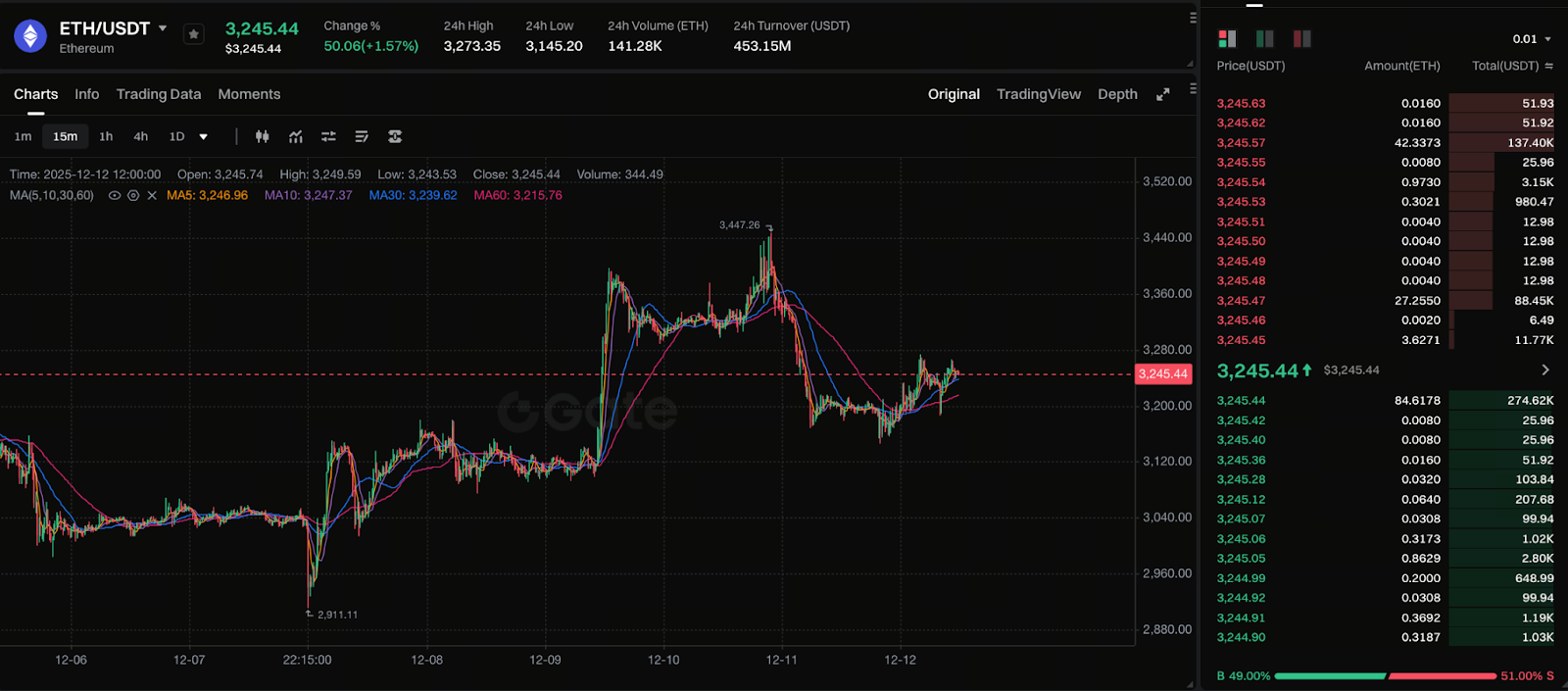
Image: [https://www.gate.com/trade/ETH\_USDT](https://www.gate.com/trade/ETH_USDT)
By late 2025, the cryptocurrency market faced renewed volatility. Bitcoin's price corrected to around $90,000 amid macroeconomic pressures, while Ethereum held steady in the $3,190 to $3,200 range. Price movements of these mainstream FTs continue to set the tone for overall market risk appetite.
In the NFT market, overall enthusiasm has cooled since the 2021 peak, but core assets remain steady. For example, CryptoPunks' floor price has hovered between 28 and 30 ETH, showing that blue-chip NFTs still command market recognition.
These trends highlight a key development: FT and NFT pricing structures are maturing, with each sector forming its own natural market layers.
## From Bitcoin to CryptoPunks: Structural Comparison of Asset Performance
Bitcoin stands as the "store of value" among digital assets, while NFTs like CryptoPunks are "cultural icons" in the world of digital collectibles.
FT prices are driven by market volatility and macro factors such as interest rate policies and institutional demand. NFT prices are shaped by cultural sentiment, the collectibles market, brand partnerships, and artist-led project developments.
This divergence underpins the fundamentally different investment logic for fungible and non-fungible tokens.
## Risks, Investment Logic, and Strategies for FT and NFT
Investing in FTs aligns with traditional finance: analyze trends, market structure, trading volume, and sentiment indicators. NFT investing is more akin to the collectibles market and requires focus on:
- Whether the project's narrative has long-term viability
- The vibrancy of the community
- Whether scarcity supports collectible value
- The reliability of creators and teams
FTs are mainly exposed to volatility risk, while NFTs face liquidity constraints and unstable valuation mechanisms.
Investors should clarify their goals: For stability, focus on FTs; for cultural expression or exploring Web3 identity, look to NFTs.
## Conclusion: FT and NFT as the Dual Engines of the Web3 Ecosystem
Fungible tokens and NFTs are not competitors—they complement each other. FTs power the financial infrastructure and economic engine, while NFTs drive creative value and cultural ecosystems. Grasping the structure of fungible and non-fungible tokens helps investors secure a stable position in the future of blockchain.
Author: Max
* The information is not intended to be and does not constitute financial advice or any other recommendation of any sort offered or endorsed by Gate Web3.
* This article may not be reproduced, transmitted or copied without referencing Gate Web3. Contravention is an infringement of Copyright Act and may be subject to legal action.
Related Articles

Beginner
2026 Stablecoin Classification Deep Dive: From Fiat-Collateralized to Algorithmic Stablecoins, Market Landscape and Future Trends
A thorough breakdown of stablecoin types—including fiat-backed, crypto-collateralized, algorithmic, and hybrid models—paired with up-to-date regulatory and market trends, empowers readers to navigate the stablecoin ecosystem and make informed investment decisions.

Beginner
What Are Fractional NFTs? Understanding the Mechanics of NFT Fractionalization and Its Real-World Use Cases
Fractional NFTs make high-value NFTs more accessible by breaking them into tradable shares. This article offers a comprehensive overview of the underlying technology, practical use cases, and inherent limitations.

Beginner
Top Telegram Games to Watch in 2026: The New Web3 Gaming Frontier and Investment Strategies
A comprehensive review of the top Telegram games to watch in 2026—including standout projects like Notcoin, Hamster Kombat, and Azuki Alley Escape—offering expert insights into gameplay trends and potential investment opportunities.

Beginner
The Next 100x Coin? Low-Cap Crypto Gem Analysis
This article analyzes cryptocurrency projects with low market capitalization that may be noteworthy in 2025, offering analysis from the perspectives of technology, community engagement, and market potential. Additionally, the report offers guidance on coin selection and highlights key risk factors for new investors.

Beginner
What Is Jupiter? A Complete Guide to Solana’s Leading Decentralized Exchange Aggregator
Jupiter stands as the core decentralized exchange aggregator within the Solana ecosystem, delivering users the best prices, minimal slippage, and seamless cross-pool liquidity integration. This article thoroughly examines Jupiter's mechanisms, exploring its features, strengths, trading processes, and future outlook. You'll gain a clear understanding of why Jupiter has emerged as the primary entry point for trading on Solana.

Beginner
Best Metaverse Projects in 2026: Seizing the Next Digital Wave
A comprehensive analysis of the leading Metaverse projects for 2026: Explore key developments from Web2 giants like Meta and Roblox, as well as Web3 frontrunners including The Sandbox and Decentraland. This article delivers the latest trends, technological breakthroughs, and investment opportunities in the Metaverse sector.