

Search Token/Wallet
A Complete Guide to Cryptographic Attack Types: From Fundamental Concepts to Real-World Threats
Beginner
Quick Reads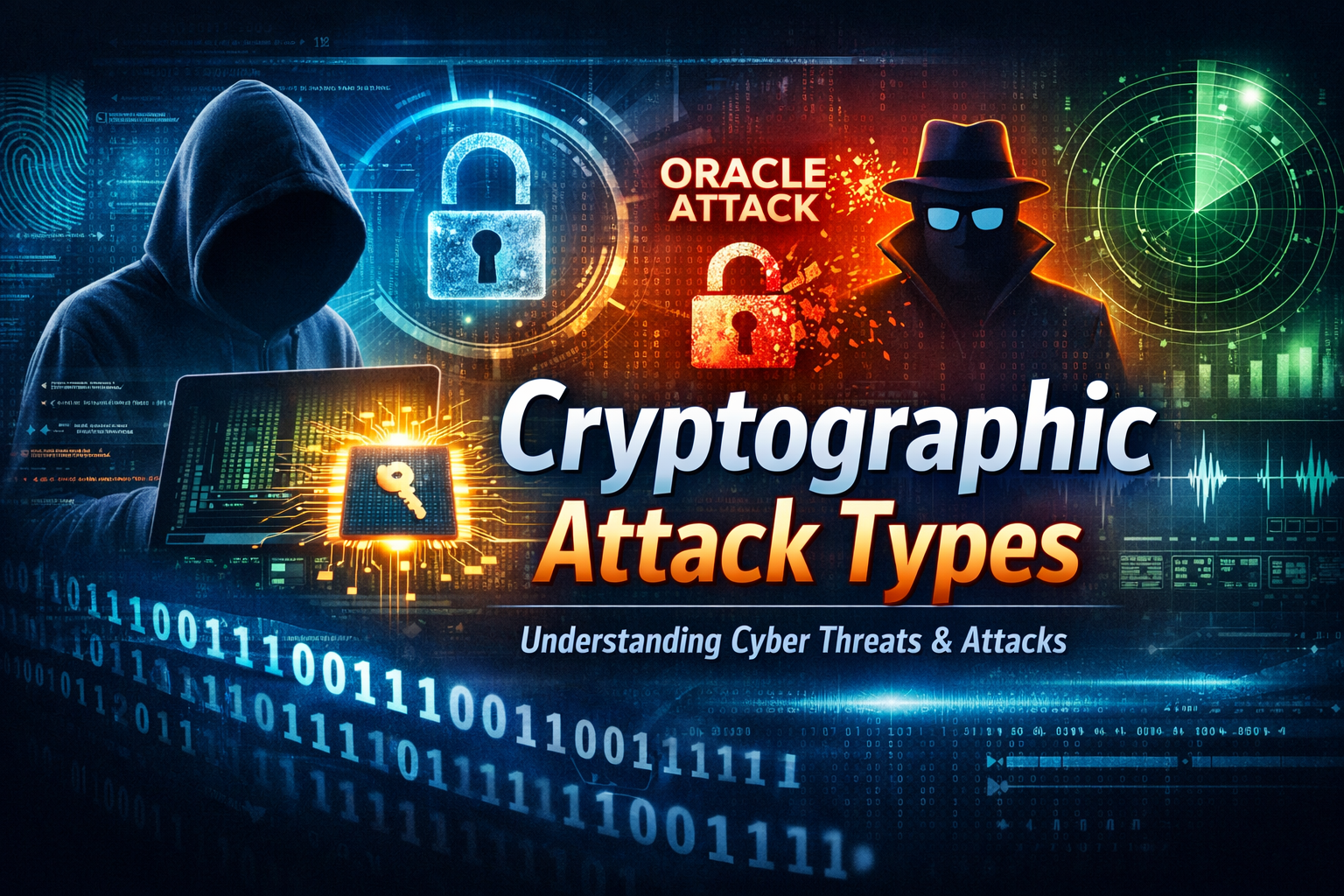
I. What Are Cryptographic Attacks?
----------------------------------
Cryptographic attacks comprise a variety of techniques rather than a single method. These attacks are classified according to the information, scenario, and resources available to the attacker. Understanding these categories is essential for designing secure encryption systems, assessing risk, and implementing effective defenses.
II. Detailed Overview of Basic Attack Types
-------------------------------------------
### 1. Ciphertext-Only Attack
This fundamental attack involves an adversary who possesses only ciphertext, with no access to the corresponding plaintext or additional data. The attacker analyzes the ciphertext or attempts exhaustive guessing to infer the plaintext or the encryption key.
### 2. Known-Plaintext Attack
The attacker obtains several known pairs of plaintext and ciphertext. By examining patterns and characteristics within these pairs, the attacker analyzes the encryption process and tries to deduce the key.
### 3. Chosen-Plaintext Attack
This more advanced attack model allows the attacker to select arbitrary plaintexts and receive the corresponding ciphertexts. Through carefully crafted plaintexts, the attacker aims to reveal the algorithm’s internal structure.
### 4. Chosen-Ciphertext Attack
Here, the attacker selects ciphertexts and obtains their corresponding plaintexts. Certain algorithms are susceptible to this model; for example, the historical Bleichenbacher attack is a notable case.
III. Advanced Attacks and Complex Scenarios
-------------------------------------------
Beyond the basic categories, there are more sophisticated techniques requiring deeper analysis:
### 1. Meet-in-the-Middle Attack
This key search optimization attack significantly reduces cracking time in multi-layer encryption environments.
### 2. Padding Oracle Attack
By exploiting feedback from a system’s reaction to incorrect padding, attackers can incrementally deduce the plaintext within a ciphertext.
### 3. Rotational Cryptanalysis
This method targets algorithms that use ARX operations (addition, XOR, rotation), leveraging preserved correlations for analytical attacks.
IV. Side-Channel Attacks and Real-World Threats
-----------------------------------------------
Beyond mathematical approaches, another attack vector does not rely on algorithmic flaws but instead extracts keys by exploiting leaked physical information:
### Side-Channel Attack
These attacks analyze external leakage from encryption devices in operation—such as power consumption, electromagnetic emissions, or computation time—to obtain key data. In recent years, such attacks have frequently targeted smart cards, IoT devices, and hardware security modules.
V. How to Build More Secure Cryptographic Systems?
--------------------------------------------------
To defend against these attack types, both industry and academia have developed multiple countermeasures:
- Use longer keys and stronger randomness to minimize the success rate of brute-force attacks.
- Implement strict constant-time algorithms to prevent leaks from timing side channels.
- Adopt hardware designs resistant to side-channel attacks, such as power analysis.
- Apply formal security proofs to protocols to ensure robustness against known attack models.
Conclusion
----------
Cryptographic attacks are highly varied, ranging from basic ciphertext-only attacks to sophisticated adaptive chosen-plaintext attacks and physical side-channel exploits. Each has distinct mechanisms, exploitation conditions, and corresponding defenses. A comprehensive understanding of these attack models is essential for secure design, implementation, and evaluation.
Author: Max
* The information is not intended to be and does not constitute financial advice or any other recommendation of any sort offered or endorsed by Gate Web3.
* This article may not be reproduced, transmitted or copied without referencing Gate Web3. Contravention is an infringement of Copyright Act and may be subject to legal action.
Related Articles

Beginner
2026 Stablecoin Classification Deep Dive: From Fiat-Collateralized to Algorithmic Stablecoins, Market Landscape and Future Trends
A thorough breakdown of stablecoin types—including fiat-backed, crypto-collateralized, algorithmic, and hybrid models—paired with up-to-date regulatory and market trends, empowers readers to navigate the stablecoin ecosystem and make informed investment decisions.

Beginner
What Are Fractional NFTs? Understanding the Mechanics of NFT Fractionalization and Its Real-World Use Cases
Fractional NFTs make high-value NFTs more accessible by breaking them into tradable shares. This article offers a comprehensive overview of the underlying technology, practical use cases, and inherent limitations.

Beginner
Top Telegram Games to Watch in 2026: The New Web3 Gaming Frontier and Investment Strategies
A comprehensive review of the top Telegram games to watch in 2026—including standout projects like Notcoin, Hamster Kombat, and Azuki Alley Escape—offering expert insights into gameplay trends and potential investment opportunities.

Beginner
The Next 100x Coin? Low-Cap Crypto Gem Analysis
This article analyzes cryptocurrency projects with low market capitalization that may be noteworthy in 2025, offering analysis from the perspectives of technology, community engagement, and market potential. Additionally, the report offers guidance on coin selection and highlights key risk factors for new investors.

Beginner
What Is Jupiter? A Complete Guide to Solana’s Leading Decentralized Exchange Aggregator
Jupiter stands as the core decentralized exchange aggregator within the Solana ecosystem, delivering users the best prices, minimal slippage, and seamless cross-pool liquidity integration. This article thoroughly examines Jupiter's mechanisms, exploring its features, strengths, trading processes, and future outlook. You'll gain a clear understanding of why Jupiter has emerged as the primary entry point for trading on Solana.

Beginner
Best Metaverse Projects in 2026: Seizing the Next Digital Wave
A comprehensive analysis of the leading Metaverse projects for 2026: Explore key developments from Web2 giants like Meta and Roblox, as well as Web3 frontrunners including The Sandbox and Decentraland. This article delivers the latest trends, technological breakthroughs, and investment opportunities in the Metaverse sector.