

Search Token/Wallet
What is an Altcoin? The 10 Most Important Altcoins You Should Know About | Beginner's Guide Beyond Bitcoin
2026-01-01 18:08
Altcoins
Crypto Trading
DeFi
Ethereum
Stablecoin
Article Rating : 4
158 ratings
# Article Overview: Exploring Alternative Cryptocurrencies: Top Altcoins to Consider Investing in 2024
This comprehensive guide demystifies altcoins—cryptocurrencies beyond Bitcoin—covering their definitions, types, and market dynamics. It examines ten leading altcoins including Ethereum, Solana, and Cardano, explaining their unique value propositions and use cases. The article addresses critical investor concerns: altcoin dominance metrics, altseason identification, risk-reward analysis, and due diligence frameworks. Perfect for cryptocurrency investors seeking portfolio diversification, it provides actionable research criteria, security best practices for storing assets on platforms like Gate, and practical strategies for navigating volatile altcoin markets. Whether you're evaluating emerging projects or understanding market trends, this resource equips you with essential knowledge to make informed investment decisions in the evolving crypto ecosystem.
## Understanding Altcoins: Definition and Context
Imagine a world where Bitcoin is just the beginning of digital currency. That is exactly what has occurred in the cryptocurrency universe. Although Bitcoin remains the pioneer and the largest cryptocurrency, since its creation in 2009, thousands of alternative digital currencies have emerged. These alternatives are collectively known as "altcoins."
The term "altcoin" is an acronym from the words "alternative" and "coin," and refers to any cryptocurrency that is not Bitcoin. Just as there are different types of vehicles for different purposes, altcoins were created to solve various problems or offer features that Bitcoin does not provide.
The first altcoin, Litecoin, appeared in 2011 with the objective of processing transactions faster than Bitcoin. Today, the crypto ecosystem includes more than 16,500 cryptocurrencies, each with unique characteristics and purposes. Although Bitcoin currently represents around half of the total value of the cryptocurrency market, altcoins make up the other half, demonstrating their growing importance in the digital economy.
## Differentiating Altcoins from Bitcoin: Key Terminology
To properly understand what altcoins are, it's important to clarify some basic terms in the crypto world:
A "coin" is a cryptocurrency that operates on its own blockchain. Bitcoin operates on the Bitcoin network, Ethereum on the Ethereum network, and so forth. These are native currencies of their respective networks.
An "altcoin" is any cryptocurrency that is not Bitcoin. However, some consider altcoins to be all cryptocurrencies that are neither Bitcoin nor Ethereum, since these two are the largest and most established.
A "token," on the other hand, is a cryptocurrency that operates on another cryptocurrency's blockchain rather than having its own network. For example, many tokens operate on the Ethereum network, using its infrastructure while serving different functions.
Altcoins are typically classified into two main categories:
1. Those that share code similar to Bitcoin but have been modified to include new features.
2. Those built from scratch with completely different code and operating mechanisms.
Most altcoins seek to resolve certain limitations of Bitcoin, such as transaction speed, energy consumption, privacy features, or versatility of use. Each altcoin has its own unique value proposition that distinguishes it from Bitcoin and other cryptocurrencies.
## Types of Altcoins: From Stablecoins to Memecoins
The universe of altcoins is incredibly diverse, with several categories serving different purposes within the crypto ecosystem:
### Stablecoins
Stablecoins are designed to minimize price volatility by tying their value to stable assets such as the US dollar or gold. Well-known examples include USDC, USDT (Tether), and DAI. Unlike most cryptocurrencies, stablecoins aim to maintain a constant value, making them useful for daily transactions or as a refuge during periods of high volatility.
### Utility Tokens
Utility tokens provide access to services within a specific blockchain network. They function as digital keys that unlock features or services on a platform. XRP, designed for international transfers, and MATIC, which helps reduce fees on the Polygon network, are examples of this type.
### Payment Tokens
These altcoins are specifically designed to be used as mediums of value exchange. They focus on being efficient means of exchange, with features such as fast transactions and low fees.
### Governance Tokens
[Governance tokens](https://web3.gate.com/crypto-wiki/article/understanding-governance-tokens-a-comprehensive-guide-20251219) grant token holders the right to vote on decisions within a blockchain project. By holding these tokens, you can participate in protocol changes, similar to how shareholders vote in a company. A notable example is Maker (MKR), which allows its holders to vote on the operation of the MakerDAO platform.
### Security Tokens
These represent ownership of an external asset, similar to traditional securities. They can represent shares of a company, real estate property, or other investments. These tokens are typically subject to securities regulations.
### Memecoins
Memecoins began as jokes or social commentary but gained popularity through community support. Dogecoin (DOGE) and Shiba Inu (SHIB) are famous examples that started as internet memes and later developed large user bases. They often have massive or unlimited supplies, leading to low unit prices.
### Play-to-Earn Tokens
These tokens power blockchain-based games where players can earn cryptocurrency rewards through gameplay. Axie Infinity is a prominent example, where players breed, train, and battle fantasy creatures while earning tokens that can be exchanged for other currencies.
## The 10 Leading Altcoins: Market Leaders and Their Use Cases
Although thousands of altcoins exist, only a few have established themselves as market leaders through their utility, adoption, and market capitalization. These are some of the most relevant altcoins in recent years:
### 1. Ethereum (ETH)
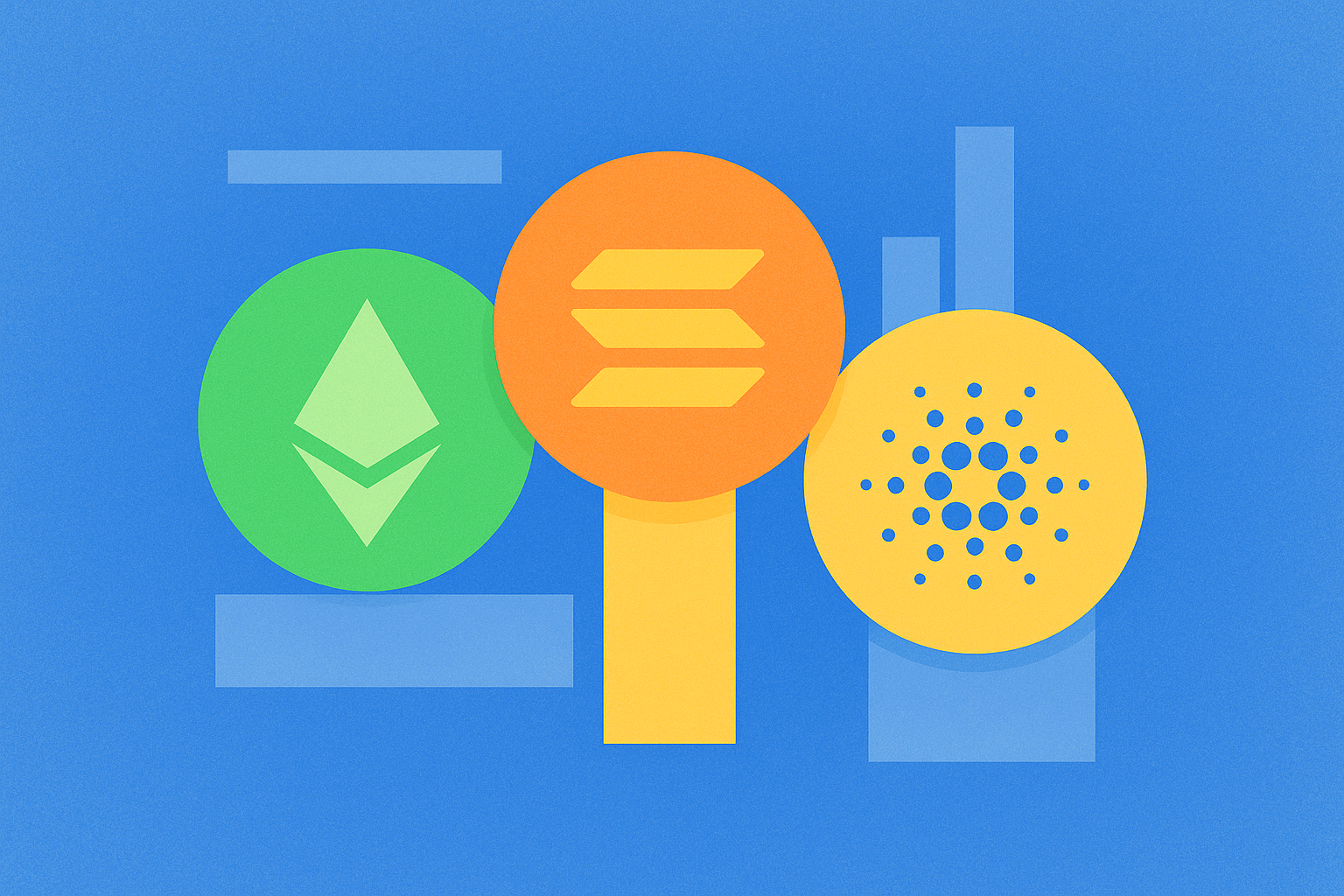
[Ethereum](https://web3.gate.com/crypto-wiki/article/understanding-ethereum-record-for-beginners-20251220) is the largest altcoin, with a market capitalization of approximately 440 billion dollars. Unlike Bitcoin, which functions primarily as digital money, Ethereum introduced programmable "[smart contracts](https://web3.gate.com/crypto-wiki/article/understanding-blockchain-smart-contracts-a-comprehensive-guide)" that execute automatically when certain conditions are met. This innovation has enabled the creation of thousands of applications on its platform, from financial services to games and digital art marketplaces.
### 2. XRP
Developed by Ripple Labs, XRP aims to enable fast, low-cost international money transfers. It focuses particularly on helping financial institutions improve cross-border payments, offering an alternative to traditional banking systems like SWIFT.
### 3. Solana (SOL)
Solana has gained popularity for its extremely fast transaction speeds and low costs. Its blockchain can process thousands of transactions per second, making it attractive for applications requiring high performance, such as trading platforms and video games.
### 4. Cardano (ADA)
Cardano adopts a research-based approach to blockchain development, with a strong emphasis on security and sustainability. It uses a proof-of-stake consensus mechanism that consumes significantly less energy than Bitcoin's mining method.
### 5. Litecoin (LTC)
Known as "the silver to Bitcoin's gold," Litecoin was one of the first altcoins, created in 2011. It offers faster transaction confirmation times and a different hashing algorithm than Bitcoin. With a solid track record of over a decade, Litecoin remains popular for everyday payments due to its relatively low fees and widespread acceptance.
### 6. Dogecoin (DOGE)
What began as a joke based on an internet meme has become one of the world's most recognized cryptocurrencies. Despite its humorous origins, Dogecoin has developed a passionate community and gained mainstream attention through celebrity endorsements. Its accessible price and infinite supply make it popular for tips and small online transactions.
### 7. Tether (USDT)
As the largest [stablecoin](https://web3.gate.com/crypto-wiki/article/stablecoins-fundamentals-and-advantages-for-cryptocurrency-beginners-20251227) by market capitalization, Tether maintains a value pegged to the US dollar. Each USDT token is backed by reserves intended to equal its $1 value, making it a crucial tool for traders wanting to move between volatile cryptocurrencies and stable assets without returning to fiat currencies. It is one of the most traded cryptocurrencies by daily volume.
### 8. USD Coin (USDC)
USDC is a rapidly growing regulated stablecoin pegged to the US dollar. Created by the Centre consortium (founded by Circle and Coinbase), USDC is known for its transparency, with periodic attestations of its dollar reserves. It has become essential infrastructure for decentralized finance applications and cross-border payments.
### 9. Shiba Inu (SHIB)
Launched in 2020 as an alternative to Dogecoin, Shiba Inu quickly gained a massive following. Despite starting as a memecoin, the project has expanded to include a decentralized exchange (ShibaSwap), an NFT platform, and other utilities. Its extremely low per-token price allows investors to own millions or billions of tokens, contributing to its popularity among retail investors.
### 10. Uniswap (UNI)
Uniswap revolutionized cryptocurrency trading with its automated market maker model. As one of the largest decentralized exchanges, it allows users to swap tokens directly from their wallets without intermediaries, while UNI token holders can participate in governance decisions about the protocol's future.
Each of these altcoins offers distinct features and benefits compared to Bitcoin, addressing specific market use cases and needs.
## Altcoin Dominance and Market Capitalization: Essential Metrics for Cryptocurrency Investors
To make informed decisions about altcoin investments, you need to understand two key market metrics: altcoin dominance and market capitalization.
### Altcoin Dominance
Altcoin dominance refers to the percentage of the total cryptocurrency market value that belongs to all altcoins combined. It is calculated using the formula:
> Altcoin Dominance = (Total Crypto Market Cap – Bitcoin Market Cap) / Total Crypto Market Cap × 100%
When Bitcoin dominance decreases, altcoin dominance increases, indicating that more capital is flowing toward alternative cryptocurrencies.
The altcoin dominance chart is a powerful tool for detecting market trends:
- **Rising altcoin dominance** (generally above 55%) typically indicates an altseason, where altcoins outperform Bitcoin
- **Falling altcoin dominance** typically indicates a Bitcoin-focused market, where investors prioritize the leading cryptocurrency
Historically, altcoin dominance peaked during the 2017-2018 bull market, reaching nearly 67%, and again in mid-2021, approaching 60%. These periods coincided with explosive price growth in altcoins.
### Altcoin Market Capitalization
The market capitalization of altcoins represents the total value of all altcoins in circulation. It is calculated by multiplying the current price of each coin by its circulating supply and then summing these values (excluding Bitcoin).
In recent years, the total altcoin market capitalization has reached approximately 1.4 trillion dollars, representing around 55% of the entire cryptocurrency market.
Monitoring the altcoin market capitalization chart provides valuable insights:
- **Sustained growth** in altcoin market capitalization typically indicates lasting interest in the broader crypto ecosystem
- **Sudden spikes** may signal excessive speculation or a potential bubble
- **Comparing individual altcoin market capitalizations** helps you understand their relative importance and adoption levels
Many investors track the relationship between Bitcoin's market capitalization and total altcoin capitalization to identify potential capital rotations between these market segments. When capital flows from Bitcoin to altcoins, it often triggers price increases across the altcoin market.
## Altseason Index: When and Why Alternative Cryptocurrencies Outperform Bitcoin
In the cryptocurrency market, there exists a fascinating phenomenon known as "altseason" or "altseason." This term refers to periods when altcoins collectively outperform Bitcoin, often experiencing dramatic price increases over a relatively short timeframe.
### What Triggers Altseason?
Altseasons typically begin after Bitcoin has experienced significant growth and then stabilizes or moves sideways. Investors seeking higher returns may shift some of their funds from Bitcoin to altcoins, decreasing Bitcoin's market dominance and causing price increases in alternative cryptocurrencies.
### How to Identify Altseason
The [Altseason](https://web3.gate.com/crypto-wiki/article/comprehensive-guide-to-understanding-altseason-trends-20251229) Index is a metric that helps investors determine whether the market is in an altseason. The index considers:
1. **Relative Performance:** If most altcoins are outperforming Bitcoin over a given period, an altseason may be underway.
2. **Bitcoin Dominance:** When Bitcoin's share of total crypto market capitalization decreases, it typically indicates capital flowing toward altcoins.
3. **Trading Volume:** An increase in altcoin trading activity compared to Bitcoin may signal the beginning of altseason.
4. **Social Media Sentiment:** Growing interest in specific altcoins on social platforms often precedes price increases.
### Historical Altseason Bull Markets and Patterns
Notable altseasons include:
- **2017-2018:** Bitcoin's market dominance fell from 86.3% to 38.69%, coinciding with the ICO (Initial Coin Offering) boom.
- **2020-2021:** During the COVID-19 pandemic, retail investors sought opportunities beyond Bitcoin, leading to the rise of meme coins like Dogecoin and the NFT (Non-Fungible Token) market boom.
### Duration of Altseason
Altseasons typically last from a few weeks to several months, depending on market conditions, investor sentiment, and broader economic factors. They can end as quickly as they begin, with prices potentially falling as rapidly as they rose.
## Investing in Altcoins: Potential Rewards and Risk Factors
Like any investment, altcoins come with potential benefits and significant risks that investors must carefully consider.
### Advantages of Investing in Altcoins
1. **Improvements Over Bitcoin:** Many altcoins were designed to address specific Bitcoin limitations, such as transaction speed, energy consumption, or functionality. This can provide them with technical advantages in certain use cases.
2. **Greater Growth Potential:** Since altcoins typically have smaller market capitalizations than Bitcoin, they can offer higher percentage returns if successful. A $1,000 investment in a successful small altcoin could multiply far more than the same investment in Bitcoin.
3. **Diversified Options:** With thousands of altcoins available, investors can choose projects aligned with specific technologies, industries, or problems they believe in.
4. **Utility Beyond Currency:** Many altcoins offer functionality beyond being a store of value, such as powering decentralized applications or providing governance rights in blockchain projects.
### Disadvantages of Investing in Altcoins
1. **Higher Risk:** Altcoins generally carry more risk than Bitcoin. Many projects fail completely, resulting in total investment loss. The smaller the altcoin, the typically higher the risk.
2. **Market Volatility:** Altcoin prices can be extremely volatile, with price swings of 20-30% in a single day. This volatility can make altcoin investments stressful and difficult to time.
3. **Lower Liquidity:** Most altcoins have lower trading volumes than Bitcoin, which can make buying or selling large quantities difficult without affecting the price.
4. **Regulatory Uncertainty:** The cryptocurrency regulatory landscape is still developing, and future regulations could significantly impact certain altcoin types, especially those that might be classified as securities.
5. **Scams and Failures:** The altcoin space has seen numerous scams, fraudulent projects, and failed ventures. Without proper research, investors can easily fall victim to pump-and-dump schemes or projects that never deliver on promises.
## How to Research Altcoins: A Framework for Evaluating Cryptocurrency Projects
Given the risks associated with altcoin investments, thorough research before committing capital is essential. Here are key factors to consider when evaluating potential altcoin investments:
### 1. Understand the Project's Purpose and Problem It Solves
- What real-world problem does the altcoin address?
- Is there a genuine need for this solution, or is it solving a non-existent problem?
- How does it compare with existing solutions within and outside the crypto space?
### 2. Evaluate the Team
- Research the experience and background of the development team
- Look for transparency regarding member identities and qualifications
- Verify whether the team has successfully delivered projects in the past
- Examine how many active developers the project has
### 3. Read the White Paper
The white paper is a key document explaining the technology, objectives, and implementation strategy of a cryptocurrency. When reviewing it, pay attention to:
- Clear and specific technical explanations
- Well-[defi](https://web3.gate.com/crypto-wiki/article/how-decentralized-finance-works-essential-guide-20251225)ned roadmap with realistic timelines
- Transparent tokenomics (how tokens are distributed and used)
- Red flags such as vague descriptions, unrealistic promises, or poor writing
### 4. Analyze the [Tokenomics](https://web3.gate.com/crypto-wiki/article/what-is-a-tokenomics-model-how-token-distribution-inflation-design-and-governance-mechanisms-work-20251228)
- What is the total token supply?
- How are tokens distributed (team allocation, public sale, etc.)?
- Is there a mechanism to control inflation?
- Are there lock-up periods for team tokens?
### 5. Evaluate Market Metrics
- Market Capitalization: the total value of all tokens in circulation
- Liquidity: how easily the token can be bought or sold without affecting its price
- Trading Volume: how much the token is traded daily
- Price History: how it has performed over time
### 6. Community and Adoption
- Community size and engagement on social media, forums, etc.
- Partnerships with established companies or organizations
- Real-world usage statistics and adoption
- Quality of project team communication
### 7. Security and Audits
- Has the code been audited by recognized security firms?
- Has the project experienced security breaches?
- How decentralized is the network?
By thoroughly examining these aspects, you can make more informed decisions about which altcoins might be valuable investments and which to avoid.
## Wallet Guide for Altcoins: Protecting Your Cryptocurrency Investments
Properly storing your altcoins is crucial for protecting your investment. Different storage options offer varying levels of security and convenience.
### Types of Cryptocurrency Wallets
#### Hardware Wallets (Cold Storage)
- Physical devices that store your private keys offline
- Examples: Ledger, Trezor, Tangem
- Most secure option, recommended for large amounts
- Protects against online attacks
- Typically cost between $50 and $200
#### Software Wallets
- Desktop applications: installed on your computer (e.g., Exodus, Electrum)
- Mobile applications: apps on your smartphone (e.g., Trust Wallet, MetaMask mobile)
- Web wallets: accessible from your browser (e.g., MetaMask extension)
- More convenient than hardware wallets, but less secure
#### Exchange Wallets
- Direct storage on the exchange where you made purchases
- Most convenient option, but less secure
- Only suitable for small amounts or temporary storage
- The exchange controls your private keys
#### Paper Wallets
- Physical documents with your private keys
- Completely offline storage
- Very secure if created correctly, but difficult to use
- Not recommended for beginners
### Security Best Practices
Regardless of the wallet type you choose, follow these essential practices:
1. **Never share your private keys or recovery phrases** with anyone
2. **Write down recovery phrases on paper** (not digitally) and store them in a secure location
3. **Use strong and unique passwords** for all cryptocurrency-related accounts
4. **Enable two-factor authentication (2FA)** with an authenticator app, not SMS
5. **Use different wallet types:** hot wallets for frequent transactions, cold wallets for long-term storage
6. **Keep your software updated** to fix security vulnerabilities
7. **Be cautious of phishing attempts** targeting your crypto assets
8. **Consider using a device dedicated exclusively** to crypto transactions
9. **Back up your wallet** according to the provider's recommendations
10. **Start with small transactions** before moving large amounts
As the saying goes in crypto: "If they're not your keys, they're not your coins." Taking personal responsibility for protecting your altcoins is an essential part of participating in the cryptocurrency ecosystem.
## Conclusion
The altcoin market has continued to evolve since its beginnings in 2011. As the crypto space matures, projects with genuine utility and real-world applications are likely to thrive, while others will disappear.
For beginners entering the altcoin world, reliable cryptocurrency exchanges offer ideal starting points with diverse trading pairs, user-friendly interfaces, and robust security measures. The competitive fees of leading platforms and their extensive selection of emerging altcoins make them especially valuable during altseasons, when diversification opportunities abound.
Whether you seek to understand market trends through metrics like altcoin dominance or build a diversified portfolio of promising projects, modern trading platforms provide the tools and accessibility needed to navigate this exciting market.
## FAQ
### What is an Altcoin (Altcoin)? What is the difference between it and Bitcoin?
Altcoins are all cryptocurrencies other than Bitcoin. They differ by having unique functionalities, blockchain protocols, and use cases. Notable altcoins include Ethereum, which offers smart contract capabilities, while Bitcoin focuses on peer-to-peer transactions and store of value.
### Why understand altcoins? What are the advantages and risks of investing in altcoins?
Understanding altcoins helps identify high-potential opportunities beyond Bitcoin. Advantages include higher growth potential and portfolio diversification. Risks involve high volatility, lower liquidity, and market speculation.
### What are the top ten altcoins worth paying attention to in 2024?
Top altcoins include Ethereum, [Solana](https://web3.gate.com/crypto-wiki/article/all-about-solana-what-it-is-and-how-it-works-20251227), Ripple, Cardano, Chainlink, Polygon, Uniswap, Avalanche, Polkadot, and Cosmos. These projects offer strong fundamentals, large trading volumes, and significant ecosystem development potential for 2024 and beyond.
### What is the core value of Ethereum (Ethereum) as the most important altcoin project?
Ethereum's core value lies in enabling decentralized applications and smart contracts on a scalable platform. Its flexibility and broad ecosystem applications make it stand out among altcoins as the world's leading programmable blockchain.
### How to evaluate the investment potential of an altcoin project? What indicators should be considered?
Evaluate altcoins by analyzing project technology, team credentials, and market demand. Key metrics include whitepaper quality, community engagement, trading volume, developer activity, tokenomics, and real-world use cases. Strong fundamentals indicate higher investment potential.
### How do altcoins compare to Bitcoin in terms of liquidity and volatility?
Altcoins typically have lower liquidity and higher volatility than Bitcoin. Bitcoin, as the largest cryptocurrency, enjoys deeper order books and more stable pricing. Altcoins experience sharper price swings and thinner trading volumes, offering both greater profit potential and higher risk for traders.
### How should beginners safely purchase and store altcoins?
Buy altcoins from regulated exchanges and complete identity verification. Use cold wallets for long-term storage to ensure security. Start with small investments within your budget and never invest more than you can afford to lose.
### What are the future prospects of altcoins? Which sectors of altcoins have the most development potential?
Altcoins show strong future prospects, particularly in blockchain technology and decentralized applications. Layer-2 solutions, DeFi, AI integration, and gaming sectors present significant growth opportunities through 2026 and beyond.
* The information is not intended to be and does not constitute financial advice or any other recommendation of any sort offered or endorsed by Gate.
Related Articles
Understanding Polygon Blockchain: A Comprehensive Guide
This article explores the Polygon blockchain network, highlighting its significance as a layer-2 scaling solution for Ethereum. It discusses Polygon's technology innovations, including plasma chains, sidechains, and the zkEVM, which improve transaction speed and reduce costs. The guide further explains the role of the MATIC token and its applications across DeFi, NFTs, and gaming sectors. Readers will gain insights into Polygon's contributions to blockchain scalability, security, and decentralized governance, making it a key player in the Web3 ecosystem.
2026-11-04
Understanding the Basics of Smart Contracts
"Understanding the Basics of Smart Contracts" explains the transformative role of smart contracts in blockchain technology. The article covers their definition, unique features such as automatic execution and reduced intermediaries, and origins with Nick Szabo and the Ethereum revolution. It guides readers through the lifecycle, from writing to deployment, and explores applications across DeFi, identity verification, and decentralized trading. Designed for tech enthusiasts and industry professionals, the article enhances understanding by comparing blockchains and smart contracts, providing examples such as Ethereum's ERC-20 standard.
2025-11-30
ZK Rollups Explained: Enhancing Blockchain Scalability Through Zero-Knowledge Solutions
This article delves into ZK Rollups, a key layer-2 scaling solution for Ethereum, enhancing blockchain scalability through zero-knowledge proofs. It addresses the challenges of high transaction costs and congestion in Ethereum's main chain, offering faster transactions and lower fees. Targeted at developers and users involved in Web3 and blockchain applications, the article explains the workings, benefits, and distinctions of ZK Rollups compared to optimistic rollups. Structured to provide clear insights on its applications in DeFi, gaming, and NFT trading, it highlights projects like Polygon, StarkWare, and Immutable X, portraying ZK Rollups as a pivotal technology in blockchain scalability.
2025-12-18

Layer 2 Scaling Made Easy: Bridging Ethereum to Enhanced Solutions
The article delves into Layer 2 solutions, focusing on optimizing Ethereum's transaction speed and cost efficiency through bridging. It guides users on wallet and asset selection, outlines the bridging process, and highlights potential fees and timelines. The article caters to developers and blockchain enthusiasts, providing troubleshooting advice and security best practices. Keywords like "Layer 2 scaling," "bridge services," and "optimistic rollup technology" enhance content scannability, aiding readers in navigating Ethereum's ecosystem advancements.
2025-12-24
Understanding the Functionality of Polygon Sidechain Technology
Explore the significance of Polygon, a pivotal blockchain solution enhancing Ethereum's scalability in the Web3 ecosystem, backed by major brands like Disney and Meta. Learn about its layer-2 sidechain technology, offering reduced transaction fees and improved speeds. Delve into MATIC's role in network security and governance, along with comparisons to Ethereum and other layer-2 solutions. Understand its diverse applications in DeFi, NFT trading, and blockchain gaming. Polygon's ongoing commitment to decentralization and security reforms emphasizes its importance in the blockchain industry's growth.
2025-12-20
What is the global crypto market overview in 2026: market cap rankings, trading volume, and liquidity analysis?
# Global Crypto Market Overview in 2026: Market Cap Rankings, Trading Volume, and Liquidity Analysis
This comprehensive analysis examines the 2026 cryptocurrency landscape, revealing how Bitcoin and Ethereum maintain dominant positions through institutional adoption and regulatory clarity. The article provides essential market intelligence covering multi-trillion-dollar valuations, daily spot trading volumes exceeding $100 billion across major exchanges including Gate, and circulation supply dynamics across 500+ trading platforms. Designed for institutional investors, crypto analysts, and market participants, this guide addresses critical questions about market cap rankings, liquidity infrastructure, and emerging asset distribution across North America, Europe, and Asia. By analyzing stablecoin infrastructure, exchange coverage rates, and trading volume metrics, readers gain actionable insights into 2026's institutional-grade crypto market maturity. The article progresses logically from market dominance asse
2026-01-02
Recommended for You

What is BULLA coin: analyzing whitepaper logic, use cases, and team fundamentals in 2026
BULLA coin introduces decentralized accounting and on-chain data management innovation built on BNB Smart Chain, eliminating intermediaries while ensuring real-time transaction verification. The platform addresses critical gaps in cryptocurrency infrastructure by embedding accounting logic directly into smart contracts, enabling transparent audit trails and regulatory compliance. Real-world applications include seamless transaction imports across multiple exchanges, comprehensive crypto portfolio tracking, and secure record-keeping for investors. Trade import tools enhance user experience by automating data categorization and consolidation. Founded in 2021 by blockchain architect Benjamin with support from experienced fintech designers and engineers, BULLA Networks demonstrates active development momentum with continuous smart contract iterations through early 2026. The 2026-2027 strategic roadmap prioritizes network infrastructure expansion and enhanced security protocols, positioning BULLA as a robust decen
2026-02-08

What is on-chain data analysis and how does it reveal whale movements and active addresses in crypto?
On-chain data analysis reveals cryptocurrency market dynamics by examining active addresses and transaction metrics that expose whale movements and investor behavior. This comprehensive guide explores how blockchain data serves as a critical market indicator, demonstrating the correlation between large holder activities and price movements—such as FLOKI's 950% surge in whale transactions. The article covers whale movement tracking, holder distribution patterns showing 73.47% concentration among major stakeholders, and on-chain fee trends as cycle indicators. Essential metrics include active addresses reflecting genuine network participation, transaction volumes revealing strategic positioning, and network congestion patterns during market cycles. By tracking these interconnected indicators through platforms like Glassnode and Gate, investors and traders can identify market sentiment shifts, anticipate price movements, and distinguish institutional activity from retail participation, making on-chain analysis i
2026-02-08

What is Vodra (VDR) crypto: whitepaper logic, use cases, and fundamentals analysis for 2026
Vodra (VDR) is a decentralized blockchain platform revolutionizing creator economics through AI-powered infrastructure and transparent compensation systems. The project addresses the creator economy's core challenge—unfair intermediary-controlled monetization—by enabling direct audience-to-creator transactions without traditional gatekeepers. VDR's whitepaper establishes a dual-layer architecture combining artificial intelligence for content assistance with blockchain verification for security and transparency. The platform's real-world applications extend from content monetization to DeFi ecosystem integration, real-world asset tokenization, and AI-driven automation by 2026. Founded by former Google engineer Yu Hu with backing from prominent investors like Dragonfly and The Spartan Group, Vodra positions itself at the intersection of Web3 infrastructure and creator empowerment. Key acquisition channels include Gate and other decentralized exchanges, with development roadmaps targeting API standardization, en
2026-02-08

How do cryptocurrency competitors compare in market share, performance, and user adoption in 2026?
This comprehensive analysis examines how major cryptocurrency competitors diverge across market share, performance, and user adoption in 2026. Bitcoin maintains dominance above 60% while institutional investors adopt core-satellite portfolios allocating 60-80% to Bitcoin and 15-25% to Ethereum. Layer-2 solutions command a decisive 40% market share advantage over legacy networks, with Solana leading at 1,133 TPS and driving institutional TVL beyond $50 billion. Regional adoption varies dramatically: Asia-Pacific accelerates at 11.6% CAGR driven by digital transformation, while North America concentrates 75% institutional users. Trading activity concentrates on Gate and leading platforms, with top five cryptocurrencies maintaining 61% combined market share. Understanding these divergent trajectories is essential for investors navigating competitive positioning and institutional capital flows.
2026-02-08

What is on-chain data analysis and how does it predict crypto market trends
This comprehensive guide explores on-chain data analysis as a foundational tool for predicting cryptocurrency market trends. The article examines how blockchain metrics—including active addresses, transaction volume, and network health—reveal genuine market sentiment beyond price action alone. Key sections analyze whale movements as reliable leading indicators of market direction, demonstrating how large holder distribution patterns expose institutional positioning before broader price shifts occur. The guide further demonstrates how gas fee trends and network congestion serve as real-time sentiment gauges across different blockchain architectures. By tracking these on-chain indicators on platforms like Gate, traders can identify market opportunities before mainstream recognition. The article emphasizes that while on-chain analysis provides measurable predictive value through transaction flow analysis and holder behavior patterns, it functions best as a complementary tool alongside other market analysis metho
2026-02-08

How Does VeChain (VET) Community and Ecosystem Activity Compare to Other Layer 1 Cryptocurrencies in 2026?
This comprehensive analysis examines VeChain's community and ecosystem activity relative to competing Layer 1 blockchains in 2026. The article evaluates VeChain's multimillion-follower social infrastructure across Discord and Telegram, extensive developer ecosystem featuring 5,000+ DApps, and robust on-chain metrics with 2.5 million daily active addresses. Key findings highlight VeChain's enterprise-grade differentiation through supply chain solutions, institutional partnerships with Fortune 500 organizations, and proven real-world applications. While VeChain demonstrates lower developer numbers than Ethereum and Solana, its focused positioning in enterprise adoption, regulatory compliance through MiCA alignment, and strategic partnerships with DNV and Boston Consulting Group establish competitive advantages in B2B blockchain adoption, positioning VET as a distinctive Layer 1 leader within enterprise-centric ecosystems.
2026-02-08