

Search Token/Wallet
Introduction to GameFi: A Beginner's Guide
2025-12-12 05:09
Bitcoin
Article Rating : 3
113 ratings
This article provides an insightful introduction to GameFi, a sector that merges gaming and finance through blockchain technology. It highlights the growing impact of GameFi on traditional gaming and cryptocurrency ecosystems, where players can earn real value through play-to-earn models and digital asset ownership. The guide explores how GameFi works, its top protocols, and how to start playing blockchain games. It addresses challenges such as gameplay quality and NFT perceptions while emphasizing the sector's growth potential. Suitable for gamers and blockchain enthusiasts interested in understanding and participating in GameFi. Key aspects include play-to-earn mechanics, decentralized governance through DAOs, and emerging opportunities in virtual economies.
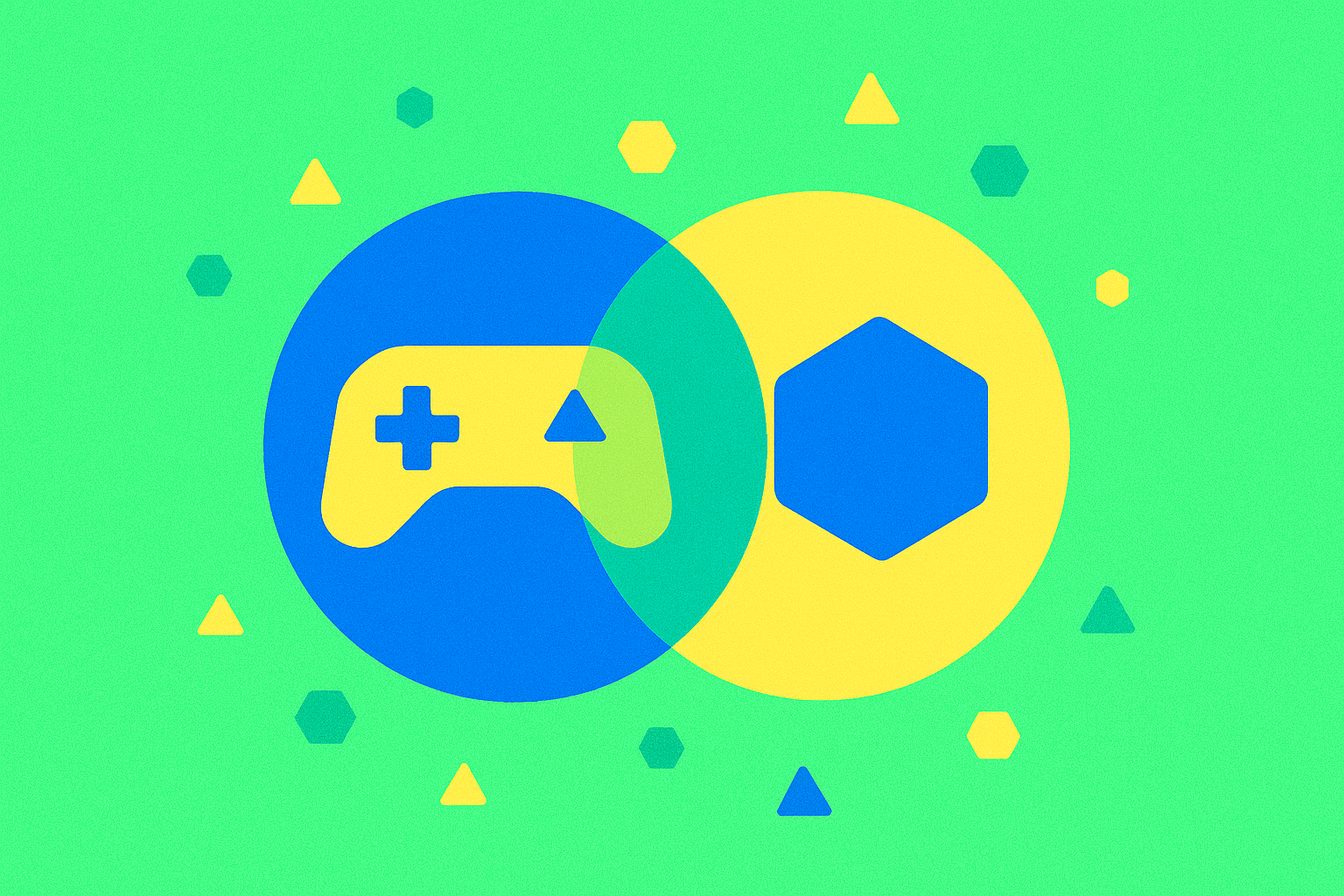
# What is GameFi? An introduction to play-to-earn and blockchain games
GameFi represents the convergence of gaming and finance, creating a revolutionary sector within the cryptocurrency ecosystem. With a total market cap exceeding $19 billion, GameFi and blockchain gaming continue to demonstrate strong growth momentum as they challenge the traditional $175 billion global video games market. This emerging field combines entertainment with financial opportunities, enabling players to generate value through gameplay while maintaining true ownership of digital assets.
## What is GameFi?
GameFi, a portmanteau of "game" and "finance," refers to the financialization of video gaming through blockchain technology. Similar to DeFi (decentralized finance), GameFi represents a fundamental shift in how players interact with and benefit from video games. Unlike traditional gaming models, GameFi titles incorporate various financial mechanisms that allow players to generate real economic value through their in-game activities.
The concept encompasses a broad spectrum of implementations, each offering unique financial elements. Some games reward players for completing specific tasks, while others enable profit generation through the trading of owned digital assets. It's crucial to distinguish GameFi from gambling—these games require players to employ skill, strategy, and tactical thinking rather than relying primarily on chance.
The term "GameFi" originated in November 2019 at the Wuzhen World Blockchain Conference in China, where MixMarvel founders discussed blockchain's potential to revolutionize gaming. Western audiences became more familiar with the term through Andre Cronje, founder of Yearn, who popularized it in a September 2020 tweet. Since then, GameFi has gained widespread recognition as the standard terminology for blockchain-based games with financial components.
The historical roots of GameFi extend nearly as far back as Bitcoin itself. Early experiments included Bitcoin-integrated Minecraft servers, the 2013 platform Gambit.com, and titles like Bombermine and Huntercoin, which allowed players to mine cryptocurrencies through gameplay. Ethereum's 2015 launch marked a pivotal moment, introducing sophisticated smart contract capabilities that enabled on-chain program execution and the creation of decentralized applications. This innovation led to breakthrough titles like CryptoKitties, which leveraged the ERC-721 standard to represent in-game assets as non-fungible tokens (NFTs).
## How do GameFi games work?
GameFi operates through various mechanisms that enable players to monetize their gaming experiences. Modern blockchain games typically combine multiple features to create engaging and financially rewarding gameplay.
Play-to-earn mechanics form the foundation of many successful GameFi titles. In these systems, players receive financial rewards for achieving gameplay objectives, with funds typically distributed from a reserve of native tokens held in smart contracts. Axie Infinity exemplifies this model, rewarding players with AXS tokens for activities such as winning battles and tournaments, maintaining virtual land plots, trading on the marketplace, and breeding Axies.
Digital asset ownership represents another cornerstone of GameFi. Blockchain technology enables true digital scarcity and ownership through NFTs, which can represent diverse in-game items. This creates unprecedented economic opportunities—players can breed creatures, trade unique items, or lease assets to other gamers, sharing generated profits. Virtual worlds like Decentraland, The Sandbox, and Cryptovoxels extend this concept further, enabling land ownership and development similar to real-world property markets. Owners can sell land, develop attractions, or lease plots to others, creating emergent virtual economies that some experts predict will eventually rival real-world markets.
DeFi integration introduces additional monetization layers familiar to cryptocurrency enthusiasts. Concepts like yield farming, liquidity mining, and [staking](https://www.gate.com/zh/staking) provide passive income opportunities within gaming contexts. Projects such as Axie Infinity, Aavegotchi, and Nine Chronicles successfully incorporate these DeFi features, bridging the gap between gaming and decentralized finance.
## Top GameFi protocols
While Bitcoin hosted the first GameFi experiments, most modern blockchain games operate on smart-contract-enabled networks. Ethereum pioneered this space and remains highly popular, though its prioritization of decentralization and security over performance presents scalability challenges. When network demand exceeds capacity, transaction fees can become prohibitively expensive, limiting mass adoption potential.
To address these limitations, developers increasingly build on alternative high-performance networks including various Layer 1 and Layer 2 solutions, Polygon Network, Solana, Wax, Polkadot, BNB Chain, Avalanche, Internet Computer, and Ronin. These platforms offer faster transaction speeds and lower costs, making them more suitable for gaming applications requiring frequent interactions.
## How to get started playing blockchain games
Entering the GameFi space requires several preparatory steps. First, players must create a [Web3 wallet](https://www.gate.com/web3) compatible with their chosen game's blockchain network. Unlike traditional gaming accounts using usernames and passwords, Web3 wallets serve as both identity verification and asset storage. Popular options include various Web3 wallets and MetaMask for Ethereum-based games.
Second, players typically need to acquire specific in-game assets before participating. For instance, Axie Infinity requires ownership of at least three Axies. These assets can be purchased through cryptocurrency exchanges or directly through game marketplaces.
Finally, players connect their Web3 wallet to the game platform, usually through a browser-based interface. The wallet acts as both account and inventory, with all progress and assets saved to the blockchain. This process involves signing a confirmation message, after which players can begin their GameFi journey.
## Decentralizing GameFi with DAOs
Decentralized Autonomous Organizations (DAOs) represent a paradigm shift in game development and governance. Unlike traditional centralized studios that maintain complete control over updates and direction, GameFi DAOs extend decision-making power to players themselves. Token holders can propose and vote on project updates, directly influencing gameplay mechanics and monetary features.
Participation requires ownership of governance tokens, with voting power typically proportional to holdings—larger stakeholders wield greater influence. Some games maintain dedicated DAOs, such as Alien Worlds with its six planetary DAOs, while others like Yield Guild Games operate across multiple titles, pooling assets to generate collective income for members.
## The state of GameFi today
The GameFi sector demonstrates remarkable resilience and growth potential despite broader market volatility. The ecosystem continues to show strong momentum, with developers continuously refining projects and showcasing innovative gameplay mechanics. Upcoming titles like Shrapnel and Illuvium generate significant anticipation, potentially driving substantial increases in active users and market engagement.
Projects increasingly attract players interested in asset ownership, cryptocurrency earnings, and participation in decentralized communities. This growing interest suggests GameFi's potential to capture meaningful market share from traditional gaming.
## GameFi obstacles and roadblocks
Despite promising developments, GameFi faces significant challenges in achieving mainstream adoption. The primary concern centers on gameplay quality—many GameFi titles prioritize earning mechanics over entertainment value, failing to match the polish and strategic depth of established Web2 games. The comparison between Hearthstone's sophisticated design and Gods Unchained's limitations illustrates this gap. Without genuinely engaging gameplay, GameFi struggles to retain players and justify ongoing development.
Additionally, the NFT stigma presents reputational challenges. Negative publicity surrounding certain projects has created skepticism among mainstream audiences. GameFi must develop transparent, fair NFT ecosystems that provide clear utility and intrinsic value, moving beyond the speculative dynamics that characterized early projects.
## The future of GameFi
GameFi stands at an inflection point, transitioning from niche experimentation to mainstream consideration. Axie Infinity's milestone achievements demonstrate the sector's growth potential, and the technology and understanding necessary for widespread adoption continue to mature, positioning gaming as a likely catalyst for blockchain's mass adoption.
The global gaming audience of 2.7 billion players already understands digital scarcity, tokenization, and virtual currencies—concepts fundamental to GameFi. Blockchain technology enhances these familiar elements with true ownership and financial empowerment. Major industry players recognize this potential; the Blockchain Game Alliance includes prestigious members like Ubisoft and AMD, demonstrating growing institutional interest in the sector.
With numerous blockchain games under development across various protocols and increasing mainstream involvement, GameFi's future appears bright. While specific developments remain difficult to predict given blockchain technology's rapid evolution, the sector will likely continue innovating, introducing novel monetization methods and gaming experiences.
## Conclusion
GameFi represents a transformative force in both gaming and cryptocurrency sectors, merging entertainment with financial opportunity through blockchain technology. From its early roots in Bitcoin-integrated games to today's sophisticated titles featuring play-to-earn mechanics, NFT ownership, and DeFi integration, the field has evolved dramatically. Understanding what is GameFi is essential for anyone interested in the future of gaming and blockchain technology. While challenges remain—particularly regarding gameplay quality and NFT perception—the sector demonstrates strong fundamentals and growth trajectory. With a market cap exceeding $19 billion, support from major industry players, and a global gaming audience predisposed to digital asset concepts, GameFi is well-positioned to capture significant market share from the $175 billion traditional gaming industry. As technology advances and developers prioritize both entertainment value and financial innovation, GameFi may well become the bridge that brings blockchain technology to mainstream audiences worldwide.
## FAQ
### How does GameFi make money?
GameFi makes money through play-to-earn models, where players earn crypto or digital assets by playing games, often requiring initial investments in tokens or in-game items.
### What does GameFi mean?
GameFi means 'gaming finance,' combining blockchain gaming with financial elements. Players can earn and trade cryptocurrencies or NFTs through gameplay.
### How to use GameFi?
To use GameFi, set up a compatible crypto wallet, play games to earn rewards, and trade in-game assets for cryptocurrency.
### Is Gods Unchained a GameFi?
Yes, Gods Unchained is a GameFi project. It's a strategic trading card game that utilizes blockchain technology to provide true digital ownership of in-game assets.
* The information is not intended to be and does not constitute financial advice or any other recommendation of any sort offered or endorsed by Gate.
Related Articles
Guide to Maximizing Returns with Top DeFi Yield Farming Strategies
This article provides a comprehensive guide on optimizing DeFi yield farming through the use of DeFi yield aggregators. It explains how these platforms enhance passive income and streamline complex processes, making yield farming more accessible and efficient. Readers will understand the challenges DeFi aggregators solve, including high gas fees and the complexity of managing multiple protocols. The article is structured to cover the operation, benefits, risks, and popular platforms in the DeFi aggregator landscape. Keywords are strategically placed for readability and scanability.
2025-12-24

Understanding Cross-Chain Solutions: A Guide to Blockchain Interoperability
This article delves into the transformative role of cross-chain bridges in blockchain interoperability, essential for the seamless transfer of digital assets. It explains what cross-chain bridges are, outlines their benefits for DeFi operations, and evaluates security challenges. Readers will learn about the top cross-chain bridges and how they innovate crypto transactions. Key points include addressing interoperability issues, enhancing transaction efficiency, and promoting integration across blockchains. With a focus on security audits, liquidity, and community support, the article serves as a comprehensive guide for users exploring cross-chain solutions.
2025-12-24

Understanding DAO in the World of Cryptocurrency
This article explores Decentralized Autonomous Organizations (DAOs) as innovative governance structures in the Web3 ecosystem, detailing their operation, benefits, risks, and notable examples. It highlights how DAOs enable transparent community-driven decision-making using blockchain technology and smart contracts. The piece addresses issues related to security and token concentration, while outlining participation and investment potentials. Key content discusses the operational framework of DAOs, how to join them, benefits and risks, with emphasis on their transformative impact on digital governance.
2025-12-24

Ultimate Guide to Top Crypto Exchange Aggregators for Efficient Trading
This article serves as an ultimate guide to understanding top crypto exchange aggregators, essential for optimizing trading efficiency in the decentralized finance landscape. It discusses their function in pooling liquidity, executing optimal trades, and reducing slippage. Readers will gain insights into selecting the right aggregator to meet individual trading needs, considering factors like cost, security, and interface usability. With detailed comparisons, the article addresses challenges and benefits for beginners and advanced traders alike. Emphasizing crucial concepts like decentralization and self-custody, it offers strategic advice for engaging with these platforms effectively.
2025-12-14

Understanding Bitcoin's Supply Limit: How Many Bitcoins Exist?
The article delves into Bitcoin's finite supply of 21 million coins, shedding light on its implications for the cryptocurrency ecosystem. It explores how Bitcoin's halving mechanism controls supply, impacting mining rewards and inflation. The piece also discusses what happens after all coins are mined, the role of transaction fees, and introduces the Lightning Network's innovation for scalability. Addressing the loss and theft of bitcoins, it highlights security challenges and advancements. Ideal for crypto enthusiasts and investors, the article explains Bitcoin's value proposition rooted in scarcity and decentralization.
2025-12-04

Introduction to GameFi: A Beginner's Guide to Blockchain Gaming
Introduction to GameFi explores the revolutionary intersection of gaming and finance through blockchain technology, highlighting potential ownership and earning opportunities in the digital gaming sphere. The guide is tailored for beginners seeking to immerse themselves in GameFi, addressing questions on its operation, rewards, and DeFi integration. The article methodically covers GameFi basics, its financial mechanisms, major protocols, how to begin playing, and the role of DAOs, followed by current industry challenges and growth prospects. Optimized for easy readability and comprehensive understanding, this article delivers key insights into the emerging GameFi sector.
2025-12-12
Recommended for You

What is BULLA coin: analyzing whitepaper logic, use cases, and team fundamentals in 2026
BULLA coin introduces decentralized accounting and on-chain data management innovation built on BNB Smart Chain, eliminating intermediaries while ensuring real-time transaction verification. The platform addresses critical gaps in cryptocurrency infrastructure by embedding accounting logic directly into smart contracts, enabling transparent audit trails and regulatory compliance. Real-world applications include seamless transaction imports across multiple exchanges, comprehensive crypto portfolio tracking, and secure record-keeping for investors. Trade import tools enhance user experience by automating data categorization and consolidation. Founded in 2021 by blockchain architect Benjamin with support from experienced fintech designers and engineers, BULLA Networks demonstrates active development momentum with continuous smart contract iterations through early 2026. The 2026-2027 strategic roadmap prioritizes network infrastructure expansion and enhanced security protocols, positioning BULLA as a robust decen
2026-02-08

What is on-chain data analysis and how does it reveal whale movements and active addresses in crypto?
On-chain data analysis reveals cryptocurrency market dynamics by examining active addresses and transaction metrics that expose whale movements and investor behavior. This comprehensive guide explores how blockchain data serves as a critical market indicator, demonstrating the correlation between large holder activities and price movements—such as FLOKI's 950% surge in whale transactions. The article covers whale movement tracking, holder distribution patterns showing 73.47% concentration among major stakeholders, and on-chain fee trends as cycle indicators. Essential metrics include active addresses reflecting genuine network participation, transaction volumes revealing strategic positioning, and network congestion patterns during market cycles. By tracking these interconnected indicators through platforms like Glassnode and Gate, investors and traders can identify market sentiment shifts, anticipate price movements, and distinguish institutional activity from retail participation, making on-chain analysis i
2026-02-08

What is Vodra (VDR) crypto: whitepaper logic, use cases, and fundamentals analysis for 2026
Vodra (VDR) is a decentralized blockchain platform revolutionizing creator economics through AI-powered infrastructure and transparent compensation systems. The project addresses the creator economy's core challenge—unfair intermediary-controlled monetization—by enabling direct audience-to-creator transactions without traditional gatekeepers. VDR's whitepaper establishes a dual-layer architecture combining artificial intelligence for content assistance with blockchain verification for security and transparency. The platform's real-world applications extend from content monetization to DeFi ecosystem integration, real-world asset tokenization, and AI-driven automation by 2026. Founded by former Google engineer Yu Hu with backing from prominent investors like Dragonfly and The Spartan Group, Vodra positions itself at the intersection of Web3 infrastructure and creator empowerment. Key acquisition channels include Gate and other decentralized exchanges, with development roadmaps targeting API standardization, en
2026-02-08

How do cryptocurrency competitors compare in market share, performance, and user adoption in 2026?
This comprehensive analysis examines how major cryptocurrency competitors diverge across market share, performance, and user adoption in 2026. Bitcoin maintains dominance above 60% while institutional investors adopt core-satellite portfolios allocating 60-80% to Bitcoin and 15-25% to Ethereum. Layer-2 solutions command a decisive 40% market share advantage over legacy networks, with Solana leading at 1,133 TPS and driving institutional TVL beyond $50 billion. Regional adoption varies dramatically: Asia-Pacific accelerates at 11.6% CAGR driven by digital transformation, while North America concentrates 75% institutional users. Trading activity concentrates on Gate and leading platforms, with top five cryptocurrencies maintaining 61% combined market share. Understanding these divergent trajectories is essential for investors navigating competitive positioning and institutional capital flows.
2026-02-08

What is on-chain data analysis and how does it predict crypto market trends
This comprehensive guide explores on-chain data analysis as a foundational tool for predicting cryptocurrency market trends. The article examines how blockchain metrics—including active addresses, transaction volume, and network health—reveal genuine market sentiment beyond price action alone. Key sections analyze whale movements as reliable leading indicators of market direction, demonstrating how large holder distribution patterns expose institutional positioning before broader price shifts occur. The guide further demonstrates how gas fee trends and network congestion serve as real-time sentiment gauges across different blockchain architectures. By tracking these on-chain indicators on platforms like Gate, traders can identify market opportunities before mainstream recognition. The article emphasizes that while on-chain analysis provides measurable predictive value through transaction flow analysis and holder behavior patterns, it functions best as a complementary tool alongside other market analysis metho
2026-02-08

How Does VeChain (VET) Community and Ecosystem Activity Compare to Other Layer 1 Cryptocurrencies in 2026?
This comprehensive analysis examines VeChain's community and ecosystem activity relative to competing Layer 1 blockchains in 2026. The article evaluates VeChain's multimillion-follower social infrastructure across Discord and Telegram, extensive developer ecosystem featuring 5,000+ DApps, and robust on-chain metrics with 2.5 million daily active addresses. Key findings highlight VeChain's enterprise-grade differentiation through supply chain solutions, institutional partnerships with Fortune 500 organizations, and proven real-world applications. While VeChain demonstrates lower developer numbers than Ethereum and Solana, its focused positioning in enterprise adoption, regulatory compliance through MiCA alignment, and strategic partnerships with DNV and Boston Consulting Group establish competitive advantages in B2B blockchain adoption, positioning VET as a distinctive Layer 1 leader within enterprise-centric ecosystems.
2026-02-08