

Search Token/Wallet
Exploring Chainlink's Role in Enhancing Ethereum dApps
2025-12-19 21:16
Blockchain
Crypto Ecosystem
DeFi
Ethereum
Web 3.0
Article Rating : 3.5

11 ratings
The article delves into Chainlink's pivotal role in enhancing Ethereum-based decentralized applications (dApps) by providing a decentralized oracle solution that bridges the blockchain with real-world data. It highlights Chainlink's significant impact on Web3 ecosystems, emphasizing its integration across DeFi, NFTs, gaming, and enterprise applications. The content is structured to explain Chainlink's technology, market positioning, unique features like Cross-Chain Interoperability Protocol (CCIP), and its roadmap for future developments. Readers interested in blockchain infrastructure and the evolution of smart contracts will find this guide particularly beneficial. The article aims to improve understanding of Chainlink’s essential contributions to modern blockchain innovation and its potential for sustained growth in the digital economy.
# What Is Chainlink (LINK): Ethereum's Oracle Powerhouse Unlocking Web3 Connectivity
Chainlink (LINK) represents a groundbreaking innovation in blockchain infrastructure, serving as a decentralized oracle network that bridges the gap between smart contracts and real-world data. This comprehensive guide explores what is Chainlink Ethereum's oracle technology, market position, and transformative potential in the [Web3](https://gate.com) ecosystem.
## Key Takeaways
Chainlink (LINK) stands as a pivotal infrastructure component in the blockchain ecosystem, particularly as Ethereum's leading oracle solution. As a decentralized oracle network, it enables smart contracts on Ethereum and other blockchains to securely access external data sources, APIs, and payment systems. Unlike traditional digital assets, Chainlink embodies the principles of trust, decentralization, and utility that define modern blockchain innovation. The platform has earned widespread adoption across major DeFi protocols on Ethereum, enterprise applications, and developer communities, establishing itself as the leading oracle solution in Web3. Its robust architecture and proven track record make it an essential building block for advanced blockchain applications, particularly within the Ethereum ecosystem.
## What Is Chainlink (LINK) and Why It Matters?
Chainlink operates as a decentralized oracle network designed to solve a fundamental blockchain limitation: the inability to natively access external information. Understanding what is Chainlink Ethereum integration reveals how blockchains function as isolated systems, unable to directly interact with real-world data sources. Chainlink addresses this critical gap by providing a secure, reliable bridge that connects smart contracts—particularly on Ethereum—to external APIs, data feeds, and payment systems. This infrastructure enables smart contracts to execute based on trusted inputs such as market prices, weather conditions, sports results, and other real-world events.
The significance of Chainlink extends far beyond simple data connectivity. Smart contracts can only be as powerful and useful as the data they rely upon. By delivering tamper-proof, decentralized oracles, Chainlink unlocks sophisticated use cases across decentralized finance (DeFi), gaming, insurance, NFT platforms, and enterprise blockchain adoption. The platform's extensive integration network and strategic partnerships position it as fundamental infrastructure for Web3 innovation, with Ethereum serving as its primary ecosystem. The LINK token serves as the economic backbone of this system, incentivizing node operators and securing the network through [staking](https://www.gate.com/zh/staking/LINK) mechanisms.
Market momentum for Chainlink has shown consistent strength, with on-chain data revealing significant accumulation by large holders during market corrections. Network activity demonstrates robust engagement, with growing active addresses reflecting sustained adoption. This expanding engagement, combined with deepening real-world adoption across Ethereum-based applications, positions Chainlink as critical infrastructure for the decentralized web.
## Chainlink (LINK) Price Outlook and Market Position
The valuation trajectory of Chainlink is influenced by multiple interconnecting factors including overall market conditions, technological development progress, and ecosystem adoption rates. Given its strong institutional backing and widespread integration across DeFi protocols and enterprise applications, particularly within the Ethereum ecosystem, LINK maintains a position as a leading oracle token. Development milestones achieved on schedule and expanding adoption across Web3 infrastructure and real-world data integration use cases continue to strengthen its market position.
Several key factors significantly impact LINK's market dynamics. Broader cryptocurrency market cycles, institutional adoption of digital assets, and macroeconomic conditions including regulatory developments shape the overall environment. The core value proposition of Chainlink lies in its oracle services—increased utilization across DeFi protocols, gaming platforms, NFT ecosystems, insurance applications, and enterprise blockchains drives consistent demand for LINK tokens. Strategic initiatives such as Chainlink Staking v0.2, the Cross-Chain Interoperability Protocol (CCIP), and expanded partnerships with global enterprises strengthen its long-term market position.
Looking ahead, as Chainlink deepens its penetration in decentralized finance, gaming, and enterprise data integration, expanding adoption continues driving growth. The platform's continuous innovation, deeper integration into Web3 ecosystems, and large-scale institutional partnerships support its position as fundamental blockchain infrastructure. Prospective participants should carefully evaluate market risks, regulatory developments, and broader economic stability when considering involvement with the ecosystem.
## Chainlink (LINK) Features: What Sets It Apart?
Chainlink distinguishes itself through several innovative features that establish its market leadership. When examining what is Chainlink Ethereum's oracle solution, the platform's decentralized oracle network provides tamper-proof, reliable real-world data to smart contracts. By eliminating dependence on single data sources, this architecture significantly reduces manipulation risks and system downtime while ensuring secure execution of blockchain applications. This distributed approach to data verification represents a fundamental advancement over centralized oracle solutions.
The Cross-Chain Interoperability Protocol (CCIP) represents another groundbreaking feature, enabling seamless communication and data transfer across multiple blockchain networks including Ethereum and other major chains. This capability unlocks powerful cross-chain applications spanning DeFi, gaming, and enterprise solutions, positioning Chainlink as foundational infrastructure for the multi-chain Web3 future. CCIP addresses one of the most significant challenges in blockchain technology—the fragmentation of liquidity and functionality across isolated networks.
The LINK token implements a sophisticated incentive model that aligns all network participants' interests. LINK serves multiple critical functions including staking, compensating node operators, and securing the network. This economic design ensures reliable data delivery by financially incentivizing honest behavior while strengthening overall system security and resilience. The staking mechanism creates a virtuous cycle where token holders actively contribute to network security while earning rewards.
## How Chainlink (LINK) Works and Delivers Value?
Chainlink's architecture represents a carefully designed system where multiple components work synergistically to support widespread adoption and deliver sustainable value. Unlike Layer-1 blockchains, Chainlink functions as a decentralized oracle network that integrates seamlessly with numerous Layer-1 and Layer-2 blockchain platforms. Understanding what is Chainlink Ethereum's relationship reveals how this cross-chain compatibility enables the network to supply secure, real-time data to major ecosystems including Ethereum, Solana, Polygon, and Avalanche, optimizing transaction reliability while minimizing manipulation risks.
The LINK token powers the entire ecosystem through its dual role as both a payment mechanism and security instrument. Node operators receive LINK compensation for delivering verified data to smart contracts. With the introduction of Chainlink Staking v0.2, token holders can lock their LINK to secure the network while earning staking rewards. This creates a positive feedback loop that strengthens utility across diverse applications including DeFi protocols, NFT platforms, insurance products, and enterprise blockchain implementations.
Governance and community engagement form integral components of Chainlink's operational model. LINK holders can participate in shaping network evolution through community proposals and governance initiatives. By staking LINK, users directly contribute to service reliability while generating passive income. The project maintains robust community engagement through grant programs, developer incentives, and strategic global partnerships. This approach ensures that network growth is driven by both technological innovation and collective participation from a distributed stakeholder base.
## The Team Behind Chainlink (LINK): Experts Driving Innovation
Chainlink was co-founded by Sergey Nazarov, who serves as CEO, and Steve Ellis, the project's CTO. Both bring extensive experience in building secure smart contract infrastructure. The project benefits from support by a global team of developers, researchers, and industry specialists with deep expertise in oracle technology and cross-chain interoperability solutions. This technical leadership has been instrumental in establishing Chainlink's market position.
From its inception, Chainlink's vision has centered on bridging the fundamental gap between blockchain networks—particularly Ethereum—and real-world data sources. The founders recognized early that smart contracts required reliable external data to unlock advanced Web3 applications. This clear vision has guided the project's development trajectory and strategic decisions.
Strategic partnerships have played a crucial role in Chainlink's growth and adoption. The platform has established collaborations with leading DeFi protocols including Aave, Synthetix, and Compound. Enterprise partnerships with organizations such as Google Cloud and Swift demonstrate Chainlink's appeal beyond the cryptocurrency sector. Integration with major blockchain ecosystems including Ethereum, Polygon, Solana, and Avalanche has expanded the platform's reach and cemented its role as critical Web3 infrastructure.
Industry experts consistently emphasize Chainlink's importance as fundamental infrastructure—often described as the "plumbing" of decentralized finance. Analysts observe that without reliable oracle services, smart contracts remain isolated and unable to reach their full potential. Chainlink's strong adoption metrics, ongoing staking mechanism upgrades, and innovations such as CCIP are frequently cited as evidence that the platform represents backbone technology for the blockchain space—infrastructure that scales alongside the broader digital economy.
## Key Use Cases of Chainlink (LINK): How It's Transforming Web3
Chainlink's decentralized oracle network enables a diverse array of practical applications across the Web3 ecosystem. In decentralized finance, the platform powers critical protocols by delivering reliable price feeds that enable lending, borrowing, and trading on platforms such as Aave, Synthetix, and Compound. These price feeds must be accurate and tamper-proof, as they directly determine collateral requirements and liquidation events worth billions of dollars.
For NFT platforms and blockchain gaming, Chainlink provides Verifiable Random Function (VRF) services that ensure fairness and transparency. VRF enables provably random outcomes for gameplay mechanics, loot drops, and reward distribution, eliminating potential manipulation and building user trust. This technology has become essential for gaming projects seeking to demonstrate fairness to their communities.
The insurance sector has found particular value in Chainlink's ability to connect smart contracts with real-world event data. Weather data, flight information, and other external events can trigger automated claims processing, reducing administrative overhead while increasing transparency and speed. This automation represents a significant improvement over traditional insurance claim procedures.
Enterprise blockchain implementations leverage Chainlink to connect legacy systems and APIs with on-chain applications. This capability enables businesses to integrate blockchain technology without completely rebuilding existing infrastructure. The Cross-Chain Interoperability Protocol (CCIP) further extends Chainlink's utility by enabling seamless communication across different blockchain networks, supporting the emerging multi-chain future of Web3.
Chainlink is fundamentally transforming the blockchain industry by solving the oracle problem—the inability of smart contracts to securely access external data. By enabling tamper-proof, verifiable data flows, the platform expands the realm of what smart contracts can achieve, from sophisticated DeFi protocols to real-world asset tokenization. This positions Chainlink as essential Web3 infrastructure, establishing the foundation for mass adoption across industries.
## Chainlink (LINK) Roadmap: Key Milestones and Future Developments
Chainlink's development roadmap outlines an ambitious plan for continued innovation and ecosystem growth. The platform continues expanding Chainlink Staking v0.2, which aims to increase node operator participation while improving overall network security. This enhanced staking mechanism strengthens economic incentives for maintaining network reliability.
Wider deployment of the Cross-Chain Interoperability Protocol (CCIP) across major blockchain platforms continues advancing. This rollout enables seamless cross-chain communication, allowing assets and data to flow freely between different networks. CCIP represents a critical step toward realizing the vision of a truly interconnected blockchain ecosystem.
Chainlink continues launching new data feeds and automation services specifically designed for DeFi applications, gaming platforms, insurance products, and enterprise adoption use cases. These expanded services strengthen Chainlink's position as core Web3 infrastructure while opening new revenue streams and use cases. The roadmap demonstrates Chainlink's commitment to continuous innovation and responsiveness to market needs.
## Conclusion
Understanding what is Chainlink Ethereum's oracle solution reveals that LINK has established itself as far more than a typical cryptocurrency—it serves as the foundational infrastructure for decentralized data connectivity throughout the Web3 ecosystem. By providing secure, tamper-proof oracle services across DeFi, NFTs, gaming, insurance, and enterprise applications, Chainlink has demonstrated both technological superiority and practical utility. The platform's continuous innovation, strategic partnerships, and accelerating adoption trajectory position LINK as an essential component for anyone seeking to understand blockchain's infrastructure development.
The project's strong fundamentals are supported by proven technology, an experienced team, and genuine real-world adoption across multiple industries. As blockchain technology continues maturing and expanding into mainstream applications, Chainlink's role as critical infrastructure becomes increasingly valuable. The combination of technical excellence, strategic positioning, and growing network effects creates a compelling case for LINK's importance in the evolving digital economy, particularly within the Ethereum ecosystem and beyond.
## FAQ
### Is Chainlink an Ethereum coin?
Chainlink is not an Ethereum coin, but rather an ERC-677 token built on the Ethereum network. LINK is Chainlink's native utility token used to pay node operators for providing decentralized oracle services across multiple blockchains.
### What exactly does Chainlink do?
Chainlink is a decentralized oracle network that connects smart contracts with real-world data and off-chain computation. It enables blockchains to securely access external data sources, APIs, and perform complex calculations, bridging the gap between on-chain and off-chain systems.
### Is a Chainlink token a good investment?
Chainlink (LINK) has strong fundamentals as the leading decentralized oracle network. With growing adoption across DeFi, NFTs, and enterprise solutions, LINK demonstrates solid long-term potential. Its utility in securing smart contracts positions it well for continued growth in the Web3 ecosystem.
### Can Chainlink reach $1000 dollars?
While Chainlink's price depends on market conditions and adoption growth, reaching $1000 is theoretically possible with significant ecosystem expansion and increased institutional demand for decentralized oracle solutions.
* The information is not intended to be and does not constitute financial advice or any other recommendation of any sort offered or endorsed by Gate.
Related Articles

Understanding Polygon Blockchain: A Comprehensive Guide
This article explores the Polygon blockchain network, highlighting its significance as a layer-2 scaling solution for Ethereum. It discusses Polygon's technology innovations, including plasma chains, sidechains, and the zkEVM, which improve transaction speed and reduce costs. The guide further explains the role of the MATIC token and its applications across DeFi, NFTs, and gaming sectors. Readers will gain insights into Polygon's contributions to blockchain scalability, security, and decentralized governance, making it a key player in the Web3 ecosystem.
2026-11-04

Understanding the Basics of Smart Contracts
"Understanding the Basics of Smart Contracts" explains the transformative role of smart contracts in blockchain technology. The article covers their definition, unique features such as automatic execution and reduced intermediaries, and origins with Nick Szabo and the Ethereum revolution. It guides readers through the lifecycle, from writing to deployment, and explores applications across DeFi, identity verification, and decentralized trading. Designed for tech enthusiasts and industry professionals, the article enhances understanding by comparing blockchains and smart contracts, providing examples such as Ethereum's ERC-20 standard.
2025-11-30
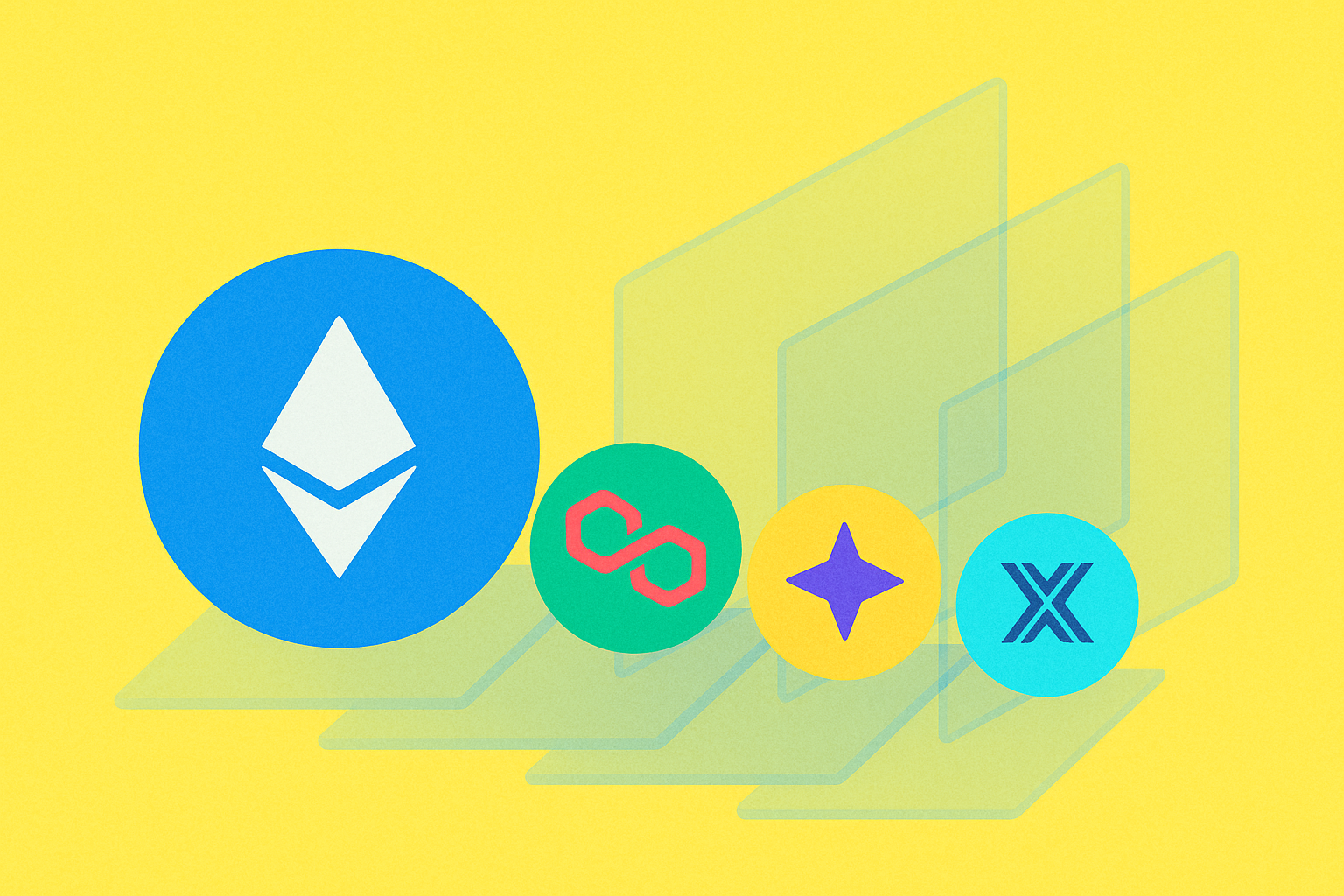
ZK Rollups Explained: Enhancing Blockchain Scalability Through Zero-Knowledge Solutions
This article delves into ZK Rollups, a key layer-2 scaling solution for Ethereum, enhancing blockchain scalability through zero-knowledge proofs. It addresses the challenges of high transaction costs and congestion in Ethereum's main chain, offering faster transactions and lower fees. Targeted at developers and users involved in Web3 and blockchain applications, the article explains the workings, benefits, and distinctions of ZK Rollups compared to optimistic rollups. Structured to provide clear insights on its applications in DeFi, gaming, and NFT trading, it highlights projects like Polygon, StarkWare, and Immutable X, portraying ZK Rollups as a pivotal technology in blockchain scalability.
2025-12-18

Understanding the Functionality of Polygon Sidechain Technology
Explore the significance of Polygon, a pivotal blockchain solution enhancing Ethereum's scalability in the Web3 ecosystem, backed by major brands like Disney and Meta. Learn about its layer-2 sidechain technology, offering reduced transaction fees and improved speeds. Delve into MATIC's role in network security and governance, along with comparisons to Ethereum and other layer-2 solutions. Understand its diverse applications in DeFi, NFT trading, and blockchain gaming. Polygon's ongoing commitment to decentralization and security reforms emphasizes its importance in the blockchain industry's growth.
2025-12-20

Layer 2 Scaling Made Easy: Bridging Ethereum to Enhanced Solutions
The article delves into Layer 2 solutions, focusing on optimizing Ethereum's transaction speed and cost efficiency through bridging. It guides users on wallet and asset selection, outlines the bridging process, and highlights potential fees and timelines. The article caters to developers and blockchain enthusiasts, providing troubleshooting advice and security best practices. Keywords like "Layer 2 scaling," "bridge services," and "optimistic rollup technology" enhance content scannability, aiding readers in navigating Ethereum's ecosystem advancements.
2025-12-24
What is the global crypto market overview in 2026: market cap rankings, trading volume, and liquidity analysis?
# Global Crypto Market Overview in 2026: Market Cap Rankings, Trading Volume, and Liquidity Analysis
This comprehensive analysis examines the 2026 cryptocurrency landscape, revealing how Bitcoin and Ethereum maintain dominant positions through institutional adoption and regulatory clarity. The article provides essential market intelligence covering multi-trillion-dollar valuations, daily spot trading volumes exceeding $100 billion across major exchanges including Gate, and circulation supply dynamics across 500+ trading platforms. Designed for institutional investors, crypto analysts, and market participants, this guide addresses critical questions about market cap rankings, liquidity infrastructure, and emerging asset distribution across North America, Europe, and Asia. By analyzing stablecoin infrastructure, exchange coverage rates, and trading volume metrics, readers gain actionable insights into 2026's institutional-grade crypto market maturity. The article progresses logically from market dominance asse
2026-01-02
Recommended for You

What is BULLA coin: analyzing whitepaper logic, use cases, and team fundamentals in 2026
BULLA coin introduces decentralized accounting and on-chain data management innovation built on BNB Smart Chain, eliminating intermediaries while ensuring real-time transaction verification. The platform addresses critical gaps in cryptocurrency infrastructure by embedding accounting logic directly into smart contracts, enabling transparent audit trails and regulatory compliance. Real-world applications include seamless transaction imports across multiple exchanges, comprehensive crypto portfolio tracking, and secure record-keeping for investors. Trade import tools enhance user experience by automating data categorization and consolidation. Founded in 2021 by blockchain architect Benjamin with support from experienced fintech designers and engineers, BULLA Networks demonstrates active development momentum with continuous smart contract iterations through early 2026. The 2026-2027 strategic roadmap prioritizes network infrastructure expansion and enhanced security protocols, positioning BULLA as a robust decen
2026-02-08

What is on-chain data analysis and how does it reveal whale movements and active addresses in crypto?
On-chain data analysis reveals cryptocurrency market dynamics by examining active addresses and transaction metrics that expose whale movements and investor behavior. This comprehensive guide explores how blockchain data serves as a critical market indicator, demonstrating the correlation between large holder activities and price movements—such as FLOKI's 950% surge in whale transactions. The article covers whale movement tracking, holder distribution patterns showing 73.47% concentration among major stakeholders, and on-chain fee trends as cycle indicators. Essential metrics include active addresses reflecting genuine network participation, transaction volumes revealing strategic positioning, and network congestion patterns during market cycles. By tracking these interconnected indicators through platforms like Glassnode and Gate, investors and traders can identify market sentiment shifts, anticipate price movements, and distinguish institutional activity from retail participation, making on-chain analysis i
2026-02-08

What is Vodra (VDR) crypto: whitepaper logic, use cases, and fundamentals analysis for 2026
Vodra (VDR) is a decentralized blockchain platform revolutionizing creator economics through AI-powered infrastructure and transparent compensation systems. The project addresses the creator economy's core challenge—unfair intermediary-controlled monetization—by enabling direct audience-to-creator transactions without traditional gatekeepers. VDR's whitepaper establishes a dual-layer architecture combining artificial intelligence for content assistance with blockchain verification for security and transparency. The platform's real-world applications extend from content monetization to DeFi ecosystem integration, real-world asset tokenization, and AI-driven automation by 2026. Founded by former Google engineer Yu Hu with backing from prominent investors like Dragonfly and The Spartan Group, Vodra positions itself at the intersection of Web3 infrastructure and creator empowerment. Key acquisition channels include Gate and other decentralized exchanges, with development roadmaps targeting API standardization, en
2026-02-08

How do cryptocurrency competitors compare in market share, performance, and user adoption in 2026?
This comprehensive analysis examines how major cryptocurrency competitors diverge across market share, performance, and user adoption in 2026. Bitcoin maintains dominance above 60% while institutional investors adopt core-satellite portfolios allocating 60-80% to Bitcoin and 15-25% to Ethereum. Layer-2 solutions command a decisive 40% market share advantage over legacy networks, with Solana leading at 1,133 TPS and driving institutional TVL beyond $50 billion. Regional adoption varies dramatically: Asia-Pacific accelerates at 11.6% CAGR driven by digital transformation, while North America concentrates 75% institutional users. Trading activity concentrates on Gate and leading platforms, with top five cryptocurrencies maintaining 61% combined market share. Understanding these divergent trajectories is essential for investors navigating competitive positioning and institutional capital flows.
2026-02-08

What is on-chain data analysis and how does it predict crypto market trends
This comprehensive guide explores on-chain data analysis as a foundational tool for predicting cryptocurrency market trends. The article examines how blockchain metrics—including active addresses, transaction volume, and network health—reveal genuine market sentiment beyond price action alone. Key sections analyze whale movements as reliable leading indicators of market direction, demonstrating how large holder distribution patterns expose institutional positioning before broader price shifts occur. The guide further demonstrates how gas fee trends and network congestion serve as real-time sentiment gauges across different blockchain architectures. By tracking these on-chain indicators on platforms like Gate, traders can identify market opportunities before mainstream recognition. The article emphasizes that while on-chain analysis provides measurable predictive value through transaction flow analysis and holder behavior patterns, it functions best as a complementary tool alongside other market analysis metho
2026-02-08

How Does VeChain (VET) Community and Ecosystem Activity Compare to Other Layer 1 Cryptocurrencies in 2026?
This comprehensive analysis examines VeChain's community and ecosystem activity relative to competing Layer 1 blockchains in 2026. The article evaluates VeChain's multimillion-follower social infrastructure across Discord and Telegram, extensive developer ecosystem featuring 5,000+ DApps, and robust on-chain metrics with 2.5 million daily active addresses. Key findings highlight VeChain's enterprise-grade differentiation through supply chain solutions, institutional partnerships with Fortune 500 organizations, and proven real-world applications. While VeChain demonstrates lower developer numbers than Ethereum and Solana, its focused positioning in enterprise adoption, regulatory compliance through MiCA alignment, and strategic partnerships with DNV and Boston Consulting Group establish competitive advantages in B2B blockchain adoption, positioning VET as a distinctive Layer 1 leader within enterprise-centric ecosystems.
2026-02-08